Vehicle protection
Bull Bars & Off-Road Bumpers for Indian 4x4s: The Honest Buyer's Guide
Choosing a bull bar for a 4x4 in India? Real advice on airbag safety, Indian legality, steel vs alloy, recovery points and winch-ready bumpers for Thar, Hilux, Jimny.
Choosing a bull bar for a 4x4 in India is less about looking rugged in a parking lot and more about three unglamorous questions: will it disable your airbags, is it road-legal, and can it actually take a winch and a recovery load without folding? This guide answers all three with India-specific detail — the Motor Vehicles Act reality, the material trade-offs that matter on a Ladakh run, and per-vehicle notes for the Thar, Thar Roxx, Hilux, Fortuner and Jimny. Read it before you spend, because the wrong choice here is either useless, unsafe, or a challan waiting to happen.
Bull bar, nudge bar, or full replacement bumper?
These three words get used interchangeably in Indian 4x4 forums, and they are not the same product. A nudge bar is a light tubular hoop that covers the grille and headlights only — decorative, minimal protection, and the type most likely to make things worse in a crash. A bull bar is a heavier front frame that wraps the grille and often the lower valance, sometimes with a skid plate. A replacement (or 'winch') bumper removes your factory plastic bumper entirely and bolts a fabricated steel/aluminium bumper to the chassis rails — this is the serious overland choice, because it is the only design that gives you a proper winch cradle, rated recovery points and better approach angle.
- Nudge bar — cosmetic, poor real-world protection, worst airbag risk. Avoid for genuine off-road use.
- Bull bar / grille guard — moderate protection against animal strikes and low-speed bush contact; check airbag rating.
- Replacement winch bumper — best protection, improved approach angle, integrated winch mount and rated recovery points. Heaviest and priciest.
Airbag compatibility: the point people ignore
Modern Indian 4x4s — Thar, Thar Roxx, Fortuner, Hilux, Jimny — deploy their front airbags based on crash-pulse sensors reading deceleration. A stiff, hard-mounted steel bar bolted directly to the chassis can change that deceleration curve: either spiking it so airbags fire in a minor knock, or, more dangerously, stiffening the front so a genuine impact reads 'wrong' and delays deployment. Reputable overseas brands (ARB, TJM, Ironman 4x4) engineer 'airbag-compatible' bars with crush cans and controlled-deformation mounts that preserve the factory crash signature. A no-name welded bar from a local fabricator has done none of that testing. If your vehicle has airbags — and every 4x4 sold new in India now does — treat 'airbag compatible' as non-negotiable, not a marketing tick.
Is a bull bar legal in India?
This is the part most sellers won't tell you plainly. Under Section 52 of the Motor Vehicles Act, altering a vehicle from its registered specification is restricted, and a Ministry of Road Transport & Highways advisory (Dec 2017) explicitly directed states to act against 'bull bars / crash guards / bumper guards' fitted to vehicles, citing pedestrian-safety and airbag-interference concerns. Several states — Delhi, UP, Kerala, Tamil Nadu among them — have issued challans and even seizure notices for external bull bars on public roads. In practical terms: an aftermarket bull bar on your Thar can be fined under the MVA, and enforcement varies wildly by state and by traffic cop's mood.
- External bull/nudge bars are technically challan-able under MVA Section 52 + the 2017 MoRTH advisory.
- Enforcement is inconsistent — common in metros, rarer on rural highways, near-nil on private off-road land.
- A full replacement bumper that fits within the vehicle's original body footprint is a grey area, but a protruding tubular guard is the clearest target.
- For genuine expedition rigs, many owners fit protection for trail/private use and accept the road-legal risk knowingly — decide with eyes open.
Steel vs aluminium vs polymer
Material is a weight-versus-strength trade, and weight sits right on your front axle where it hurts steering, braking and approach angle. Steel (usually 3–6 mm plate plus tube) is the strongest and cheapest to fabricate in India, but a full steel winch bumper adds 30–45 kg over the factory plastic unit — that is noticeable ground pressure on soft Rann-of-Kutch sand or a river crossing. Aluminium bumpers shave 30–40% of that weight and won't rust in coastal Goa or Himalayan salt-slush, but cost more and are harder to repair-weld in a small town. Polymer/composite 'bars' are light and pedestrian-friendlier but offer little against a real animal strike. For most Indian overlanders doing Spiti, Ladakh and the North-East, powder-coated steel remains the pragmatic pick; weight-conscious Hilux and Fortuner tourers increasingly go aluminium.
Recovery points and winch-ready bumpers
Here is where a real bumper earns its money. Your factory tow hook is a transport tie-down, not a recovery point — snatching a stuck vehicle off it can rip it clean off and turn a shackle into a projectile. A proper replacement bumper integrates rated recovery points (look for a stamped rating, typically 4.75–5 tonne WLL) welded to the chassis rails. If you plan to run a winch, the bumper must be a true winch cradle designed for your winch's mounting pattern and pull rating: a 9,500 lb winch suits a Jimny/Thar, while a loaded Hilux or Fortuner wants 12,000 lb-plus. Confirm the bumper clears your winch's solenoid box and that the fairlead sits square. Pair the winch with a snatch block, rated soft shackles, a tree-trunk protector and a damper — a winch without recovery kit is half a system.
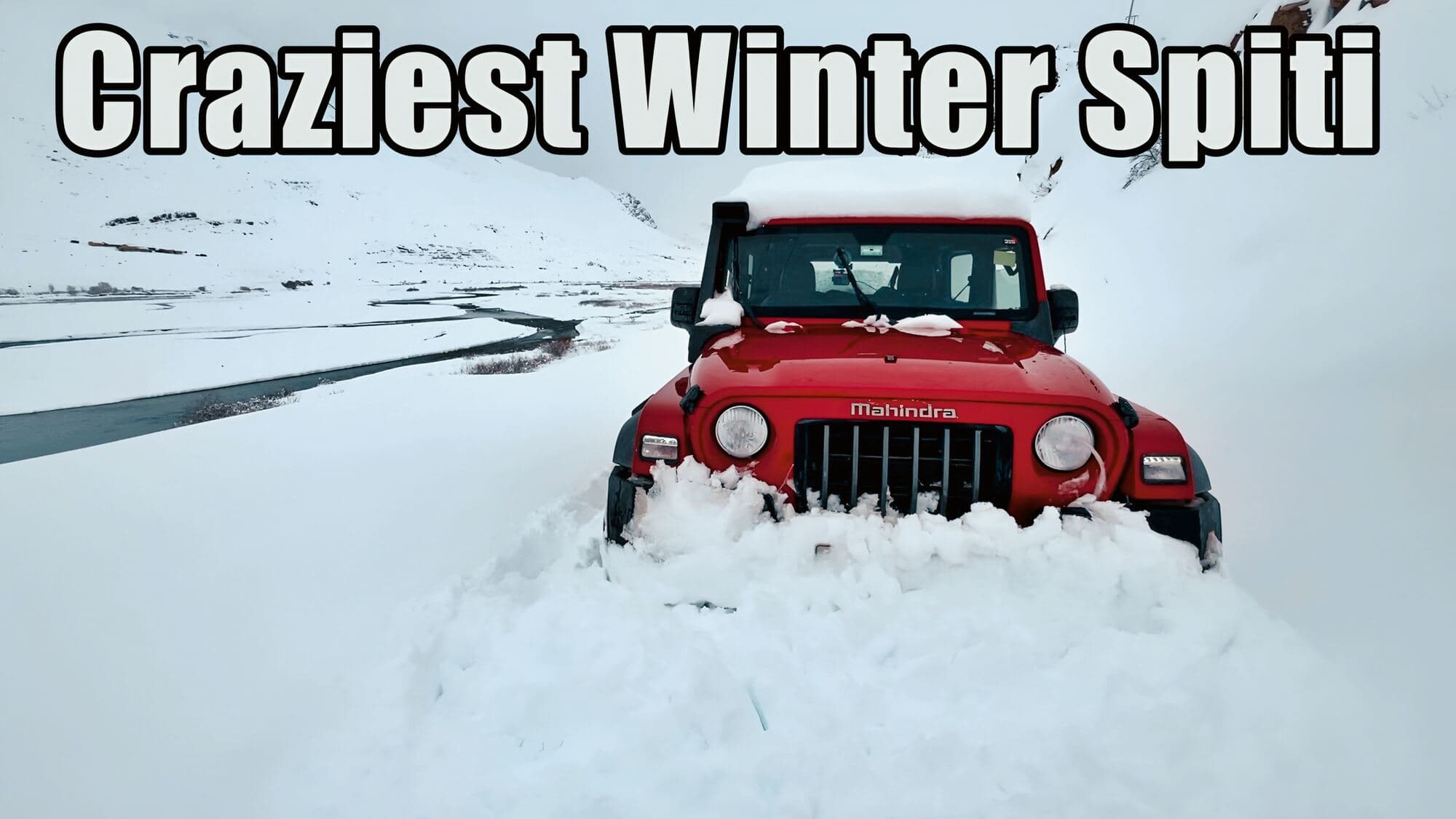
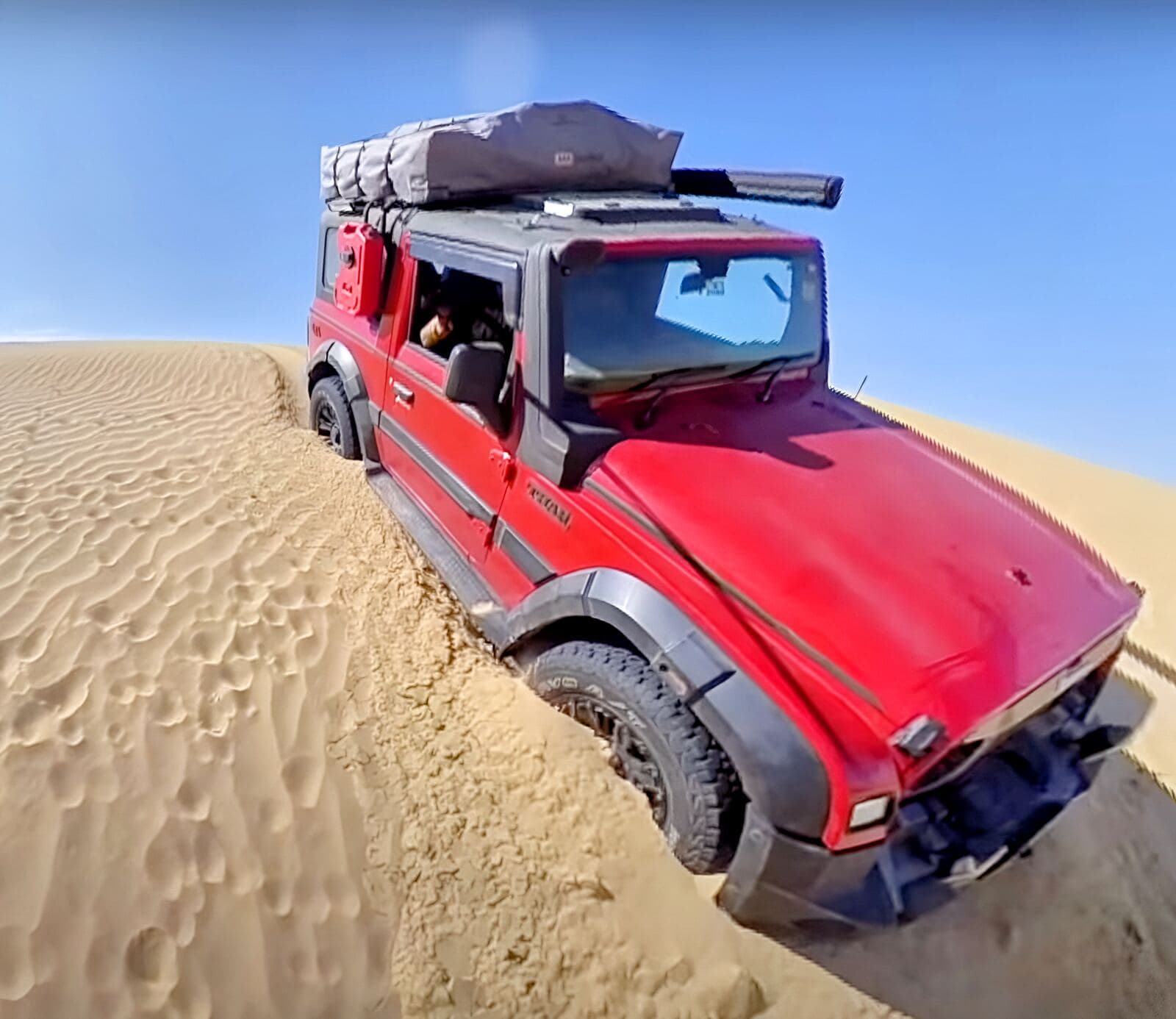
Even without a winch or bumper upgrade, every Indian 4x4 owner heading past the tarmac should carry self-recovery gear that needs no anchor point at all — traction boards to float out of sand and snow, and a kinetic rope for a vehicle-to-vehicle snatch. That kit gets you unstuck far more often than a winch does.
Per-vehicle notes
- Mahindra Thar / Thar Roxx — huge aftermarket; airbag-rated bars and winch bumpers widely available. The Roxx's wider track and front sensors make airbag compatibility especially important. Popular winch: 9,500–12,000 lb. Watch front weight vs the factory-modest approach angle.
- Toyota Hilux — the overland default. Heavy front end already; a good aluminium winch bumper keeps nose weight sane while adding a 12,000 lb winch and rated points. Excellent choice for long expedition loads and canopy builds.
- Toyota Fortuner — heavier, road-biased; owners usually want protection plus recovery points more than a full winch. Airbag-compatible replacement bumper is the sensible route.
- Maruti Suzuki Jimny — light and short; keep front weight minimal. A light alloy bar or compact winch bumper with a 6,000–9,500 lb winch suits its 3-cylinder front end. Overloading the nose blunts its brilliant off-road balance.
- Older Gypsy / Thar CRDe — no airbags on many, so the legality question dominates over airbag compatibility; steel is cheap and repairable in the field.
Buying checklist before you spend
- Confirm 'airbag compatible' in writing for any vehicle with front airbags.
- Check recovery points are chassis-mounted and load-rated, not welded to sheet metal.
- Match winch mount pattern and pull rating (aim ~1.5x vehicle GVW) to your actual vehicle.
- Weigh the weight penalty against your approach angle and front-axle load.
- Factor 18% GST and fitment cost; insist on powder-coat or galvanising for Himalayan salt and coastal humidity.
- Know your state's enforcement stance on external bars before you fit.
Where AdventureX fits in — honestly
Straight answer: AdventureX 4x4 does not currently manufacture bull bars, winch bumpers or winches. We are an Indian overland-gear brand based in Faridabad, and armour is a category on our expansion roadmap — not something we sell today, and we won't pretend otherwise. If a rated bumper or winch matters to your build, tell us at /contact and we'll notify you the moment we have something worth your money. In the meantime, the gear that actually gets Indian 4x4s unstuck — traction boards, kinetic recovery ropes, shackles and a portable air compressor to re-inflate after airing down — is exactly what we do build. If you're planning a Spiti or Ladakh run, sorting real recovery kit first is the higher-value move than a bar you might get challaned for.
Ready to kit out?
Everything in this guide is built, stocked and backed by AdventureX4x4 — engineered for Indian cold and proven from Spiti to Ladakh.