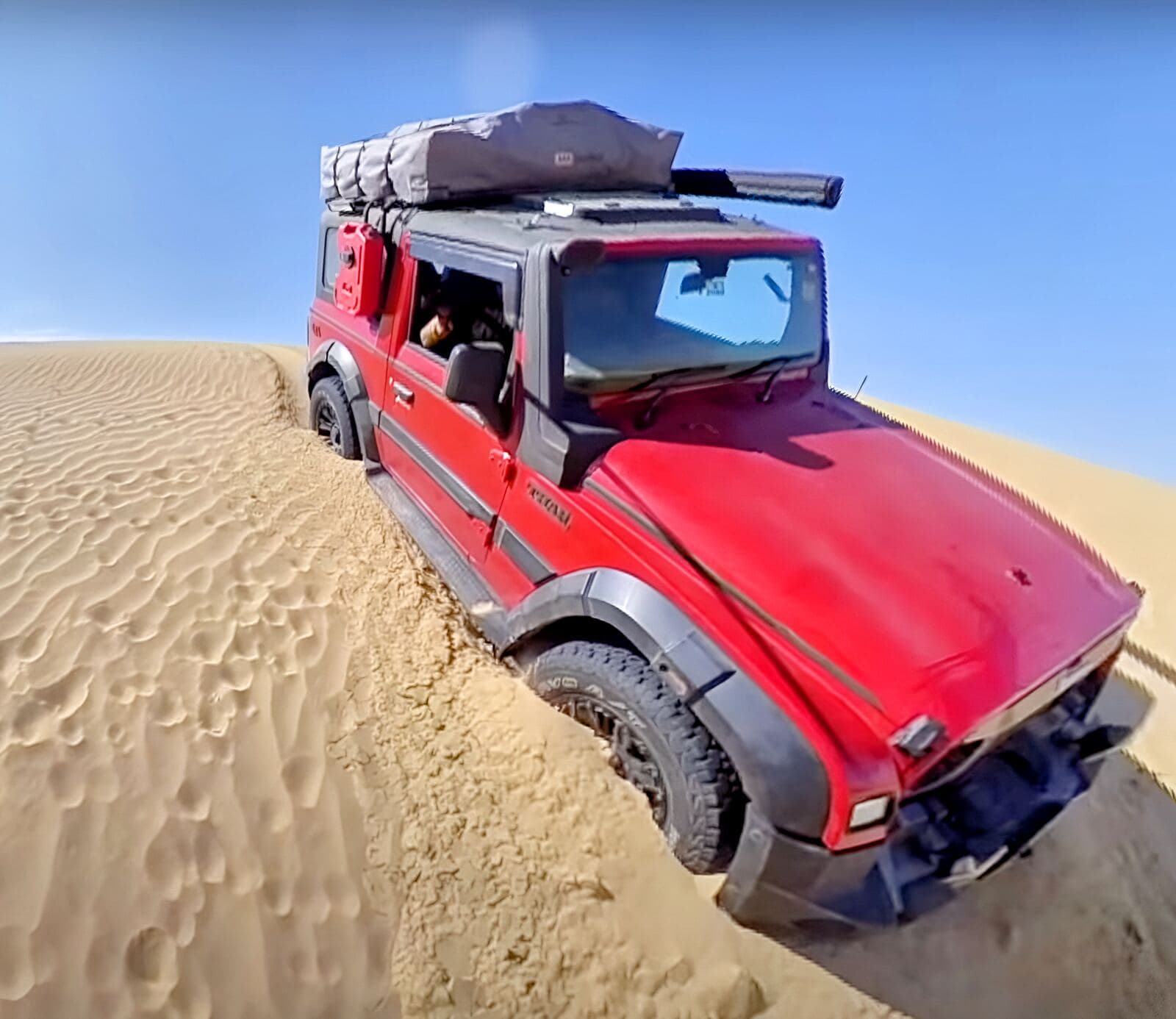

4x4 recovery
Best Winch for a 4x4 in India: Line Pull, Rope, Mounting and Vehicle-by-Vehicle Sizing
The best winch for 4x4 in India, explained: line-pull sizing (the 1.5x rule), synthetic vs steel rope, IP rating, mounting, and picks for Thar, Hilux and Fortuner.
The best winch for a 4x4 in India, for the overwhelming majority of overlanders, is a 12V electric unit rated at roughly 1.5 times your vehicle's fully-loaded weight, wound with synthetic rope, sealed to at least IP67, and mounted on a properly engineered plate that ties into the chassis. That single sentence eliminates most of the buying mistakes we see on Spiti and Ladakh runs. But the right number and the right rope change depending on whether you drive a Thar, a Hilux or a Fortuner, and India throws in a few variables — river crossings, sub-zero mountain passes, dust, and patchy spares availability — that the glossy import brochures never mention. This guide walks through line pull, rope, mounting, sealing and vehicle-by-vehicle sizing the way an Indian trail actually demands.
Line pull: the 1.5x rule (and why bigger isn't automatically better)
Winch capacity is quoted as maximum line pull on the first, bottom layer of the drum — and that figure drops sharply as rope stacks up. A '9,500 lb' winch might only deliver around 6,500-7,000 lb once the drum is half full. So you always size up. The working rule for India: take your vehicle's kerb weight, add passengers, fuel, water, rooftop tent and recovery kit to get a realistic loaded weight, then multiply by 1.5. A Mahindra Thar loaded for a week runs close to 2,300-2,500 kg (roughly 5,000-5,500 lb); 1.5x lands you at an 8,000-9,500 lb winch. A loaded Hilux or Fortuner sits nearer 2,900-3,200 kg, pushing you to a 12,000 lb-plus unit. Add a further margin if you routinely get properly bogged in Himalayan slush or riverbed sand, where suction multiplies the load far beyond the vehicle's dead weight.
Resist over-buying, though. A 12,000 lb winch is heavier (hurting your front axle load and approach angle), draws enormous current, and costs more. Match the winch to the vehicle; use a snatch block (double-line pull) to effectively double your capacity for the rare heavy recovery rather than lugging a monster winch everywhere.
Synthetic vs steel rope: for Indian conditions, synthetic wins
This is the decision that most affects your safety and your experience. Steel wire rope is cheap, abrasion-resistant against rock edges, and shrugs off UV and heat — but it stores lethal energy under load, and when it fails it whips. It also develops burrs that shred bare hands, rusts in our monsoon and river-crossing reality, and is heavy. Synthetic rope (UHMWPE / Dyneema) is a fraction of the weight, floats, is far safer if it snaps (it drops rather than lashes), and is easy to handle and re-spool. For 90% of Indian overlanders, synthetic is the correct answer.
- Choose synthetic if: you value safety, do river crossings and water is a factor, you self-recover often, and you'll inspect and care for the rope. Add a rock guard/sleeve for abrasion.
- Choose steel if: you winch through sharp rock and edges constantly, store the vehicle outdoors in harsh UV, or want the lowest-maintenance, lowest-cost option and accept the safety trade-off.
- Non-negotiable with either: always drape a heavy winch damper/blanket over the rope mid-span, and never stand in line with a loaded rope.
- In the cold: synthetic handles Ladakh sub-zero temperatures well and won't rust after a wet crossing freezes overnight — a real edge on high passes.
IP rating and sealing: the spec Indian buyers ignore and regret
A winch lives on the very front of the vehicle, taking the full brunt of river fords, monsoon spray, dust and slush. The motor, solenoid pack and contactor are the parts that die. Look for a stated IP rating: IP67 is a sensible minimum (dust-tight, survives temporary immersion to 1 m), and IP68 is worth paying for if you cross deep water. Be sceptical of cheap unbranded units that quote no IP figure at all — they will corrode. A sealed, mechanically-bonded solenoid mounted on the winch, or better still a fully-sealed contactor, matters more than a headline price. In the Himalaya, thermal cut-outs and a good brake also earn their keep on long, controlled downhill lowers.
Mounting: the winch is only as strong as its plate
You cannot bolt a 9,500 lb winch to a decorative bumper and expect it to hold — under load it will tear the mount off. The winch must sit on a purpose-built mounting plate that transfers load into the chassis rails, ideally integrated with a rated steel bull bar or a dedicated winch cradle. On the Thar, plenty of aftermarket winch-ready bumpers exist; verify the plate steel thickness (6-8 mm) and that it's a bolt-through-chassis design, not tack-welded. Account for the extra 30-45 kg hanging ahead of the front axle: it worsens your approach angle and adds nose weight, so budget for it and check your front springs. Wire the winch with adequately-sized cable and an isolator, keep the battery healthy (a winch can pull 300-400 A on a hard recovery), and consider a dual-battery or upgraded alternator if you winch often.
Choosing by vehicle: Thar, Hilux, Fortuner and Jimny
- Mahindra Thar / Thar Roxx: An 8,000-9,500 lb synthetic-rope winch is the sweet spot. The Thar has strong aftermarket support and winch-ready bumper options, so integration is straightforward. Don't jump to 12,000 lb — it's needless nose weight on a relatively light vehicle.
- Toyota Hilux: Heavier and often loaded for expeditions (canopy, tent, water), so size to 12,000 lb, synthetic rope, on a heavy-duty plate. The Hilux's ladder chassis takes a proper winch bar well; ensure the bar is airbag-compatible if fitted.
- Toyota Fortuner: Similar 12,000 lb bracket by weight, but the Fortuner is a monocoque-influenced body-on-frame SUV with more front-end plastic and sensors (parking, radar). Mounting is fiddlier and you must retain crash structure and cooling airflow — use a Fortuner-specific winch bar, not a generic one.
- Maruti Suzuki Jimny: Light and short; a compact 4,000-6,000 lb winch is plenty. Weight and approach angle matter most here, so go small, synthetic, and light. Many Jimny owners run a portable/removable winch on a hitch cradle instead of a permanent front mount.
India-specific realities: cold, water, dust and spares
High-altitude cold (Spiti, Ladakh, Sach Pass) thickens grease and drains batteries — keep the winch exercised, the battery strong, and favour synthetic rope that won't seize. River and nallah crossings mean you should winch briefly, then let the motor cool and, ideally, run it dry afterwards. Fine Rajasthan and Himalayan dust destroys unsealed solenoids — hence the IP-rating insistence. And practically: buy a brand with Indian service presence and available spares (contactors, motor brushes, remote sockets). A slightly less powerful winch you can get repaired in Manali beats an exotic import that's dead weight the moment its solenoid fails 400 km from the nearest workshop. Budget realistically too — a quality winch plus a rated bumper and wiring, with GST, typically runs well into six figures once fitted, so plan the whole system, not just the winch.
Your minimum recovery kit around the winch
A winch is one tool in a system, and half your recoveries won't even need it. Carry a snatch block (to double line pull and change pull direction), a tree-trunk protector strap, rated bow shackles or soft shackles, heavy leather gloves, and a winch damper. Pair the winch with traction boards for self-recovery in sand and snow, a kinetic recovery rope for a quick snatch by a second vehicle, and a good compressor to air down for grip and re-inflate afterwards. Nine times out of ten on an Indian trail, boards, a kinetic rope and aired-down tyres get you out faster than spooling out a winch.
Where AdventureX fits in — honestly
Full disclosure: AdventureX 4x4 does not currently manufacture winches. We're a Faridabad-based overland-gear brand (rooftop tents, Hilux canopies, aluminium water tanks, awnings, air compressors and recovery gear), and winches are a category on our expansion roadmap — not something we sell today, and we won't pretend otherwise. If you'd like us to notify you when we do move into winches and winch-ready mounting, register your interest at /contact and we'll keep you posted with no spin and no fake launch dates. In the meantime, the parts of your recovery system we do build to expedition standard are ready now: our recovery range (traction boards, kinetic ropes, shackles, deflators) and the X-Flate200 air compressor cover the gear that gets you unstuck most often. Build the surrounding kit right first, and the winch becomes the rare-use backup it should be.
Ready to kit out?
Everything in this guide is built, stocked and backed by AdventureX4x4 — engineered for Indian cold and proven from Spiti to Ladakh.