
HydroXwater
HydroX26 Aluminium Pressurised Water Tank
The HydroX26 is a rugged 26-litre aluminium pressurised water tank engineered for overlanders,…
Price
₹46,990
26 litres of independence.
HydroX series water tanks — UV-treated, food-grade, mountable on rack or under deck. Because the difference between a 4-day trip and a 14-day trip is your water plan.
These are overland water tanks for 4x4 camping in India, built around the HydroX26: a 26-litre aircraft-grade aluminium pressurised tank that mounts on a roof rack or under the deck, runs dual brass outlets off a hand or air pump, and carries enough water to stretch a long-weekend trip toward a genuine multi-day expedition. Tank sizing, mounting and a water plan matched to your trip length are what separate a 4-day run from a 14-day one - this page covers all three.
Showing 1 product
HydroXwater
The HydroX26 is a rugged 26-litre aluminium pressurised water tank engineered for overlanders,…
Price
₹46,990
The single most useful habit in overland water planning is to size by people and days, not by the tank on the shelf. Start with a per-person daily allowance for drinking and cooking, add a margin for washing up if you want it, then multiply by group size and the number of days between reliable refill points - that total tells you how many 26-litre HydroX26 tanks to carry. This is the practical meaning of the line that the difference between a 4-day trip and a 14-day trip is your water plan: a weekend run to a campsite with a tap nearby might need one tank you top up daily, while a remote multi-day route needs either more tanks or a clear refill strategy. The HydroX26's wide fill port makes topping up and cleaning quick, so the plan is usually carry enough to bridge the gaps, then refill, rather than haul a fortnight of water at once.
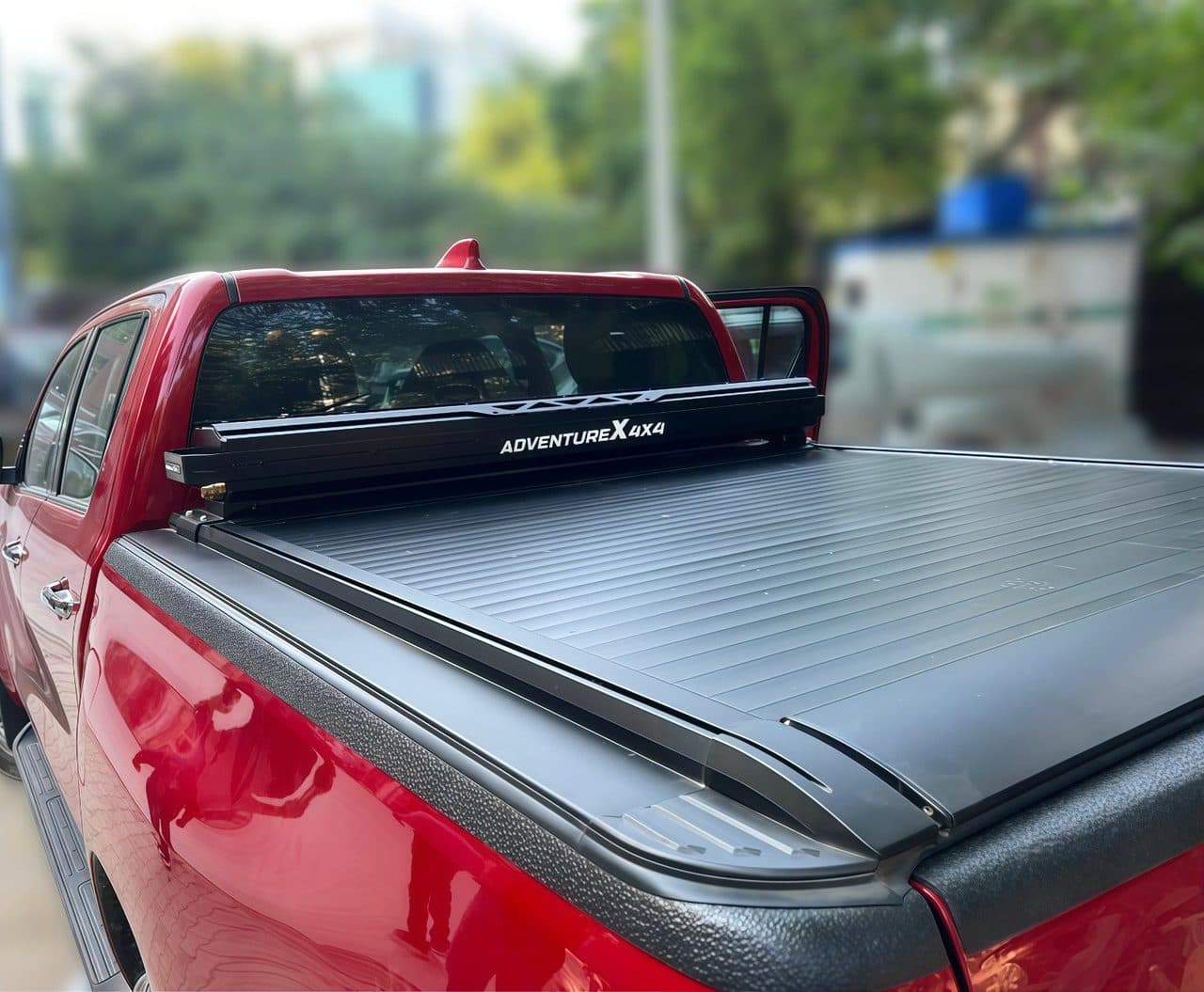
The HydroX26 ships with integrated handles and mounts so it can ride securely on a rack or be carried by hand, and where you fix it changes the camp experience. Mounted high on a roof rack or platform it is out of the way and very easy to fill from the wide port, though it puts 26 litres of water up high and in the sun. Mounted low - under the deck, in a pickup bed, or against a bed rack - it keeps weight down low for better handling on rough trails and keeps the water shaded and cooler. On a Toyota Hilux the tank sits naturally in the bed alongside crossbars or a roller-shutter setup; on a wagon-style 4x4 an under-deck or rear-mount keeps the cabin clear. Whichever position you pick, bolt the tank to its mounts so a full, heavy tank cannot shift on corrugations or a steep climb.
Plenty of overland water setups depend on a wired 12V pump; the HydroX26 deliberately does not. It is a pressurised tank that is hand-pump or air-pump ready, so you pressurise it manually or from a compressor and then draw a real flow from its dual brass outlets, with a pressure-release valve keeping things safe. That keeps the system simple and failure-resistant - there is no pump motor to burn out at altitude - and it pairs neatly with the air compressors many overlanders already carry to re-inflate tyres after a trail. The dual outlets mean you can run water for two jobs at camp, and because the fittings are brass rather than thin plastic they stand up to repeated use. For the recovery-and-compressor side of your kit, the Recovery Gear category covers the air sources that double as your tank's pressure supply.
On high-altitude winter routes the limiting factor is rarely the tank's toughness and almost always the cold itself. The HydroX26's aircraft-grade aluminium body, powder-coated finish and brass fittings shrug off corrosion, UV and knocks far better than a plastic can, but water still freezes when the night drops below zero in Spiti, Lahaul or Ladakh. The workaround is to treat water as part of a cold-weather system: leave headroom in the tank so forming ice has somewhere to go, drain the outlets and lines before a hard freeze so the brass fittings are not left holding ice, and keep a smaller drinking supply inside the tent or a heated space overnight. Used that way, the HydroX26 carries your camp water through a sub-zero expedition; relied on as a sealed block of liquid through a -20 night, any tank will let you down. For the heating and insulation that keep the rest of camp above freezing, see the Extreme Weather category.
Questions, answered
It depends entirely on how you ration, not on a fixed number we can promise. A single HydroX26 holds 26 litres, which is the tank's rated capacity; how far that goes is down to how many people draw on it and whether you are using it only for drinking and cooking or also for washing up. The honest way to plan is to decide your per-person daily allowance first, multiply by people and days, then size the number of tanks to that figure - which is exactly why the difference between a 4-day trip and a 14-day trip is your water plan, not the tank alone. For longer expeditions many overlanders carry more than one HydroX26 and refill at known sources along the route.
Both. The HydroX26 is designed with integrated handles and mounts so it can be carried by hand or fixed securely on racks, and the category is built around tanks that go on a rack or under the deck. A roof-rack or bed mount keeps the tank outside the cabin and easy to fill from the wide fill port; an under-deck or in-bed mount keeps weight low and the water shaded. Whichever you choose, fix it down on its mounts rather than letting a full tank move around, because 26 litres of water is a heavy, shifting load on rough trails. On a pickup like the Hilux it pairs naturally with a bed-rack or crossbar setup.
The HydroX26 is built from aircraft-grade aluminium with a powder-coated, UV-resistant exterior, and the water category is food-grade and UV-treated by design so the contents are protected from light and the tank resists corrosion. As with any overland tank, the water is only as clean as what you put in and how you maintain it: fill from a trusted source, use the wide fill port to rinse and clean the tank between trips, and treat or filter water of uncertain origin before drinking. We do not make medical or potability claims about water you collect on the trail - that part is on your own judgement and treatment.
No electricity is required. The HydroX26 is a pressurised tank that is hand-pump or air-pump ready, so you build pressure manually (or from a compressor you already carry for tyres) and then draw water on demand from the dual brass outlets, with a pressure-release valve to keep operation safe. That means you get a real flow at camp - enough to rinse hands, dishes or vegetables - without wiring in a 12V pump or relying on gravity from a roof tank. If you already run an air compressor for airing tyres back up after a trail, the same air source can pressurise the tank.
Any water tank can freeze if the water itself drops below freezing, and the high Himalaya - Spiti, Lahaul, Ladakh - regularly does that overnight. The HydroX26's aluminium body and brass fittings are tougher and more corrosion-resistant than thin plastic, but no tank is immune to ice. On genuinely sub-zero trips, plan around it: keep the tank only partly filled so expanding ice has room, drain the outlets and lines before a freezing night so brass fittings are not left holding ice, and store drinking water inside the tent or a heated space when temperatures crash. Treat the tank as part of a cold-weather system, not a guarantee against frozen water.
A plastic jerry can is fine for short trips, but the HydroX26 is built for repeated expedition use: aircraft-grade aluminium that resists corrosion and UV, a powder-coated scratch-proof finish, dual heavy-duty brass outlets, a pressure-release valve and integrated mounts so it bolts to a rack instead of rolling loose in the boot. It also gives you pressurised flow rather than tipping and pouring. The trade-off is price and weight - at around Rs 46,990 it is an investment compared with a stack of cans - so it earns its place when you are doing real multi-day overland trips and want fixed, mountable, pressurised water rather than the cheapest possible container.
Work it backwards from your daily allowance rather than guessing. Set a realistic per-person daily figure for drinking and cooking, multiply by the number of people and the number of days between reliable refill points, then divide by 26 litres to get the number of HydroX26 tanks. On a 14-day Himalayan route you rarely carry the whole fortnight at once - you carry enough to bridge the gaps between known water sources and refill the tank through its wide fill port as you go. Running two tanks also gives redundancy: if one is being cleaned or set aside after a freezing night, the other keeps camp supplied.
Related buying guides
Field-tested picks, prices and fitment for camping water and the rest of your overland build.
Field-tested in extreme conditions
Researched & proven on Spiti, Ladakh & Lahaul
Our own proprietary range
AutoNest · TractionX · ThermaEvo — not resold gear
Free shipping over ₹25,000
Dispatched across India with a GST invoice
TÜV-certified snow chains
TractionX — TÜV GS & ÖNORM V5117 rated
Build your rig. Jump straight to the gear, guides and per-vehicle build dossiers our overlanders reach for most.
We use essential cookies to run AdventureX4x4 and privacy-light, IP-anonymised analytics to improve it. By continuing you agree to our Cookie Policy and Privacy Policy.
Showing 1 of 1
HydroXwater
The HydroX26 is a rugged 26-litre aluminium pressurised water tank engineered for overlanders,…
Price
₹46,990