Snow chains
The Best Snow Chains in India: How to Pick a Set That Survives Real Himalayan Cold
Looking for the best snow chains India offers? Pick automatic vs manual, match your tyre size, and fit safely for Spiti and Ladakh cold to -20C.
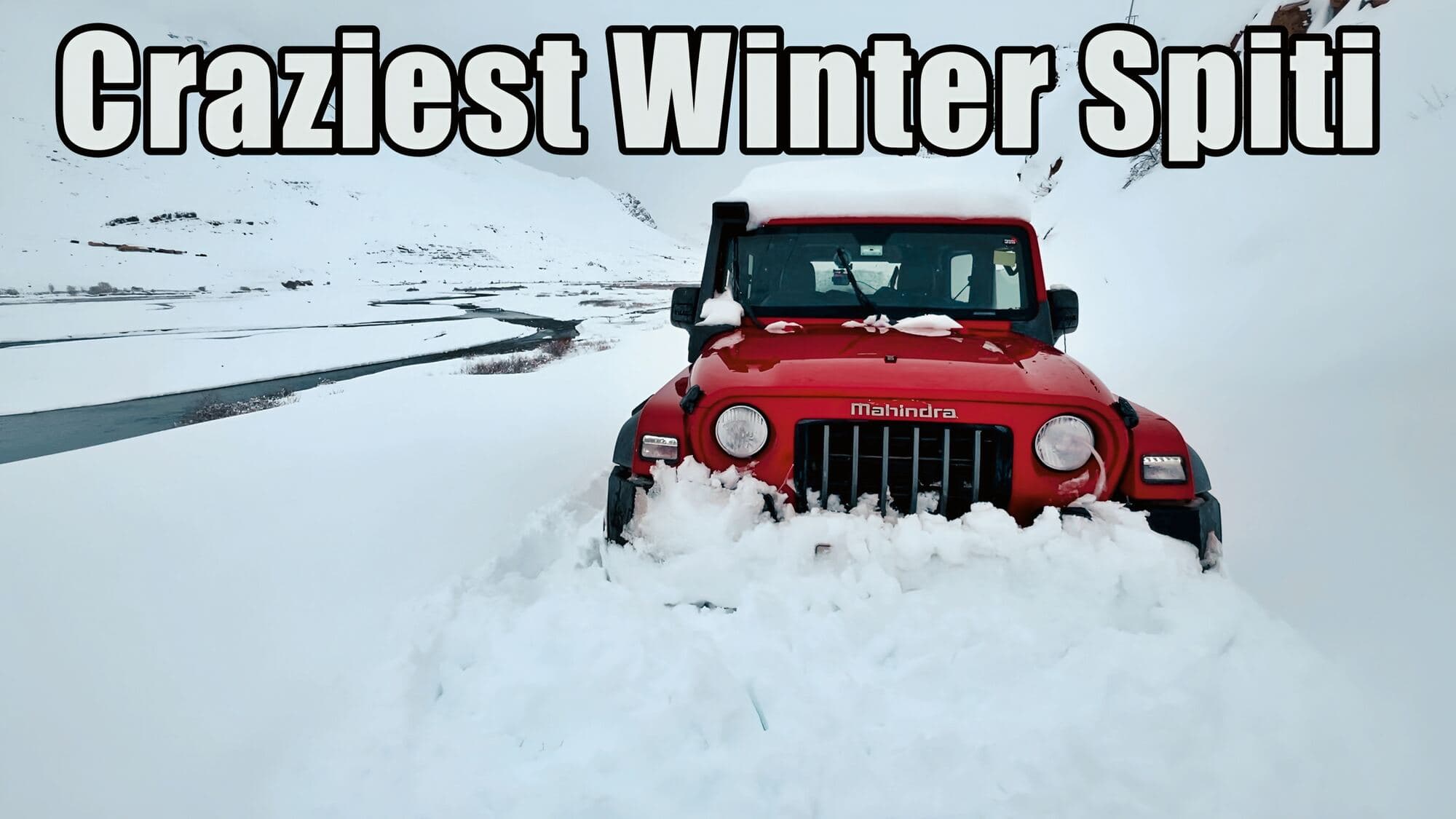
Every winter the same thing happens. A convoy of SUVs leaves Manali at first light, clears the Atal Tunnel feeling invincible, and then hits the first sheet of black ice on the Sissu side. Somebody pulls over, drags a bargain set of chains out of the boot, and discovers in -15C that the plastic clips have gone brittle, the links do not reach across the tread, and the so-called universal fit was never measured for their tyre. That is the moment people learn the difference between a chain that was built and a chain that was merely sold. If you are searching for the best snow chains India sells, this guide is written from the road - Spiti to Ladakh, Kunzum to Khardung - not from a spec sheet.
Why Most Marketplace Snow Chains Fail in Real Himalayan Cold
The cheap chains that flood Indian marketplaces are not designed for the Himalaya. They are designed for a photograph. Priced anywhere from Rs 2373 to Rs 5999, they are built to look like snow chains and to clear the lowest possible bar - a dusting of snow in a flat parking lot. Take them above Gramphu, point them at a frozen switchback below Kunzum at 4500 m, and the gap between marketing and metal opens up fast.
Three things go wrong, and they go wrong together. First, the steel. Generic chains use thin, low-grade links that stretch and snap under the shock loading of a heavy 4x4 clawing for grip on glare ice. Second, the cold itself. Most marketplace sets rely on ordinary rubber or plastic tensioners, and rubber does not stay rubber at -20C - it turns to glass and shatters the first time you flex it. Third, the fit. A chain that is even slightly oversized whips against your wheel arch, hammers the brake line, and can wrap the strut. A chain that is undersized will not close. In genuine cold, on a real Himalayan gradient, near enough is not good enough.
AdventureX4x4 engineers the TractionX ladder for exactly this environment - the cold of Lahaul and Ladakh, the altitude of Kunzum and Tanglang La, the punishment of a fully loaded overland rig. The links are heat-treated steel sized to the load of the vehicle they fit. The mesh is a true diamond pattern, which puts biting edges across the tyre in every direction so the tyre grips whether you are braking, climbing, or holding a line through a banked icy corner. And every set is ABS and traction-control compatible, so your electronics keep working instead of fighting the chain. That is the engineering you are paying for - and it is why TractionX sits at Rs 7068 to Rs 19460, above the marketplace pack, not next to it.
Automatic (AX) vs Manual (MX): The Real Buying Decision
Once you have decided to buy a chain that actually works, the single most important choice is not brand or price. It is whether you want an automatic self-tensioning chain (the AX line) or a manual hand-tensioned chain (the MX line). Get this right and everything else follows.
TractionX AX chains are self-tensioning. You lay them over the driven wheels, connect them, drive forward a couple of metres, and the mechanism pulls the chain tight on its own. There is no kneeling in the snow wrestling a tensioner. For first-time chain users, for solo drivers, and for anyone who values getting moving again in a hurry on a freezing roadside, the AX line is the easy answer. AX220 and AX200 are the automatic options.
TractionX MX chains are manually tensioned. You fit them and then close the tension by hand. This sounds like more work, and it is - but in exchange you get a tougher, more serviceable system at sharper value, and tension you can set exactly the way you want it. For experienced overlanders who fit chains every season, for heavy rigs that punish their hardware, and for anyone who would rather spend the difference on fuel and permits, the MX line is the value-and-toughness choice. MX180, MX160, MX140 and MX120 are the manual options.
- Choose AX (automatic) if: you are new to chains, often drive solo, want the fastest possible fitment in deep cold, and value convenience over the price difference.
- Choose MX (manual) if: you fit chains regularly, run a heavy or built rig, want the best value, and are comfortable hand-setting tension on a frozen roadside.
How to Pick by Vehicle and Tyre Size
Here is the rule that overrides everything else: the chain is matched to your tyre size, not to your vehicle badge. A chain fits a band of tyre dimensions, and your job is to read the marking on your sidewall - something like 265/65 R17 - and match it to the band the chain covers. Two owners of the same model running different tyres can need different chains. Always fit-check against the sidewall, because that number is the truth and the brochure is not.
Within the TractionX ladder, AdventureX4x4 maps the line to the most common Indian 4x4 platforms so you have a confident starting point before you confirm by tyre size:
- TractionX AX220 (automatic, largest tyre band, Rs 19460): Land Cruiser, LC Prado, AT-build Hilux, and custom or heavily modified rigs running oversized rubber.
- TractionX AX200 (automatic, Rs 15280): Toyota Fortuner, Ford Endeavour, Isuzu MU-X, Hilux, and Mahindra Alturas G4.
- TractionX MX180 (manual, heavy rigs, Rs 10788): Land Cruiser, LC Prado, MG Gloster Top spec, and Jeep Grand Cherokee.
- TractionX MX160 (manual, Rs 10620): Fortuner, Hilux, Endeavour, Alturas G4, MU-X, and Gloster.
- TractionX MX140 (manual, Rs 7188): Mahindra Scorpio-N Z2 to Z4, Pajero Sport, and older Fortuner.
- TractionX MX120 (manual, Rs 7068): Maruti Gypsy, Jimny, Bolero, Sumo, old Safari, and the old Gurkha.
Notice the overlap: a Fortuner or Endeavour owner can step up to the automatic AX200 for convenience, or take the manual MX160 for value and toughness. That is the AX-versus-MX decision in action. Use the mapping to find your bracket, then confirm the exact set against your tyre sidewall.
Fitment and the Driven-Axle Rule
A TractionX set is sold as a pair, which equals one axle. The safety question is which axle. Snow chains go on the driven axle - the wheels your engine actually turns. On a part-time 4x4 running in two-wheel drive that is usually the rear. On most modern SUVs in four-wheel-drive mode, when in doubt and when you can only run one set, the front axle does the steering and a large share of braking, so chaining the front is the common call - but the rule is simple: chain the wheels that drive. Putting chains on the axle that is just along for the ride gives you almost nothing where it counts.
There is one fitment habit that separates people who have done this before from people who have not: re-tension after the first few kilometres. Even a self-tensioning AX set beds in as the chain settles into the tread. Drive a short distance, pull over somewhere safe, and check the tension. A loose chain is the one that flails, damages bodywork, and eventually throws itself off the wheel. Two minutes of re-checking saves a very bad afternoon below Kunzum.
ABS and Traction-Control Compatibility
Modern 4x4s lean heavily on ABS, traction control, and hill-descent systems, and a chain that confuses those systems is a liability, not an aid. Every TractionX chain is engineered to be ABS and traction-control compatible, with an even diamond mesh that keeps wheel-speed signals consistent so your electronics behave predictably. Cheap, uneven, oversized chains can upset wheel-speed sensors at the worst possible moment - mid-corner on ice on the approach to the Atal Tunnel. Compatibility is not a luxury feature here; on a frozen Himalayan descent it is a safety requirement.
The Cold-Weather Retainer Problem - and TractionX Spiders
Here is the failure almost nobody warns you about. The component that usually dies first in extreme cold is not the chain - it is the tensioner that keeps it tight. Standard rubber retaining rings stiffen, then go brittle, then crack once the temperature drops below -20C, exactly the cold you meet on a Lahaul night or a Ladakh dawn. Your steel can be perfect and you still lose tension because the rubber gave up.
That is what TractionX Spiders solve. Spiders are a cold-weather bungee retaining system designed to keep a chain set tight in temperatures where ordinary rubber tensioners turn to glass. They are not a chain on their own - they are a retainer you run together with a chain set, the insurance policy that keeps your hardware where it belongs through the coldest part of the trip. If your itinerary includes genuine deep cold, Spiders belong in the kit alongside your chains.
The best snow chains in India are not the cheapest ones that fit - they are the engineered ones sized to your tyre and your axle, with a retainer that survives the cold you are actually driving into.
AdventureX4x4
Frequently Asked Questions
What are the best snow chains in India for a Himalayan trip?
The best snow chains in India for serious Himalayan cold are engineered sets sized to your tyre and load, not generic universal-fit products. The AdventureX4x4 TractionX ladder is built for routes like Spiti and Ladakh, with heat-treated steel, a diamond mesh pattern, and full ABS compatibility. Choose automatic AX for convenience or manual MX for value, then match to your tyre size.
Should I buy automatic (AX) or manual (MX) snow chains?
Buy automatic AX chains if you are new to chains, often drive solo, or want the fastest possible fitment in freezing conditions - they self-tension once you roll forward. Buy manual MX chains if you fit chains regularly, run a heavy rig, or want the best value and the toughest, most serviceable hardware. This is the single most important snow-chain buying decision.
How do I know which snow chain size fits my vehicle?
Match the chain to your tyre size, not your vehicle model. Read the sidewall marking - for example 265/65 R17 - and select the TractionX set whose tyre band covers it. The vehicle mapping (AX200 for Fortuner and Endeavour, MX120 for Gypsy and Jimny, and so on) gives you the right bracket, but always confirm the exact fit against your sidewall number.
Which axle do snow chains go on?
Snow chains go on the driven axle - the wheels your engine actually turns. A TractionX set is a pair, which equals one axle. If you can only run one set, chain the driven wheels; on many modern SUVs in four-wheel drive the front axle is the common choice because it steers and brakes. Then re-tension after the first few kilometres once the chain beds in.
Are TractionX snow chains ABS and traction-control compatible?
Yes. Every TractionX chain is engineered to be ABS and traction-control compatible. The even diamond mesh keeps wheel-speed signals consistent so your ABS, traction control, and hill-descent systems keep working correctly on ice. Cheap, uneven chains can upset wheel-speed sensors at the worst moment, which is why compatibility is treated as a safety requirement, not an optional extra.
What are TractionX Spiders and do I need them?
TractionX Spiders are a cold-weather bungee retaining system that keeps your chains tight below -20C, where ordinary rubber tensioners go brittle and crack. They are not a standalone chain - they are a retainer you run together with a chain set. If your trip involves genuine deep cold, such as a Lahaul or Ladakh winter night, Spiders are worth carrying as insurance against losing chain tension.
Ready to kit out?
Everything in this guide is built, stocked and backed by AdventureX4x4 — engineered for Indian cold and proven from Spiti to Ladakh.