CampToprooftop tents
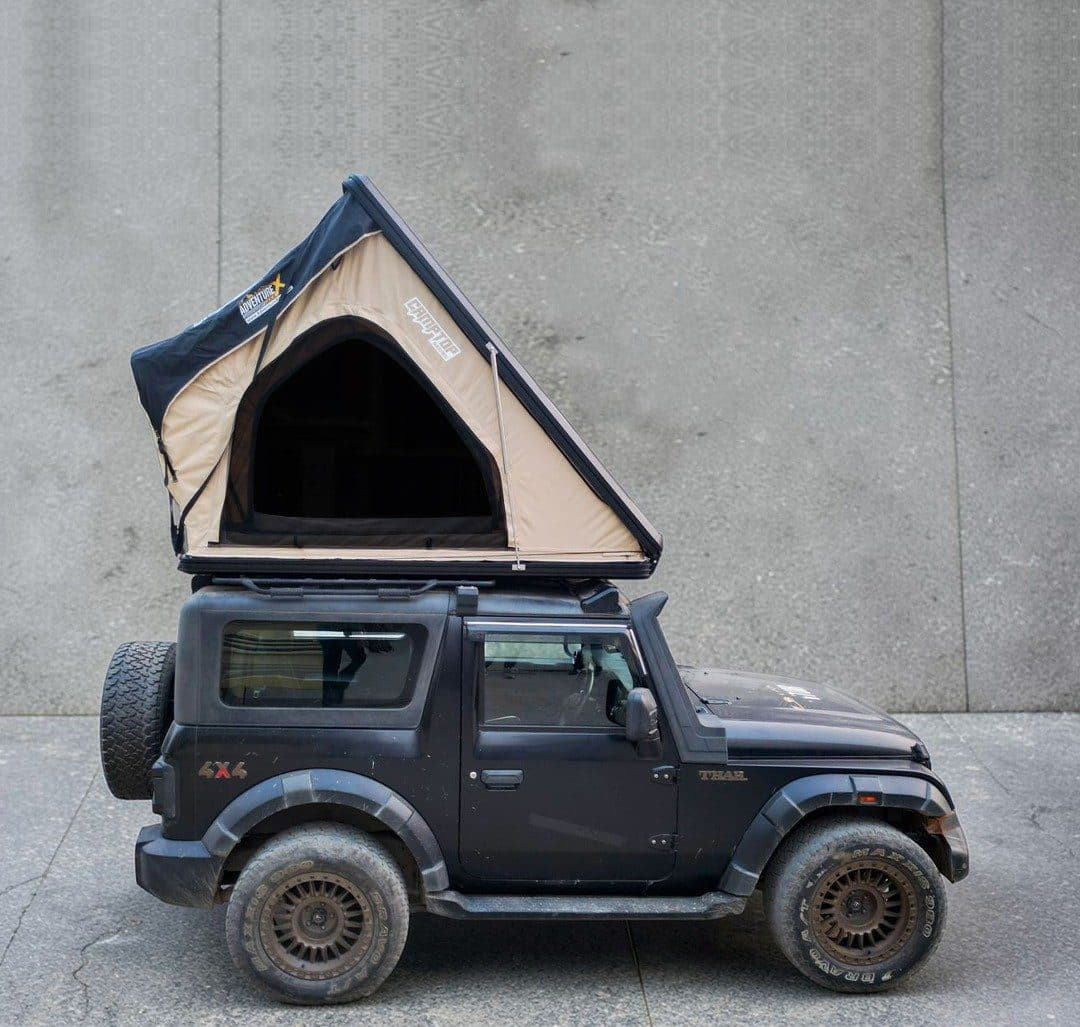
Camptop AeroV V2 Rooftop Tent
Meet the CAMPTOP AERO-V V2 RTT with Integrated Thermal Liner — refined hard-shell camping, engineered for elevated adventures.
Price
₹1,64,990
Fits: Mahindra Thar · Mahindra Scorpio N +4
Build dossier - Land Rover Defender
Building a Land Rover Defender for overlanding means matching premium gear to a premium platform: a hardshell rooftop tent its rated roof can carry, the correct large-tyre snow-chain size, a fast 270 awning and recovery kit you can trust at altitude. Here is the Defender accessories build we fit and field-test in India for Ladakh and Spiti - with the numbers that matter.
Rooftop tents, snow chains, an awning and recovery kit — each one chosen for the Defenderspecifically, not just badged “universal.” Prices are live from the AdventureX4x4 catalogue.
CampToprooftop tents
Meet the CAMPTOP AERO-V V2 RTT with Integrated Thermal Liner — refined hard-shell camping, engineered for elevated adventures.
Price
₹1,64,990
Fits: Mahindra Thar · Mahindra Scorpio N +4
Expeditionrooftop tents
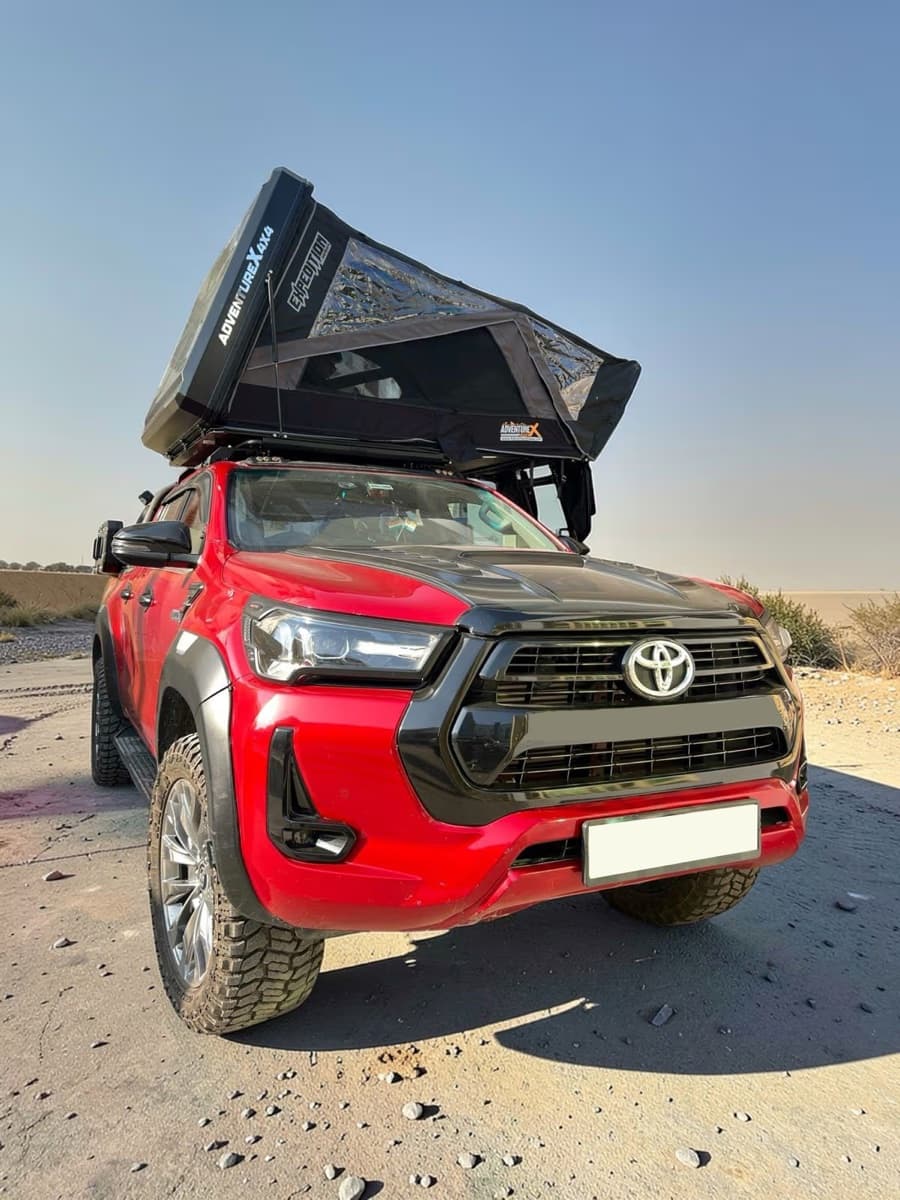
When adventure calls, the Bison61 answers with engineering that blends strength, luxury, and…
Price
₹2,09,990
Fits: Mahindra Thar · Mahindra Scorpio N +3
AutoNestrooftop tents
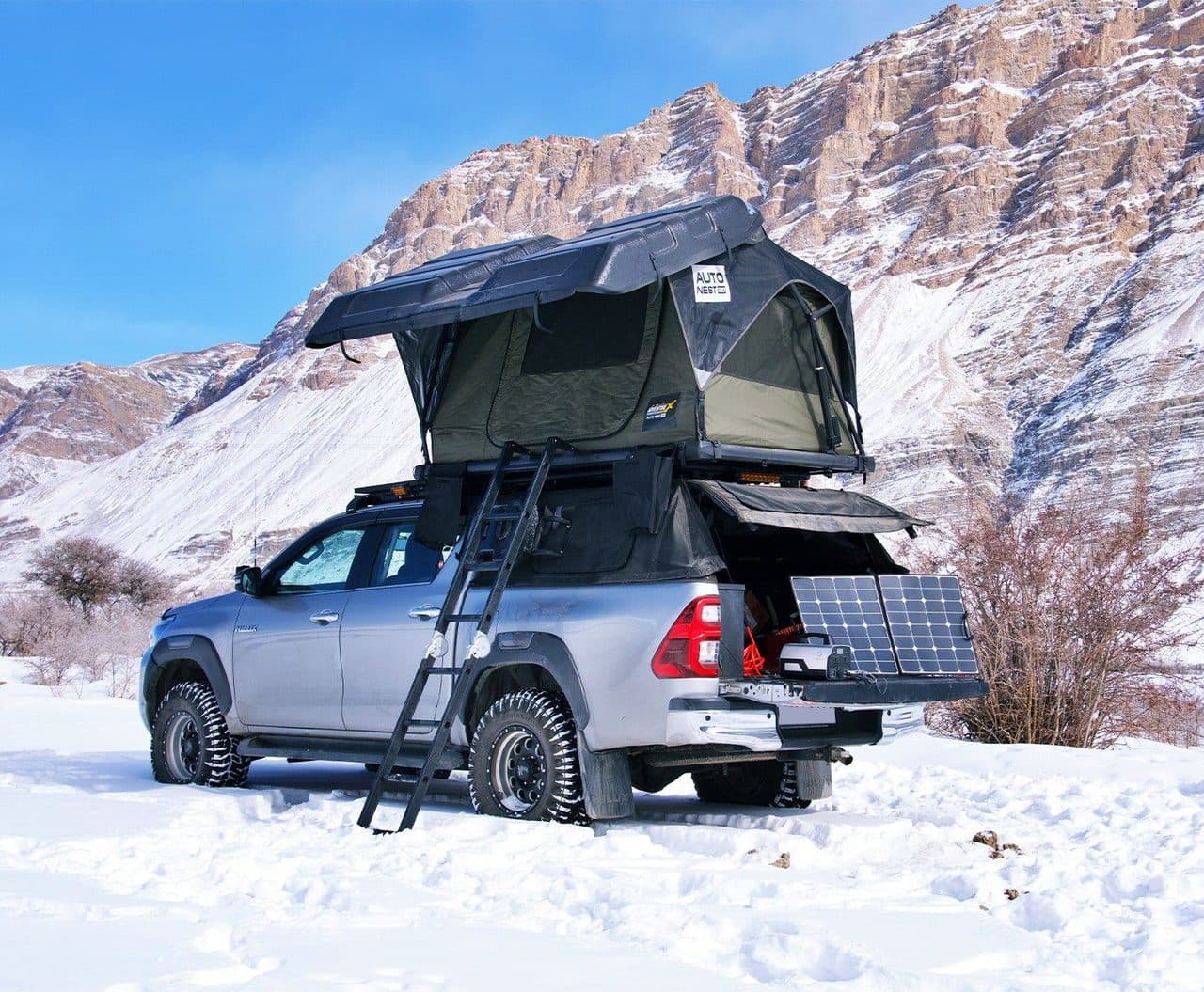
AutoNest120 , the pinnacle of innovation and comfort in overlanding gear. Designed for…
Price
₹2,35,000
Fits: Mahindra Thar · Mahindra Scorpio N +3
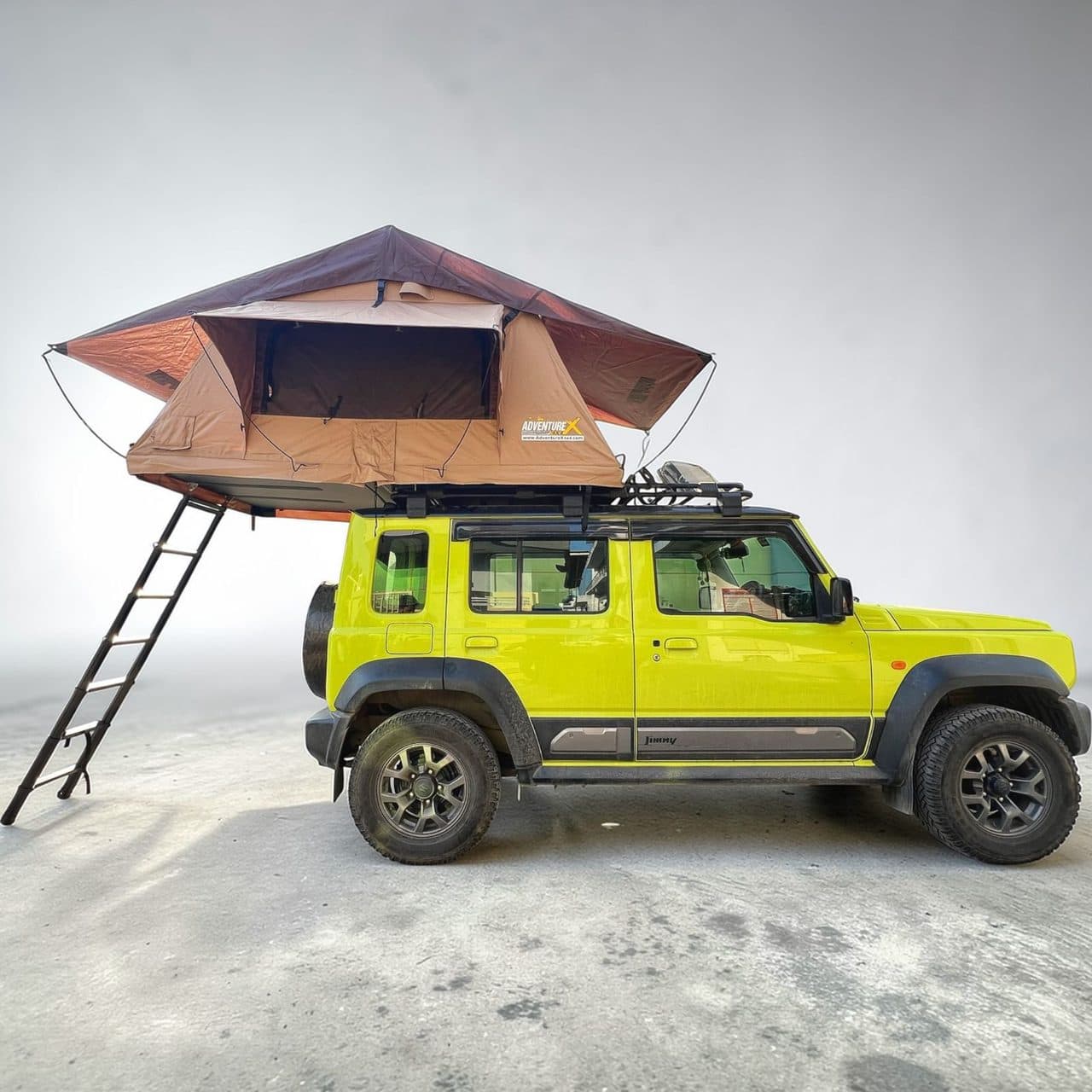
CampToprooftop tents
Engineered for serious overlanders, the CampTop 300Lux combines lightweight efficiency with…
Price
₹94,990
Fits: Mahindra Thar · Mahindra Scorpio N +3
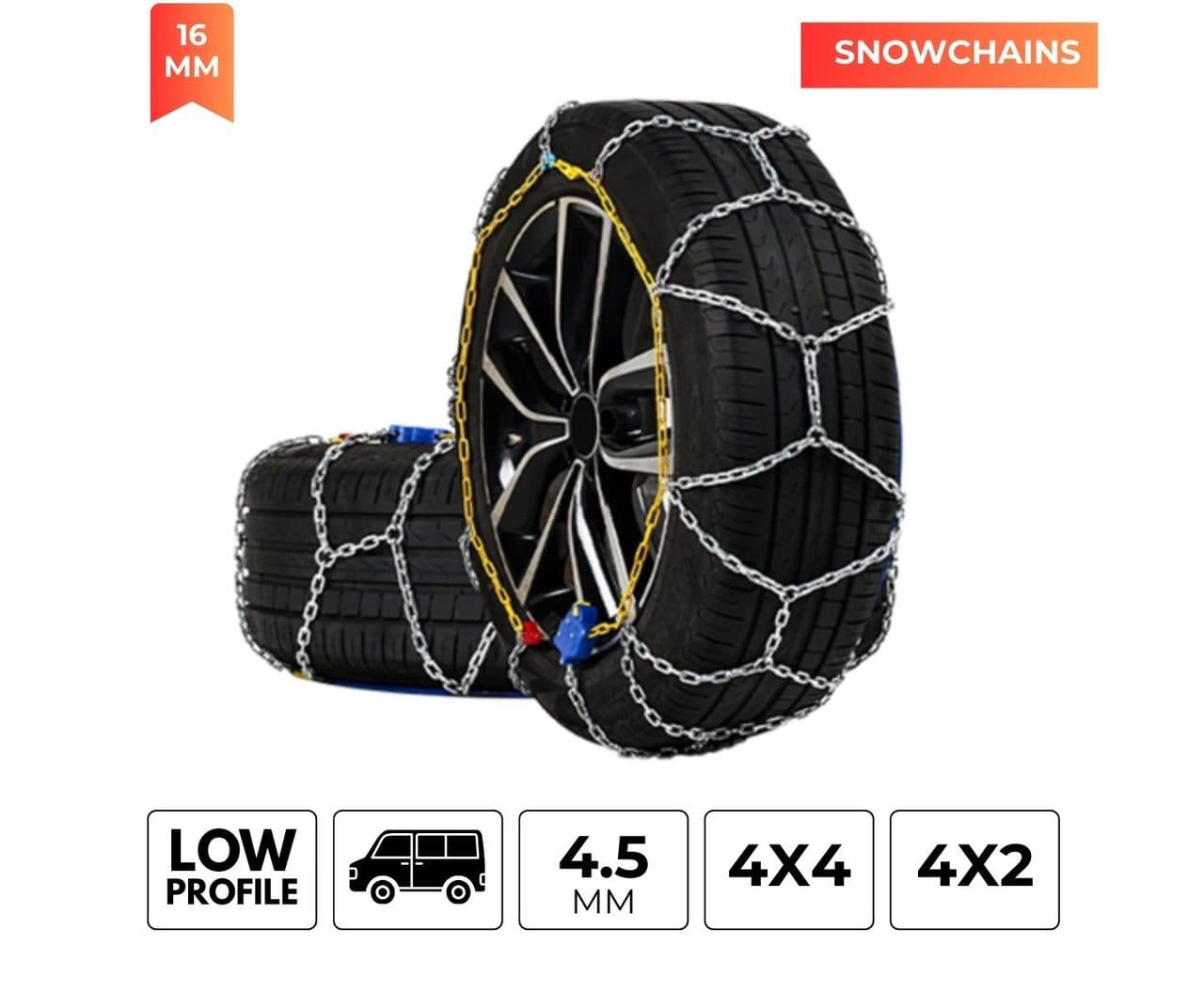
TractionXsnow chains
TractionX AX220 Snowchains combine rugged performance with smart convenience, featuring an…
Price
₹19,460
Fits: Toyota Hilux
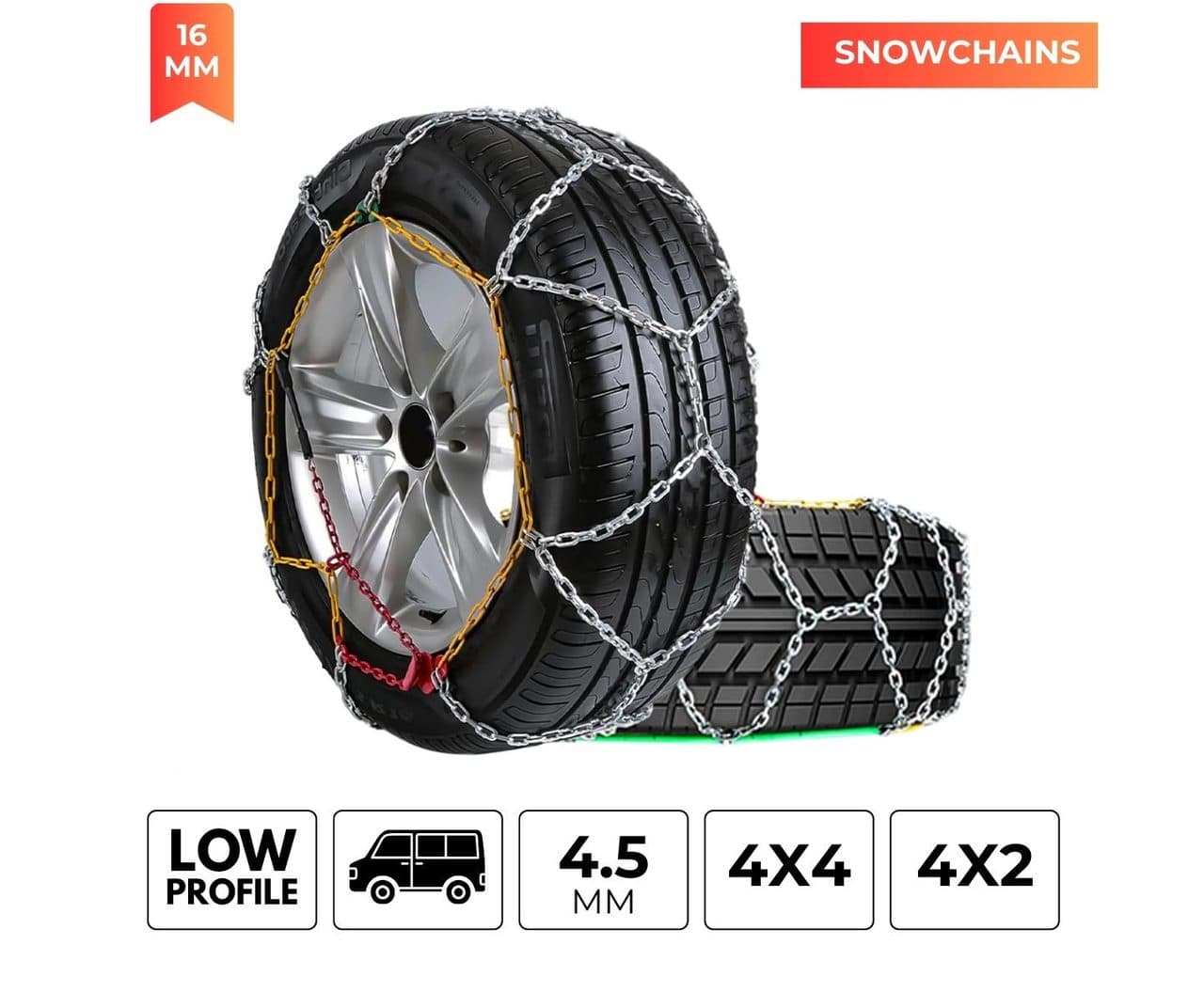
TractionXsnow chains
Discover the TractionX MX180 —engineered for powerful performance, durability, maximum grip,…
Price
₹10,788
Fits: Toyota Fortuner · Toyota Hilux +1
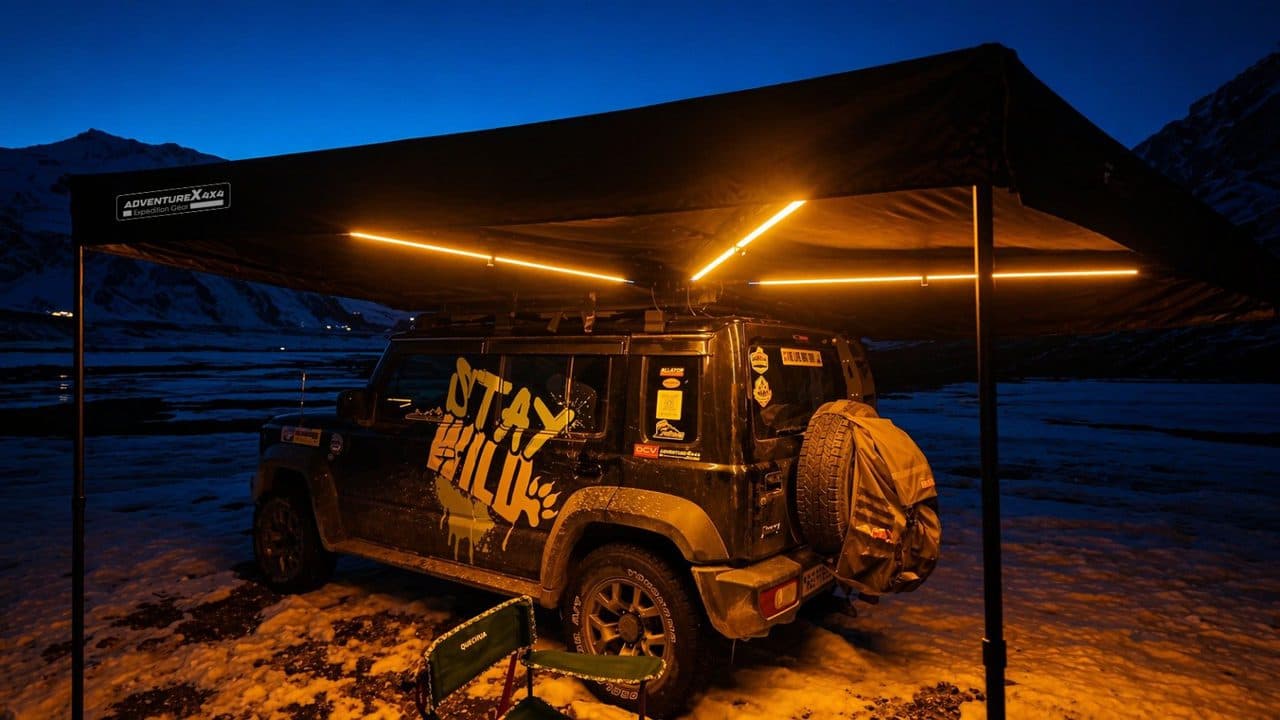
SaberLightawnings
The AdventureX4x4 SaberLight V2 270° Freestanding Awning is designed to transform your vehicle…
Price
₹69,990
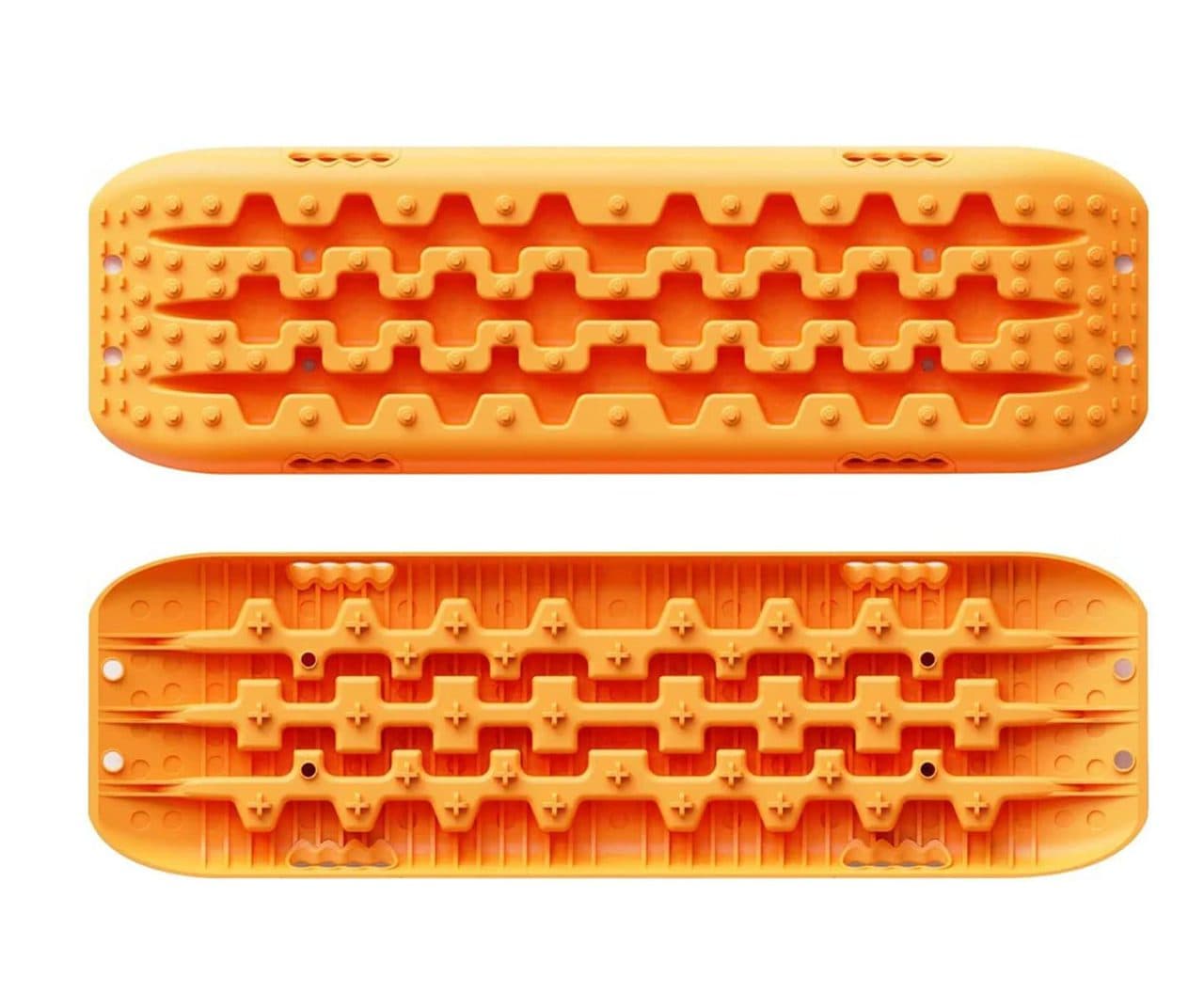
Field gearrecovery
Heavy-duty and lightweight, the ALL-TOP USA Recovery Traction Boards (Orange) deliver superior…
Price
₹12,082

Field gearrecovery
ALL-TOP Kinetic recovery rope, 1in x 20ft, rated at 48,000 lbs. High-visibility orange,…
Price
₹12,866
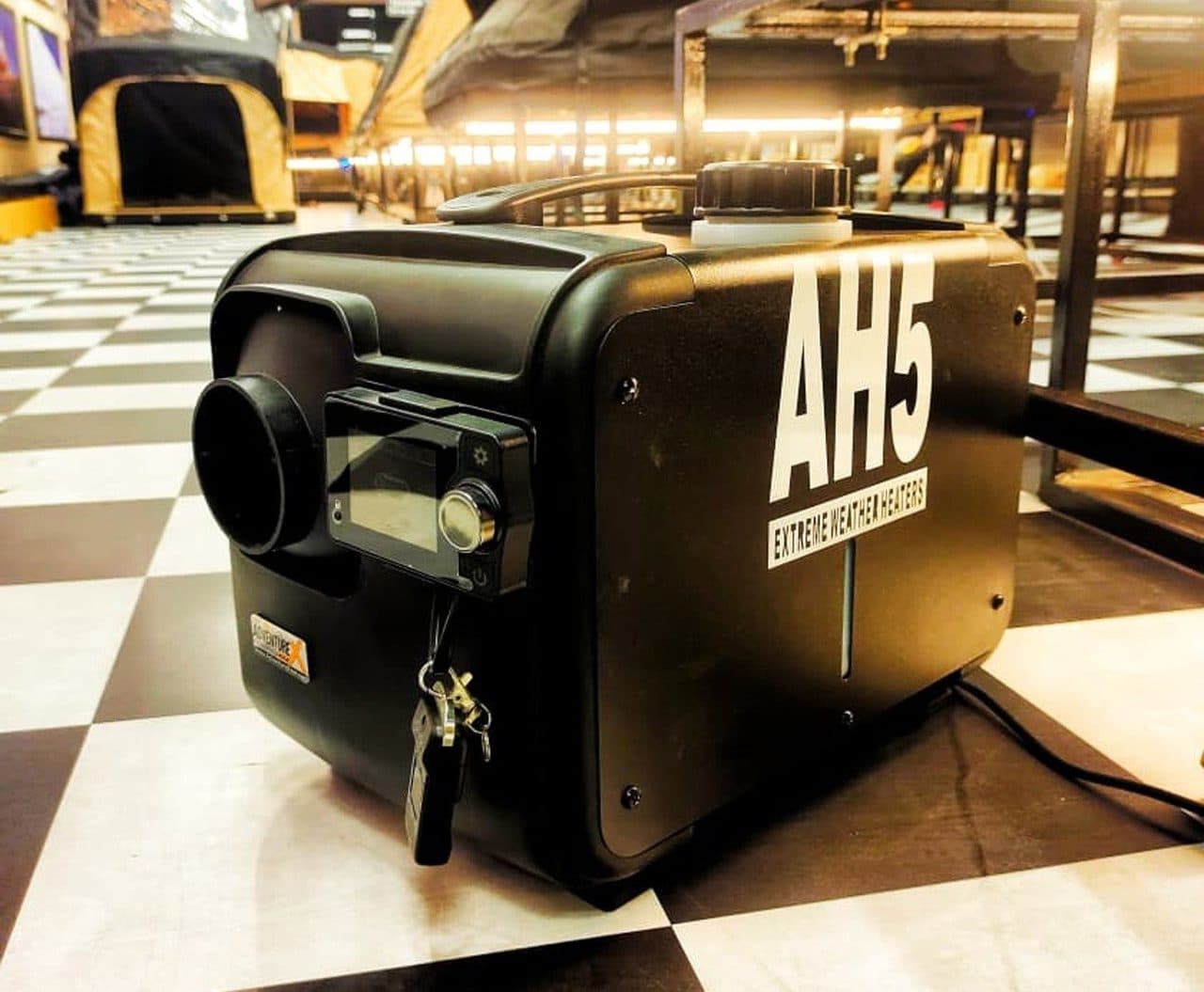
ThermaEvoextreme weather
The Adventure X4x4 ThermaEvo AH5 is a compact, high-efficiency diesel air heater designed for…
Price
₹39,990
The Land Rover Defender is the vehicle people buy when capability and comfort matter equally. The current model pairs genuine off-road hardware - a low-range transfer case, locking centre and optional rear differentials, configurable terrain modes and serious wheel articulation - with a cabin and ride quality that make a 14-day Himalayan loop feel less like an endurance test and more like a journey. On the Leh and Spiti circuits it is one of the most able machines you can point at a snowed-in pass, and it carries four people and a fortnight of kit in real comfort.
What shapes a Defender build is its roof. Unusually for an overlander, the modern Defender is engineered with a high factory dynamic roof-load rating - around 168 kg on the cross bars when correctly fitted - which is far more headroom than a Thar or a Jimny gives you. That single number changes the gear conversation: where we steer owners of lighter vehicles firmly toward the lightest tents, the Defender owner can specify our heaviest, most weatherproof hardshells and still sit comfortably inside the rating. The platform was built to carry a full expedition roof, so this dossier leans into that strength.
The trade-offs are price and the electronics. A Defender is an expensive, complex vehicle, and a long way from a Land Rover specialist you want it set up properly and serviced before a big trip. But as a platform to build a premium, comfortable, genuinely capable overland rig on, very little sold in India matches it - and the gear below is chosen to do justice to it.
On most overland builds, roof load is the constraint that limits your tent. On a Defender, it is the opposite - the roof is the strength you build around. As always there are two numbers. The dynamic load is what the roof can carry while you are driving; on the Defender's cross bars that figure is around 168 kg when the bars are correctly fitted, one of the highest factory ratings of any overlander sold here. The static load is what the tent and roof hold while parked, which is higher still - a tent's load rating describes people sleeping in it once you have stopped.
That generous dynamic allowance is why the Defender can carry our hardshell tents with margin. The Camptop AeroV V2 is an all-aluminium aerodynamic hardshell that belongs on a properly rated roof with load bars - exactly what the Defender provides - and the Bison61 is our premium side-opening hardshell with German Stabilus struts and a felt-lined insulated shell for cold nights. Both are real, heavy tents that a lightly-railed Jimny cannot take; the Defender takes them in its stride. If you prefer a tent that sets itself up, the AutoNest 120 - India's first auto-deploying tent - lists the Defender directly in its confirmed fitment.
The rule still holds even on a strong roof: put the tent up high and keep the dense, heavy items - water, recovery gear, tools, fuel - low and inside the vehicle. A 26-litre HydroX26 water tank carried in the load bay does more for handling than the same weight on the roof ever could. The Defender simply gives you the freedom to choose any tent in the range without the weight anxiety a smaller platform imposes. The best rooftop tent guide walks through the hardshell-versus-softshell decision in full.
The modern Land Rover Defender runs a large 255-section tyre - typically 255/70 R18 or 255/65 R19 / 255/60 R20 depending on wheel choice - and that big, heavy footprint maps to the top of our fitment ladder, the same band our AX220 and MX180 list for the Toyota Land Cruiser and LC Prado. The Defender is a heavy vehicle and almost always automatic, which is exactly what the auto-tensioning TractionX AX220 is built for: fit it, roll forward a few metres, and it draws itself tight with no kneeling in the snow to retension on a Baralacha or Chang La gradient. It is a set of 2 weighing 9.2 kg, carries TUV GS and ONORM V5117 certification, and uses the same carburised multi-alloy steel - Boron, Titanium, Manganese, Chromium and Carbon, heat-treated for 8 hours at 900C to a Vickers hardness of HV 720-780 - so it bites on glare ice, not just soft snow. If you would rather hand-fit and save, the manual TractionX MX180 covers the same large-tyre envelope. Both are ABS- and traction-control-compatible. Because Defender wheel and tyre options vary widely across trims and aftermarket fitments, confirm your exact sidewall size against the chain before ordering - a chained large tyre can foul the arch at full lock - and fit to the driven axle before the climb, never on the ice itself.
Fitment data sheet
For most Defender owners the choice is between two hardshells. The Camptop AeroV V2 is the aerodynamic option - an all-aluminium shell that cuts drag and wind noise on the highway, opens fast, and is built to carry real static and dynamic weight on a rated roof. The Bison61 is the premium expedition hardshell: side-opening on German Stabilus gas struts, wrapped in DarkShield fabric over a felt-lined insulated shell that holds warmth far better than a bare ABS clamshell on a sub-zero night. Both match the Defender's premium character, and both rely on the high roof rating the Defender uniquely provides.
If you want a tent that does the work for you, the AutoNest 120 is India's first auto-deploying rooftop tent and names the Land Rover Defender in its confirmed fitment list - it mounts on any cross bars rated for 75 kg or more of dynamic load, which the Defender comfortably exceeds. For trips that lean genuinely cold - winter Spiti, high camps on the Ladakh circuit - the CampTop 300Lux softshell is the warm specialist, with dual heater ports designed to take a diesel heater's ducting, a 60mm thermal-control mattress and a 3000mm+ waterproof rating on a 300 kg honeycomb base at 53 kg.
Match the tent to how you travel: the AeroV V2 for aerodynamic, fast hardshell touring; the Bison61 for premium insulation and convenience; the AutoNest 120 for hands-off deployment; the 300Lux when warmth in deep cold is the priority. Whichever you choose, the Defender's roof is rated for it - which is exactly the freedom this platform gives you over a lighter rig.
Snow chains are the item people skip and regret, and on a heavy Defender they matter more, not less - mass carries momentum down an icy descent that a lighter vehicle does not. The correct size is covered in the fitment box below: the automatic TractionX AX220 for most owners, or the manual MX180 if you prefer to hand-fit and save - both list the large Land Cruiser / Prado tyre band the Defender shares. Carry them on any Himalayan trip from October to April even when the forecast looks clear; a single overnight snowfall on the Baralacha or Chang La approach can turn a routine drive into a recovery. Fit them to the driven axle before the climb, not on the ice, and confirm your exact tyre size first because Defender wheel options vary so widely.
An awning is the comfort upgrade that turns a Defender from a vehicle you sleep on into a basecamp you live in. The 270 SaberLight V2 is freestanding - a strong aluminium arm structure that stands without legs in normal conditions - and wraps a 2-metre radius around the side and rear for a covered kitchen and living area in under a minute, single-handed. Add the optional wall set and it closes into a wind- and rain-proof shelter for a Ladakh high camp or a Northeast downpour.
For recovery, build from the ground up rather than buying a winch first. A pair of traction boards and a 1-inch kinetic recovery rope solve the overwhelming majority of real situations a heavy Defender finds - bogged in Rann salt, sunk to the sills in a Spiti snowdrift, or losing grip on a wet Northeast climb. The boards need no anchor point and both are rated to the -25C the Defender genuinely sees on a winter expedition. Add the ThermaEvo AH5 diesel heater - altitude-compensated to 5,000 m - for the nights, and you have a Defender ready for the routes that matter. When you want it run for you, our guided Ladakh Loop expedition crosses exactly this kind of terrain with a support vehicle and a mechanic in the convoy.
Because the modern Defender has one of the highest factory dynamic roof loads of any overlander sold in India (around 168 kg on correctly fitted cross bars), it can carry our heaviest hardshell tents with margin. For most owners the choice is the aerodynamic Camptop AeroV V2 or the premium side-opening Bison61, both built for a properly rated expedition roof. If you want a tent that deploys itself, the AutoNest 120 names the Defender in its confirmed fitment. For sub-zero trips the CampTop 300Lux softshell adds dual heater ports and a thermal mattress.
The modern Defender runs a large 255-section tyre - typically 255/70 R18, 255/65 R19 or 255/60 R20 depending on wheel choice - which sits in the top band of our fitment ladder, the same large envelope our chains list for the Land Cruiser and LC Prado. The automatic, self-tensioning TractionX AX220 is the one most Defender owners should buy; the manual TractionX MX180 covers the same band for less if you are happy to hand-fit. Both are TUV GS and ONORM V5117 certified and ABS-compatible. Because Defender wheel options vary widely, confirm your exact sidewall size before ordering.
The modern Defender's cross bars carry a dynamic (driving) load of around 168 kg when correctly fitted - among the highest factory ratings of any overlander sold in India, and far more headroom than a Thar or Jimny. That covers your cross bars plus the closed tent plus anything strapped on top while moving. The static (parked) load is higher still - a tent's load rating refers to people sleeping in it once you have stopped. This generous allowance is exactly why the Defender can run our heaviest hardshell tents. As always, keep heavy items like water and recovery low and inside, with only the tent up high.
Yes, if you are travelling between roughly October and April. The Defender's terrain modes and locking differentials help you go, but they do nothing to help you stop or steer once the tread packs with snow or glare ice - and a heavy vehicle carries real momentum down an icy descent. A certified set of TractionX chains (AX220 automatic or MX180 manual) in the boot is the difference between crossing a snowed-in Baralacha or Chang La and being turned back or towed. Fit them to the driven axle before the gradient, not on the ice in the dark.
Five things cover most expeditions: a hardshell rooftop tent the Defender's rated roof can carry (Camptop AeroV V2, Bison61 or auto-deploying AutoNest 120; CampTop 300Lux for cold), the correct large-tyre TractionX chains (AX220 or MX180), a 270 SaberLight V2 awning for a fast camp kitchen, a recovery floor of traction boards plus a kinetic rope, and a ThermaEvo AH5 diesel heater for sub-zero nights above 3,500 m. Carry a HydroX26 water tank low in the load bay, and the Defender is ready for Ladakh and Spiti.
Yes - the modern Defender is one of the most capable and comfortable overland platforms sold in India. It pairs genuine off-road hardware (low-range transfer case, locking differentials, configurable terrain modes and real articulation) with a cabin and ride that make a long Himalayan loop comfortable, and an unusually high roof-load rating that lets it carry the heaviest gear in our range. The trade-offs are price and the need to have a complex vehicle properly set up and serviced before a big trip. Built well, it carries four people and a fortnight of kit anywhere the road goes.
Buying guides for the Defender
The rooftop tents, prices and gear we recommend specifically for the Land Rover Defender.
Build your Defender
Every item here is built, stocked and backed by AdventureX4x4 — engineered for Indian cold and proven from Spiti to Ladakh. Pick a starting point, or talk to our outfitters about a full Defender build.
Field-tested in extreme conditions
Researched & proven on Spiti, Ladakh & Lahaul
Our own proprietary range
AutoNest · TractionX · ThermaEvo — not resold gear
Free shipping over ₹25,000
Dispatched across India with a GST invoice
TÜV-certified snow chains
TractionX — TÜV GS & ÖNORM V5117 rated
Build your rig. Jump straight to the gear, guides and per-vehicle build dossiers our overlanders reach for most.
We use essential cookies to run AdventureX4x4 and privacy-light, IP-anonymised analytics to improve it. By continuing you agree to our Cookie Policy and Privacy Policy.