Skip to content
AdventureX4x4

From the salt

Rann of Kutch 4x4 trip

A Rann of Kutch 4x4 trip is the easiest great overland drive in India — a low-altitude run across the white salt desert of Kutch, Gujarat, with mild winter days, hard-packed flats instead of high passes, and full-moon nights camped on the glowing salt. It is the trip we point first-time overlanders toward. Go between November and February, thread the Great and Little Rann, and pack for desert heat — shade and water — not Himalayan cold. This is the field guide to doing it right.

Season
Nov – Feb
Signature night
Full-moon Rann
Grade
Beginner · ~850 km
§ 01Why start here
A 4x4 on the open salt-and-sand flats of the Rann of Kutch under a wide winter sky

The best first overland trip in India

If you have a 4x4, a rooftop tent and the itch to actually use them, the Rann of Kutch is where we tell you to begin. Everyone fixates on Ladakh and Spiti, and both are extraordinary — but they are also unforgiving classrooms. A first-timer who points a fresh build at a 4,500 m pass is learning altitude, ice, recovery and camp-craft all at once, with no margin. Kutch lets you learn the same overland rhythm — load the rig, find a camp, pitch the tent, cook in the dark, break it down at dawn — on warm, forgiving, low-altitude ground. The driving is genuinely easy: it is mostly sealed two-lane highway across Gujarat, with the off-tarmac sections being firm, flat, predictable salt and sand rather than boulder fields or river crossings.

That accessibility is the whole pitch, and it is why our own Rann & Kutch expedition is graded Beginner — six relaxed days, roughly 850 km, no pass above a few hundred metres. You spend the saved bandwidth on the things that make overlanding stick: getting comfortable reversing a trailer of fabric and aluminium onto a campsite, learning how your awning sets up in a crosswind, working out your own water and power rhythm. Do Kutch first and Ladakh stops being intimidating, because the camp-craft is already muscle memory. Skip it, and you spend your big Himalayan trip fighting your own gear instead of looking at the mountains.
§ 02Great vs Little
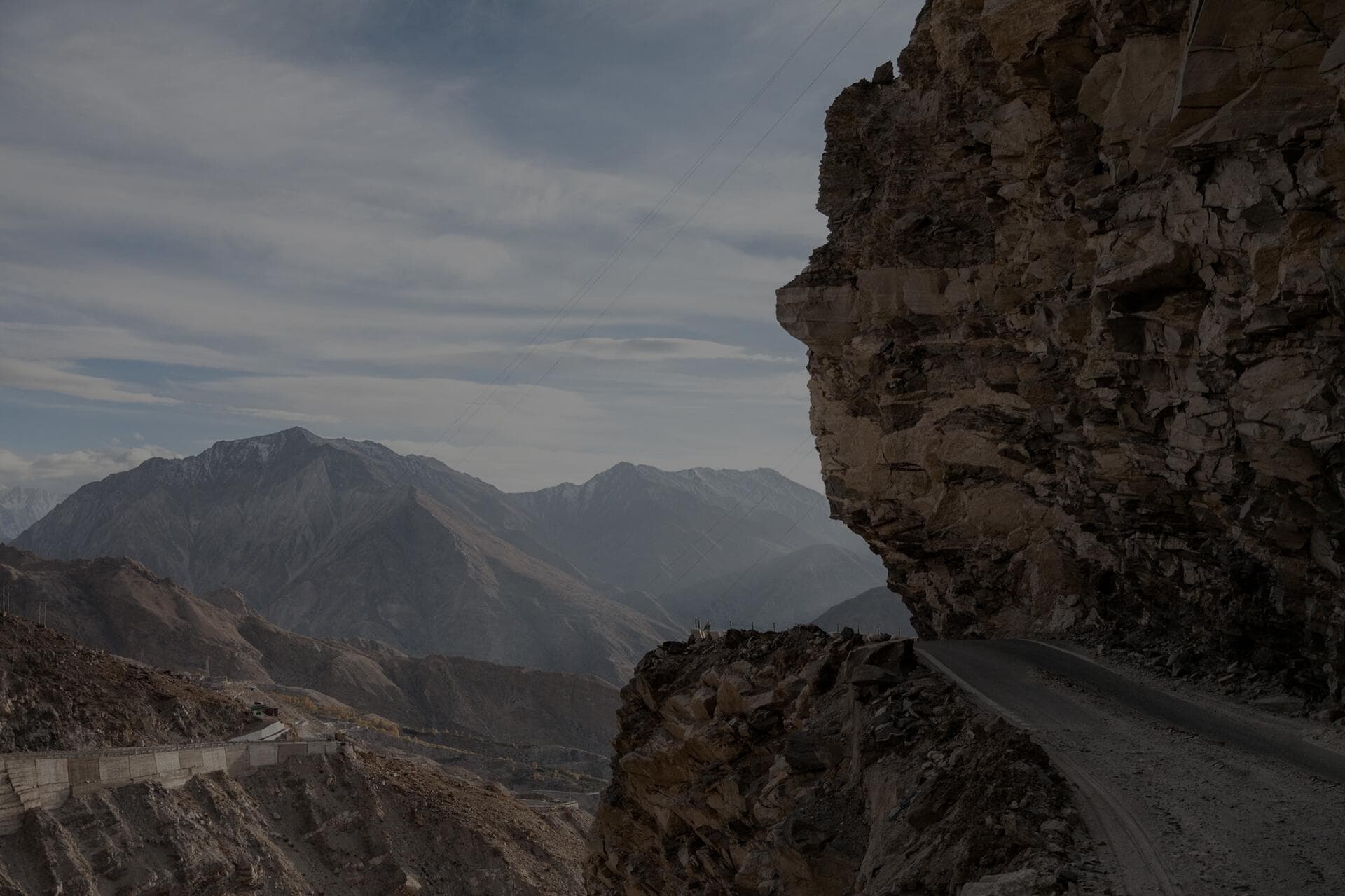
An overland route winding through the open, arid terrain of western Gujarat

The two Ranns, and how to thread both

"The Rann" is really two distinct deserts, and a good trip takes in both. The Great Rann of Kutch is the famous one — the vast white salt desert north of Bhuj, where a seasonal arm of the Arabian Sea evaporates each winter and leaves a blinding crust of salt stretching flat to the horizon. The viewing-and-camping heart of it is Dhordo, the gateway village near the international border, and standing on that white plain at dusk with nothing but salt in every direction is the image people carry home. The Little Rann of Kutch, to the southeast, is a different landscape entirely: a browner, scrubbier salt marsh that is the last refuge of the Indian wild ass, protected inside the Wild Ass Sanctuary.

Between and around the two sit the Kutchi craft villages — Ajrakhpur with its block-printers, Nirona with its rogan painters and copper-bell makers, Hodka and Bhirandiyara with embroidery and mud-and-mirror Bhunga houses. The natural loop runs the Little Rann and its wildlife first, climbs into Bhuj for the craft circuit, then pushes north to the Great Rann at Dhordo for the headline white-desert night, before dropping to the coast at Mandvi. That is exactly the spine of our six-day route, and even if you self-drive it independently, threading wildlife, craft and salt desert into one trip is what turns a single photo-stop into a proper expedition.

§ 03Full-moon nights
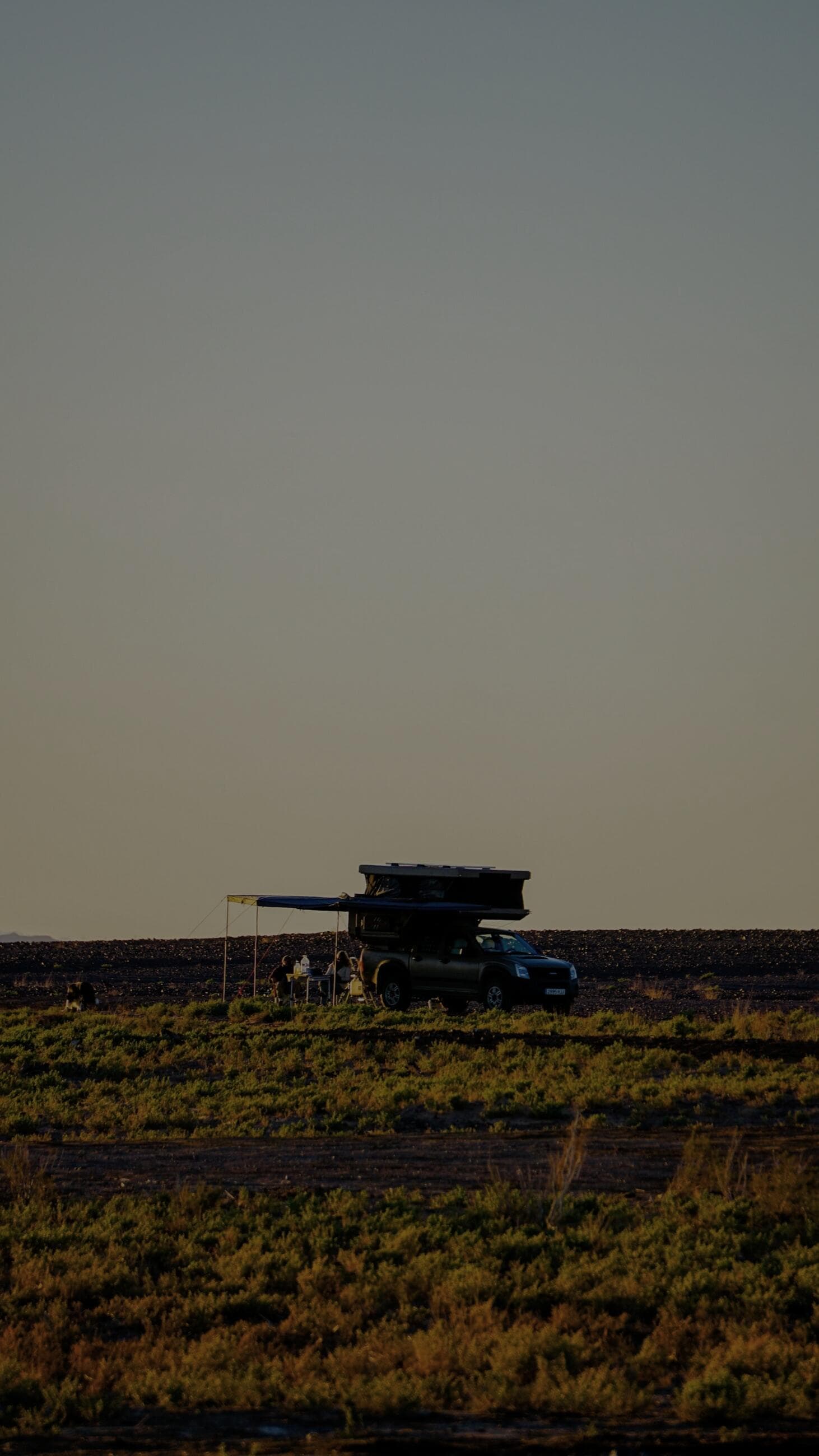
A rooftop-tent camp pitched on open ground under a bright, clear night sky

Camping on the white desert under a full moon

The reason to time a Rann trip to the full moon is simple: the salt desert is at its most surreal under moonlight. On a clear full-moon night the white crust catches and throws the light until the whole plain glows a soft silver, the horizon dissolves, and you can walk out onto the flats and read by the moon alone. This is the experience the Gujarat tourism calendar — the Rann Utsav, which runs through the winter at Dhordo — is built around, and it is why the camps fill on full-moon weekends. It is also a winter-only gift: those same nights are mild enough to sit out late around a fire, which simply is not true in the desert summer.

Pitch a rooftop tent on the firm ground at the desert's edge and you get the best of it — up out of the dust, zipped against the fine salt that gets into everything, with the flats at your doorstep at moonrise. A tent like our CampTop 250, on its 300 kg-rated aluminium base with hot-stitched waterproof seams and a transit cover for the long dusty highway run in, is well suited to exactly this: a clean, sealed sleeping platform that shrugs off blown salt and the occasional unseasonal shower. The one rule particular to the salt flat is to camp at its margins on firm ground, not to drive deep onto soft or damp crust chasing a photo — wet salt will bog a heavy rig in seconds, and there is no easy recovery out in the middle of a white nowhere.

§ 04Gear for heat
Overland gear and a vehicle set up for shade and self-sufficiency in arid terrain

Why the desert problem is heat, not cold

Everything you read about Himalayan overlanding is about staying warm; Kutch flips that. Even in the cool season the midday sun on an open white salt plain is relentless, glare bounces straight back up off the crust, and there is essentially no natural shade anywhere on the flats. The single most useful piece of kit here is therefore an awning. A 270-degree freestanding unit like our SaberLight throws a wide wrap-around shaded room off the side of the vehicle in under a minute — heavy-duty UV-resistant ripstop canopy, deployable without legs for a quick lunch stop and pegged out with its support legs for a longer camp. After a morning on the salt you will retreat under it gratefully, and so will everyone you are travelling with; it turns the vehicle into a basecamp with a roof.

Airflow and water round out the desert kit. A rooftop tent with good cross-ventilation and a big mesh skylight is far more important here than a heater — you want the desert breeze moving through, not sealed out. Carry markedly more water than a mountain trip: the dry heat dehydrates you without the obvious sweat, so plan generous drinking water per person per day on top of cooking and washing, and top up in Bhuj before the northern push because resupply thins out fast toward the border. Keep tyres aired up on the highway and air down a few PSI for grip and float if you do venture onto soft sand, and stash sun shades, lip balm and proper sunglasses where you can reach them — the glare off white salt is genuinely fierce.

§ 05Plan & permits
The open white horizon of the Great Rann of Kutch salt desert at golden hour

Routes, permits and getting it right

Most Kutch trips stage out of Ahmedabad and use Bhuj as the regional base — it is the last proper town for fuel, cash, supplies and vehicle help before the Great Rann, so top everything up there. The Great Rann around Dhordo sits close to the international border, which means a permit and a Border Security Force checkpost: you buy the Rann permit at the entry gate (carry photo ID for everyone, and the vehicle papers), and the white-desert viewing zone closes after dark, so clear the gate and reach your camp before sunset rather than arriving in the night. The Little Rann's Wild Ass Sanctuary similarly runs on timed entry and is best done as an early-morning or late-afternoon safari when the wildlife and the light are both at their best.

Season is the one non-negotiable. The Rann is under water through the monsoon and only dries into a firm, drivable salt crust by late autumn, so the window is roughly November to February; come too early and the flats are still soft and wet, come after February and the desert heat starts to make camping unpleasant by day. Build the trip slow — this is a place to linger at a craft village or sit out a full-moon night, not to rack up kilometres — keep your fuel range honest on the longer empty stretches, and respect the salt by camping on firm margins. None of this is hard, which is precisely the point: get the season, the permits and the water right, and the Rann of Kutch gives you the full overland experience with almost none of the risk. If you would rather have the route, the permits and the camps handled while you simply drive and learn, that is exactly what our guided Rann & Kutch expedition is for.

“Learn the camp-craft on warm salt, not on a frozen pass. Do Kutch first and the big mountains stop being scary — your hands already know the work.”

Dinesh, on where to point a first-time overlander

Rather have it handled?

Cross the white desert with the route and permits sorted

Our Rann & Kutch expedition is the guided version of this page — a relaxed six-day winter run from Ahmedabad across the Little Rann and its wild ass, up through the Kutchi craft villages to a full-moon camp on the Great Rann at Dhordo, and down to the coast at Mandvi. Lead vehicle, all Rann permits and campsite fees, recovery support and a full rooftop-tent sleep system if you rent our rig. The easiest, most forgiving way to take a first overland trip.

Guided · beginner grade

6 days · Nov – Feb

Ahmedabad to the Great Rann and the Kutch coast, the easy way.

§ 06Frequently asked

The Rann, answered

The questions we get from first-time overlanders planning a Kutch run — starting with the one about timing.

November to February. The Rann is a seasonal salt desert: it floods during the monsoon and only dries into a firm, drivable white crust by late autumn. December and January are the classic months — clear, mild days and cold-enough nights to enjoy a fire — and full-moon weekends are the most popular, since the salt flat glows under moonlight. Come before November and the flats are still soft and wet; come after February and the desert heat makes daytime camping unpleasant. The Rann Utsav at Dhordo runs across this same winter window.

It is the one we recommend first. The driving is easy — mostly sealed two-lane highway with firm, flat salt-and-sand sections rather than the boulders, ice and river crossings of the Himalaya — and it is all at low altitude, so there are no acclimatisation or oxygen concerns. That lets a first-timer learn the real overland rhythm (loading the rig, finding camp, pitching the rooftop tent, cooking in the dark, breaking down at dawn) on forgiving ground. Our Rann & Kutch expedition is graded Beginner for exactly this reason. Do Kutch first and a later Ladakh or Spiti trip stops being intimidating, because the camp-craft is already second nature.

They are two distinct deserts. The Great Rann of Kutch is the famous white salt desert north of Bhuj, around Dhordo near the international border — a vast, blinding flat of salt that stretches to the horizon and is the headline full-moon camping spot. The Little Rann of Kutch, to the southeast, is a browner salt marsh and the last home of the Indian wild ass, protected inside the Wild Ass Sanctuary and visited on a timed safari. A complete trip threads both, along with the Kutchi craft villages (Ajrakhpur, Nirona, Hodka) that sit between them.

Yes — camping on the edge of the white Rann under a full moon is the trip's signature night, and a rooftop tent is ideal for it. It lifts you up out of the fine salt and dust, seals against blown crystals, and puts the flats at your doorstep at moonrise. A sealed, waterproof platform such as the CampTop 250 — a 300 kg-rated aluminium base with hot-stitched seams and a transit cover for the dusty highway run — suits it well. The one firm rule: camp on the solid ground at the desert's margins, never drive deep onto soft or damp salt chasing a shot, because wet crust will bog a heavy vehicle instantly with no easy recovery.

Shade, airflow and water — because the desert problem here is heat, not cold. There is almost no natural shade on the salt, so a freestanding awning (a 270-degree SaberLight sets up a wide shaded room off the vehicle in under a minute) is the most useful single item. A rooftop tent with strong cross-ventilation beats a heater every time; you want the breeze moving through. And carry far more water than a mountain trip — the dry heat dehydrates you quietly — topping up in Bhuj before the northern push. Add good sunglasses and sun shades: glare bouncing off white salt is genuinely fierce.

Yes, for the sensitive zones. The Great Rann around Dhordo sits near the international border, so there is a Border Security Force checkpost and a Rann permit you buy at the entry gate — carry photo ID for everyone in the vehicle plus the vehicle papers, and note the white-desert viewing area closes after dark, so clear the gate and reach camp before sunset. The Little Rann's Wild Ass Sanctuary runs on timed entry and is best as an early-morning or late-afternoon safari. Bhuj is the base town to sort fuel, cash and supplies before heading to the border.

All expeditions
WhatsApp us