Snow chains
Snow Chains for Spiti and Ladakh: Where You Actually Need Them in Winter
Do you need snow chains for Spiti or Ladakh in winter? Where chains matter, how many sets to carry, and a fully supported expedition alternative.
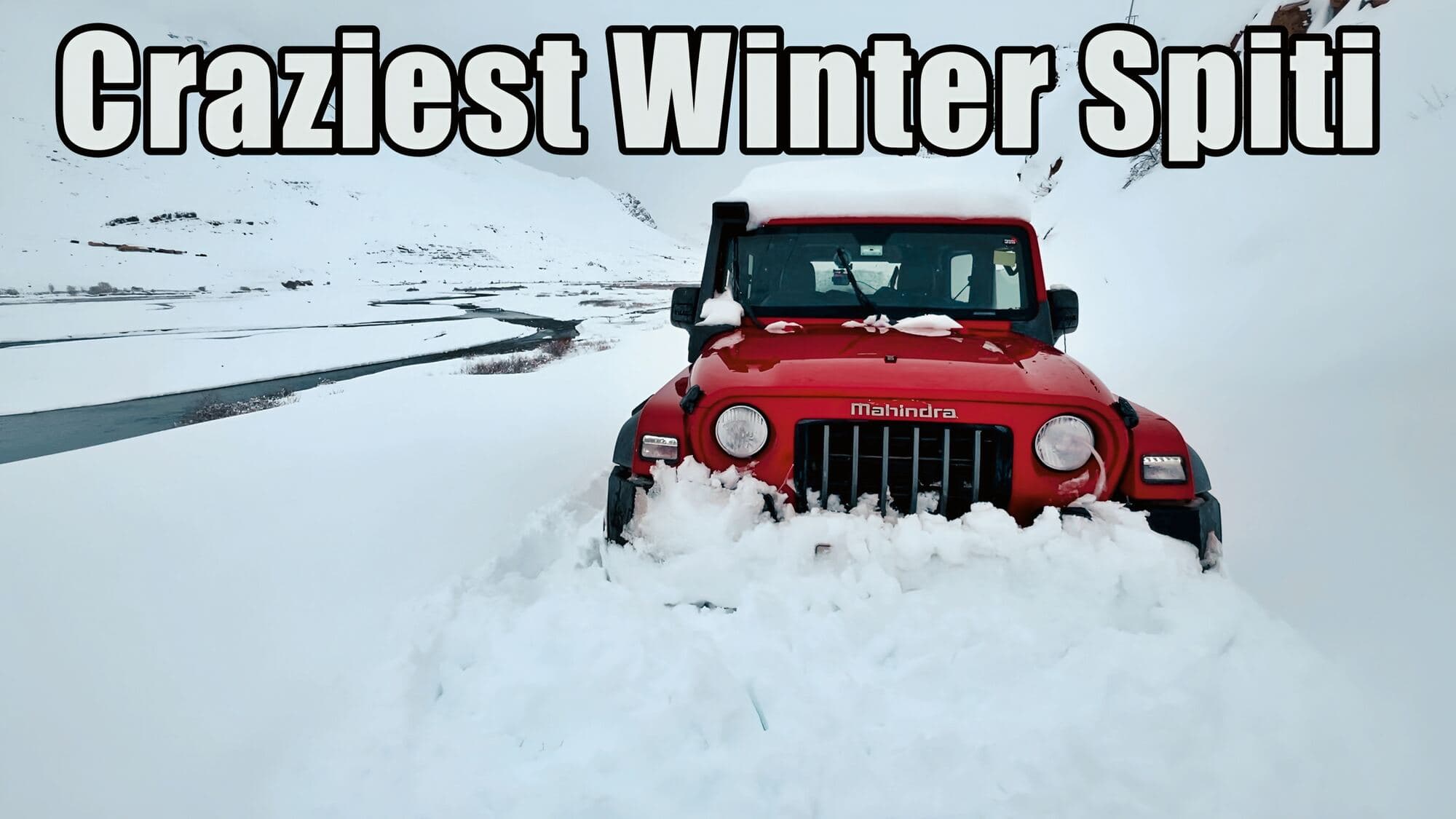
Winter Spiti does not care how good your driving is. It cares whether you have grip. The frozen circuit through Lahaul and Spiti, and the high passes toward Ladakh, turns from manageable to lethal in the length of one shaded switchback - tarmac one minute, polished blue ice the next, with a drop on the outside and no margin to learn on. So the real question is not whether snow chains exist for these roads. It is exactly where you need them, how many sets to carry, and whether you want to self-manage all of that or hand it to a team that does it for a living. Let us answer all three from experience.
Do You Actually Need Snow Chains for Spiti?
In deep winter, on the genuine Spiti and Ladakh circuit, the honest answer is yes - carry chains, and be ready to fit them. This is not the soft-snow tourism of a Manali day trip. From roughly December through March the high sections ice over hard, the sun never reaches the worst corners, and a 4x4 with good winter tyres can still slide helplessly without chains. You may drive for hours and never fit them. But the one stretch where you need them is the stretch that ends trips, so you carry them the way you carry a spare - not because you expect a puncture, but because the consequence of not having one is unacceptable.
The nuance is that you will not run chains the whole way. You fit them for specific icy sections and pull them off when the road clears, because running chains on bare tarmac wears them and slows you down. Knowing the where is what separates a smooth winter run from a white-knuckle one.
Where and When You Actually Need Chains on the Circuit
Ice on this circuit is not random. It collects in predictable places, and once you learn the pattern you can read the road ahead and fit chains before you are committed, not after you are already sliding. These are the zones to respect:
- Kunzum La approaches: high, shaded, and wind-scoured near 4500 m. The switchbacks below the pass hold ice long after the valleys have thawed and are a classic chain-on zone.
- Atal Tunnel approaches and the Sissu side: the tunnel keeps the route open through winter, but the shaded approaches and the descent toward Sissu and Lahaul glaze over fast, often early morning and late evening.
- Frozen switchbacks and north-facing cuttings: any hairpin that sits in permanent shade is a candidate. The corner you cannot see around is exactly where you do not want to discover there is no grip.
- High Ladakh passes: on the longer Ladakh circuit the big passes above 5000 m carry packed snow and ice on the steep pitches. Chains for Ladakh follow the same logic - fit for the climb, remove when it clears.
- Early morning and after dusk: meltwater that ran across the road in afternoon sun refreezes into a clear sheet overnight. The same corner that was fine at 3 pm is glass at 8 am.
The discipline is simple. When you see a shaded climb or a north-facing hairpin coming, stop somewhere safe and fit before the ice, not on it. Fitting chains while already stuck on a frozen gradient, in the wind, with traffic behind you, is the situation you are trying to avoid - so fit early and stay ahead of the road.
How Many Sets: Driven Axle or All Four?
A TractionX set is a pair, which covers one axle. For most winter Spiti and Ladakh runs, one set fitted to the driven axle is the baseline - it gets you traction and control through the icy sections that matter. Remember that chains belong on the wheels your engine actually turns, so fit them to the driven axle and re-tension after the first few kilometres once they bed in.
Two sets - all four wheels - is the serious-conditions answer, and there are good reasons to carry a second pair on a committed winter expedition. Chains on all four give you balanced braking and steering on the steepest ice, which matters enormously on a loaded descent. They also mean that if one chain is damaged, your trip is not over. For a casual winter visit, one set on the driven axle is the sensible minimum. For a deep-winter crossing of the high passes with a heavy rig, four-wheel coverage is the confident choice - and in that cold, run TractionX Spiders as your retainer so the chains stay tight when ordinary rubber tensioners would go brittle below -20C.
- One set (driven axle): the baseline for most winter Spiti and Ladakh trips - traction and control through the icy sections.
- Two sets (all four wheels): for deep-winter, heavy-rig, or steep-pass conditions - balanced braking and steering, plus a spare if one chain is damaged.
- Add Spiders: in genuine deep cold, run the cold-weather retainer with your chains so tension holds below -20C.
Carrying Chains vs Fitting Chains
There is a world of difference between owning chains and being able to fit them at -15C with cold hands and failing light. Carry them somewhere you can actually reach - not buried under every duffel in the boot - along with a pair of grippy waterproof gloves, a headlamp, and a foam mat or piece of cardboard to kneel on. Practise fitting your set once at home, in the daylight, in the warm. The roadside below Kunzum is the worst possible classroom, and the people who struggle there are almost always the people fitting their chains for the very first time.
This is also where the AX versus MX choice from your purchase pays off. If you went automatic, your AX set self-tensions once you roll forward, which is a genuine relief when your fingers have stopped cooperating. If you went manual MX, you traded a little roadside effort for value and toughness - which is fine, as long as you have practised so the manual tensioning is muscle memory and not a puzzle you are solving for the first time in a blizzard.
The Fully Supported Alternative: AdventureX4x4 Spiti Frozen
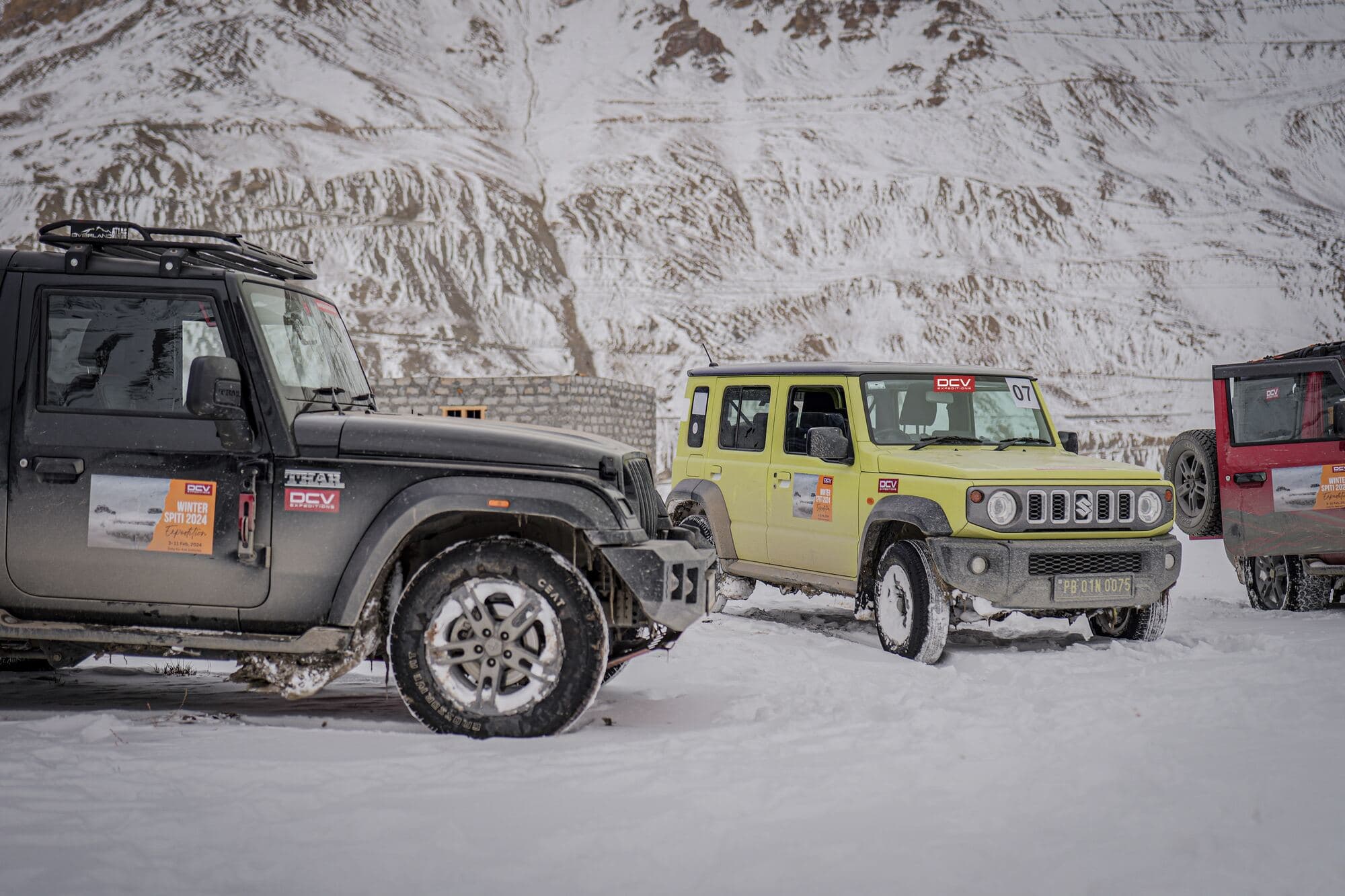
Not everyone wants to self-manage chains, read ice, and gamble on their own roadside fitment at altitude - and that is a completely reasonable position. For those drivers, AdventureX4x4 runs the Spiti Frozen guided expedition: a nine-day, fully supported winter crossing of the frozen circuit where the hard parts are handled by people who do this every season. You get the experience of winter Spiti without carrying the entire risk of it on your own shoulders.
On a supported expedition the chain decisions are made by a team that knows precisely which corner below Kunzum ices first and when the Sissu descent turns to glass. Vehicles are prepared for the cold, the convoy moves with backup, and you drive a route that has been planned around the conditions rather than discovered on the fly. If it is your first frozen Himalayan winter, or you simply want to enjoy the landscape instead of managing it, Spiti Frozen is the way to see the circuit at its most spectacular with the safety margin built in.
On the winter Spiti circuit, the smartest drivers fit chains before the ice, not on it - and the ones who would rather not gamble on that timing let our Spiti Frozen team handle it.
AdventureX4x4
Frequently Asked Questions
Do I need snow chains for Spiti in winter?
Yes. In deep winter, from roughly December through March, you should carry snow chains for Spiti and be ready to fit them. The high, shaded sections near Kunzum and the icy approaches around the Atal Tunnel can defeat even a good 4x4 on winter tyres. You may not run them the whole way, but the one icy stretch where you need them is the stretch that ends trips.
Do I need snow chains for Ladakh as well?
Yes - snow chains for Ladakh follow the same logic as Spiti. The high passes above 5000 m carry packed snow and ice on the steep pitches, especially in shade and after dusk when meltwater refreezes. Fit chains for the icy climbs and remove them when the road clears. Carry them the way you carry a spare: not because you will need them every hour, but because the consequence of not having them is unacceptable.
How many sets of snow chains should I carry?
For most winter Spiti and Ladakh trips, one set on the driven axle is the baseline - a TractionX pair covers one axle. For deep-winter conditions, a heavy rig, or the steepest passes, carry two sets for all four wheels: you get balanced braking and steering, plus a spare if one chain is damaged. In genuine deep cold, add TractionX Spiders so the chains stay tight below -20C.
Where exactly do I fit chains on the Spiti circuit?
Fit chains on the predictable ice: the shaded switchbacks below Kunzum La near 4500 m, the Atal Tunnel approaches and the Sissu descent, and any north-facing hairpin that never sees sun. Early morning and after dusk are the riskiest times, when meltwater refreezes into a clear sheet. Stop and fit before the ice, somewhere safe, rather than trying to fit chains once you are already stuck on a frozen gradient.
What is the AdventureX4x4 Spiti Frozen expedition?
Spiti Frozen is AdventureX4x4's nine-day, fully supported guided winter expedition across the frozen Spiti circuit. It is the alternative for drivers who would rather not self-manage chains and ice at altitude. A team that knows the circuit handles the chain decisions, the vehicles are prepared for the cold, and the convoy moves with backup - so you experience winter Spiti at its most spectacular with the safety margin built in.
Ready to kit out?
Everything in this guide is built, stocked and backed by AdventureX4x4 — engineered for Indian cold and proven from Spiti to Ladakh.