Skip to content
AdventureX4x4

Why we run a convoy

Guided winter Himalaya expedition

A guided winter Himalaya expedition is a supported self-drive — you drive your own 4x4 into the frozen high Himalaya, but in a convoy led by a guide who knows the route, with a mechanic, recovery support, satellite comms and emergency oxygen carried for the whole group. This is the case for going supported: what a lead vehicle, a medic and route knowledge actually buy you when Kaza is at −30 °C and there is no help past Reckong Peo.

Format
Supported self-drive
Kaza nights
−20 to −30 °C
High day
Komic 4,587 m
Convoy
Guide · mechanic · medic
§ 01The support stack

Four things a convoy carries that a solo rig cannot

A supported self-drive is not about taking the adventure away — you still drive every kilometre. It is about who carries the safety net. These are the four pillars that make the difference between a hard solo gamble and a managed winter crossing.

§ 01

A lead guide who knows the route

The first thing a convoy carries is judgement. Our lead guide has driven the winter line repeatedly and reads it in real time — which shaded switchback above Nako is glazed before noon, when to hold for the sun, which approach is actually open this week, and where the weather shuts the road. That is the one part of the safety system you cannot order as a product.

§ 02

A mechanic and recovery support in the group

Past Reckong Peo there is no garage and no tow truck. So we bring the workshop: a travelling mechanic, a spares kit for the common winter failures, and recovery gear — traction boards, snatch strap, shovel — with people who know how to use them. A waxed fuel filter, a dead battery or a stuck vehicle becomes a roadside fix instead of the end of your trip.

§ 03

Emergency oxygen and a first-aid medic

Acute mountain sickness is the quiet danger at these heights, and the only real treatment for the serious form is to lose altitude fast. Our convoys carry supplemental oxygen and a first-aid medic so a bad night at Kaza or a hard day at Komic is managed and escorted down, not improvised alone in the dark at −25 °C.

§ 04

Satellite comms and a moving plan

Mobile coverage is patchy to absent past Pooh, so the convoy runs its own satellite communication and a daily plan with slack days built in for weather. If one vehicle has a problem the whole group knows; if the road closes ahead, the plan flexes rather than breaks. You are never the only person who knows where you are.

§ 01Why supported
A 4x4 convoy on a snow-bound winter route through the high Himalaya

What a guided winter Himalaya expedition really is

A guided winter Himalaya expedition is not a coach tour and it is not a hand-holding exercise. It is a supported self-drive: you drive your own 4x4, but you do it inside a convoy led by a guide who knows the route, with a mechanic, recovery gear, satellite communication and emergency oxygen carried on behalf of the whole group. You keep the experience of driving the frozen Himalaya yourself — the part that makes it worth doing — while a support team absorbs the failures that, on a solo run, end trips or worse.

The reason the support exists is simple arithmetic. In deep winter the high Himalaya gives you almost no margin. Kaza, the winter base in Spiti, sits at about 3,650 m and drops to −20 °C to −30 °C at night; the high day at Komic touches 4,587 m; black ice forms every night on the shaded bends; and there are no recovery services, no fuel and no hospital past Reckong Peo. One frozen fuel filter, one bad altitude decision, one stuck vehicle on an empty road at dusk, and a solo crossing can unravel fast. A convoy is what turns each of those single points of failure into something the group simply handles.
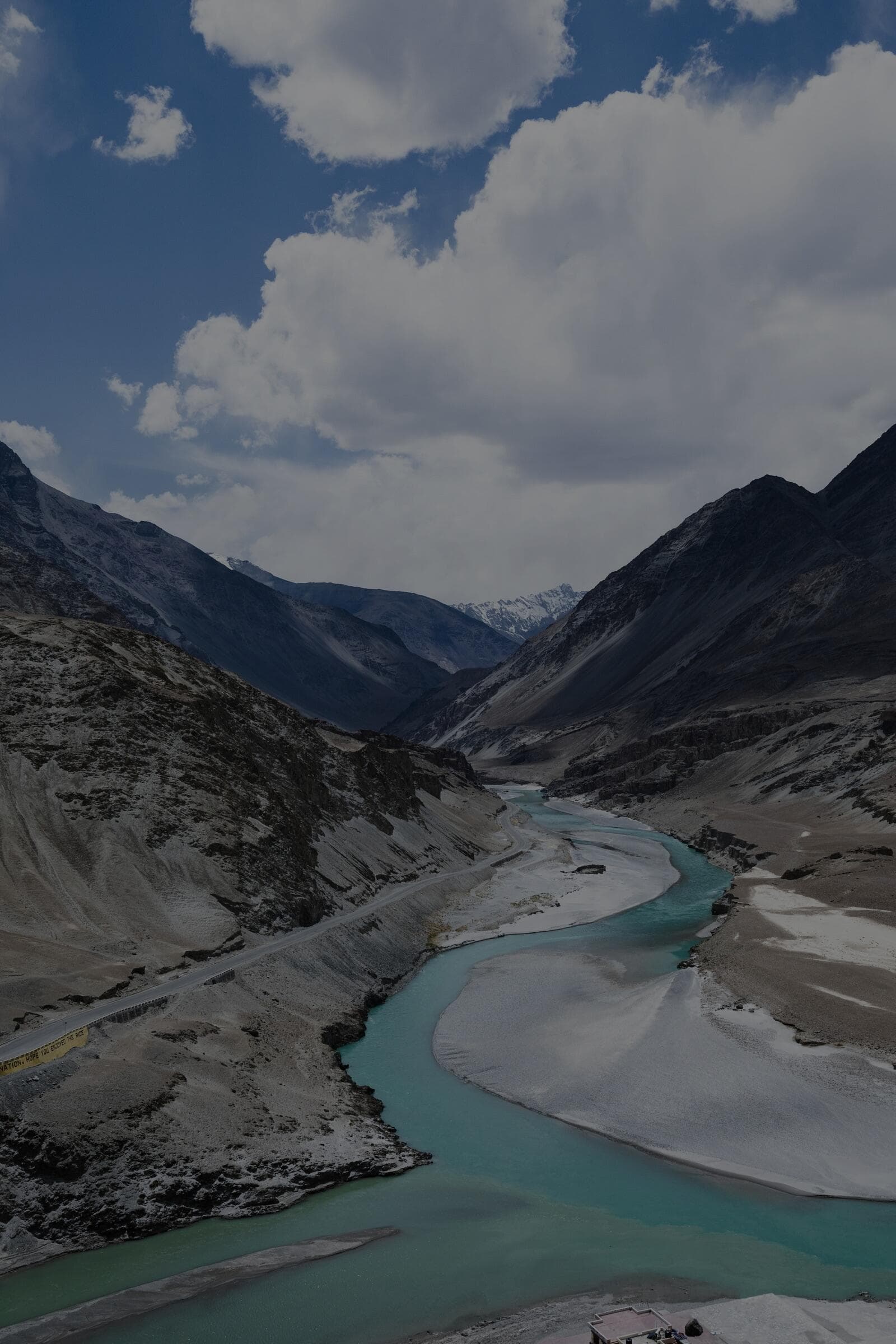
§ 02The lead vehicle
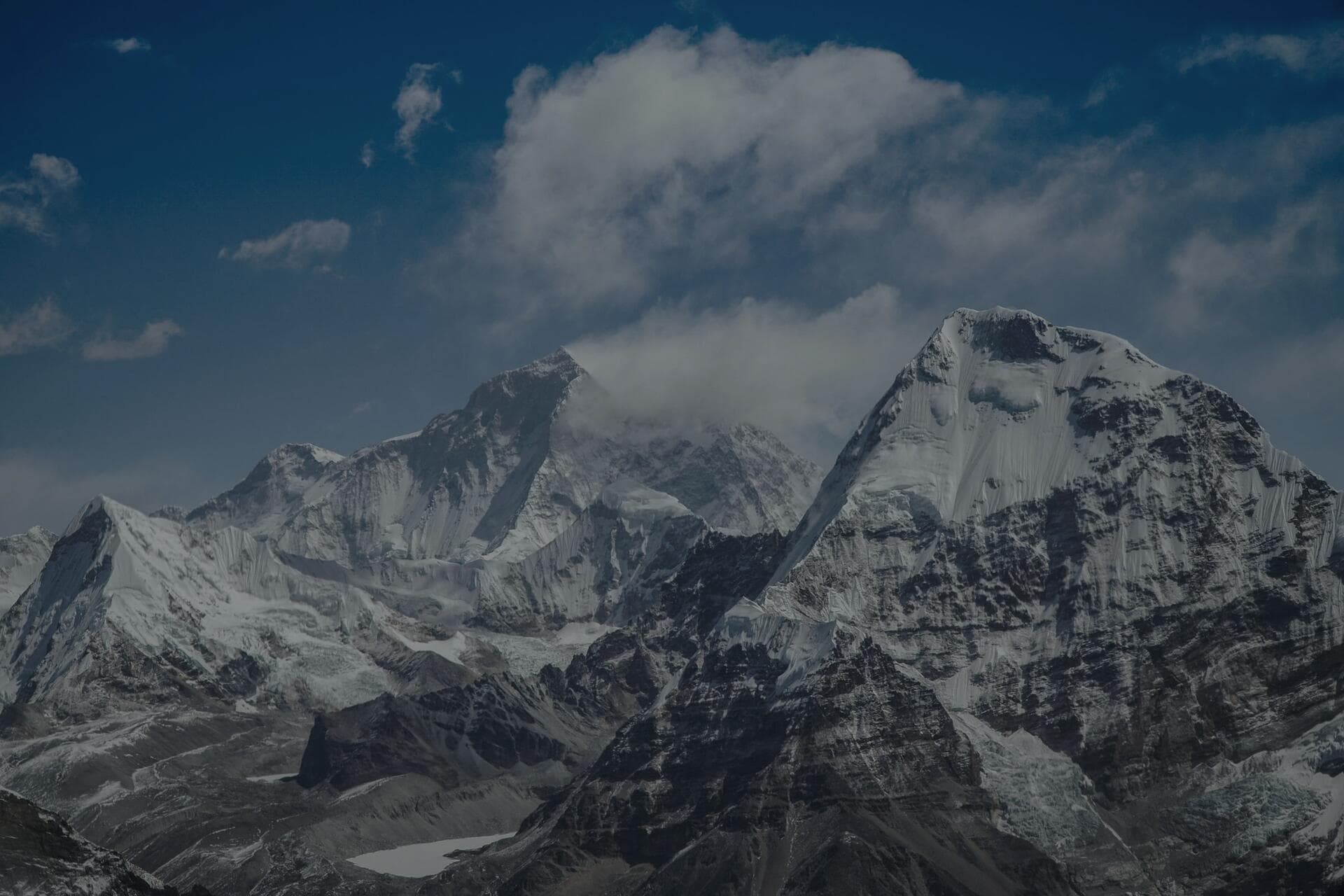
Snow-locked Himalayan switchbacks where a guide reads black ice on shaded bends

The lead vehicle: reading the winter line

The most valuable thing in the convoy is the lead vehicle, and not because of what is bolted to it. It is because of who is driving it. A guide who has run the winter line repeatedly makes a hundred small calls a day that a first-timer cannot: holding the group below a north-facing switchback until the sun has touched it, reading where a thin film of black ice has refrozen overnight on the shaded inside of a bend, knowing that only the Shimla–Kinnaur approach is open while the Manali side over Kunzum La is snow-locked from roughly November to May.

That judgement is the safety system you cannot purchase as a product, and it is the core of what a guided expedition sells. On our Spiti Frozen and Zanskar Frozen crossings the lead vehicle sets the pace, runs the snow-driving clinic before the first serious ice, and carries the route in its head so the rest of the group can concentrate on driving well rather than navigating blind. It is also the vehicle that decides, honestly, when conditions mean waiting a day — the single hardest and most important call in winter overlanding.

§ 03Mechanic & recovery
A diesel 4x4 on the frozen valley floor where no recovery services exist in winter

The mechanic, the spares, and self-recovery

Once you are past Reckong Peo there is no garage, no parts counter and no tow truck for the rest of the trip. A guided convoy answers that by bringing the workshop along: a travelling mechanic, a kit of the spares that actually fail in the cold, and the recovery equipment — traction boards, a snatch strap, a shovel — alongside the people who know how to deploy it without making a stuck vehicle worse. The failures here are predictable. Below about −25 °C an untreated diesel waxes and will not crank; batteries lose their punch; an AT tyre slides on glazed ice and a wheel drops off the broken edge of the carriageway.

With a mechanic in the group, each of those becomes a roadside job rather than a rescue you cannot summon. A flat battery gets a jump from the convoy; a waxed filter gets warmed and treated; a bogged vehicle gets recovered by people who have done it before. This is exactly the environment our extreme-weather range was engineered around — a ThermaEvo WH5 engine pre-heater is rated to start diesel vehicles in −35 °C to −40 °C, and on a guided trip the support team makes sure the whole convoy is woken and rolling at first light instead of one cold rig holding everyone up.

§ 04Oxygen & altitude
A high-altitude rooftop-tent camp where acclimatisation and oxygen support matter most

Emergency oxygen, the medic, and altitude safety

Altitude is the danger people underestimate most, because it is invisible until it is serious. The road in climbs from Shimla at 2,200 m through Nako at 3,660 m and Tabo at 3,280 m to Kaza at 3,650 m, with the high day at Komic and Hikkim touching 4,587 m. At those heights acute mountain sickness — headache, nausea, breathlessness — can tip from uncomfortable to dangerous, and the only definitive treatment for the severe forms is to lose altitude quickly. That is hard to do well alone, in the dark, in extreme cold.

So a guided convoy carries supplemental oxygen and a first-aid medic, and it builds the itinerary around acclimatisation: gaining height in stages over several days, sleeping low after climbing high, and never making Komic a day-one objective. If someone is struggling, there is oxygen on hand and a planned, escorted descent rather than a panicked improvisation. The discipline that keeps people safe — drink far more water than feels natural, watch your group for symptoms, treat altitude with respect — is enforced by the trip structure itself instead of left to each driver to remember at 4,000 m.

§ 05Solo or guided
A supported overland convoy descending a winter Himalayan route at the end of a crossing

Drive it guided, or kit your own rig — honestly

We will be straight about this: a self-driven winter Himalaya crossing can be done safely, and plenty of capable overlanders do exactly that. If you go alone, the non-negotiables are the same ones our convoys carry — snow chains sized to your vehicle, a diesel pre-heater so the engine starts at −30 °C, recovery gear you can actually use, a satellite communicator, deliberate stage-by-stage acclimatisation, and slack days for weather. Our extreme-weather and snow-chain ranges exist precisely so a private rig can carry the same protection a guided group does.

But the support is the point of going guided, and it is worth naming what it buys: route knowledge that keeps you off the ice at the wrong hour, a mechanic and recovery for the failures that strand a solo driver, emergency oxygen and a medic for the altitude, and a convoy so you are never the only person who knows where you are. That is the whole proposition of our Spiti Frozen and Zanskar Frozen expeditions — you drive the frozen Himalaya yourself and we carry the safety net. Whichever way you go, the mountain does not change. The difference is how much of it you are carrying alone.

“You drive the frozen Himalaya yourself. We carry the things that strand the people who go alone — the mechanic, the recovery, the oxygen, and the call to wait a day.”

Dinesh, on why the convoy exists

Pick your level of support

Go fully guided, or carry the safety net yourself

Our Spiti Frozen and Zanskar Frozen expeditions are the fully supported version of everything on this page: a winter convoy with a lead vehicle, a mechanic, recovery support, satellite communication, and oxygen with a first-aid medic. Prefer to run your own crossing? Our extreme-weather range gives a private rig the same protection — you just carry it yourself.

Guided · expert grade

Convoy · Jan – Feb

Frozen Spiti and Zanskar, run with the full support backbone.

§ 07Frequently asked

The support, answered

The questions we get from drivers deciding between a guided convoy and going it alone — starting with what the support actually includes.

It is a supported self-drive, not a coach tour. You drive your own 4x4 in a convoy, and the support team carries what a solo rig cannot: a lead guide who knows the winter route, a travelling mechanic with a spares kit, recovery gear and the people to use it, satellite communication for the group, and emergency oxygen with a first-aid medic. On our Spiti Frozen and Zanskar Frozen trips that also covers permits, campsite fees, breakfasts and dinners, and a full thermal sleep system if you are renting our rig. The idea is that you keep the experience of driving the frozen Himalaya while the team absorbs the failures that end solo trips.

For most people, yes — meaningfully so. The winter Himalaya gives almost no margin: −20 °C to −30 °C nights at Kaza, a high day at Komic of 4,587 m, black ice on the shaded bends, and no garage, fuel or hospital past Reckong Peo. A convoy turns single points of failure into group problems. A flat battery or a waxed fuel filter is a roadside fix with a mechanic present; a stuck vehicle gets recovered by people who have done it before; a bad night at altitude is met with oxygen and an escorted descent. A solo crossing can be done safely with the right preparation and humility, but you carry every one of those risks yourself.

Oxygen is carried because acute mountain sickness is the danger people underestimate most at these heights, and the only definitive treatment for the severe forms is to lose altitude quickly. A first-aid medic and supplemental oxygen in the convoy mean a struggling traveller is managed and escorted down rather than left to improvise alone in the cold. But oxygen does not replace acclimatisation — it is a backstop. The real protection is the itinerary itself: gaining height in stages over several days, sleeping low after climbing high, drinking far more water than feels natural, and never making the 4,587 m day a day-one objective. The trip structure enforces that discipline so it is not left to each driver to remember.

Yes. A convoy carries shared support — a mechanic, recovery, oxygen, comms — but your vehicle still has to make it up the ice and start in the cold. You need snow chains sized to your rig because black ice on the shaded switchbacks above Nako and the river-ice near Kaza will defeat all-terrain tyres alone, and the lead vehicle cannot drive your car for you. And a diesel paired with a pre-heater like the ThermaEvo WH5, rated for −35 °C to −40 °C starts, is what gets you rolling at first light instead of holding the whole group up over a frozen fuel filter. The convoy makes the trip survivable around your rig; the rig still has to do its job.

The deep-winter window is roughly late December to February, when the valleys are genuinely frozen and the landscape is at its most dramatic. In those months only the Shimla–Kinnaur approach (the Hindustan–Tibet highway) stays open into Spiti; the Manali side over Kunzum La is snow-locked and closed from about November to May. So a true winter crossing is always an in-and-out via Kinnaur, with one road in and one road out — which is exactly why route knowledge and slack days for weather matter, because a single closure can hold the group for days. February is the classic window: coldest, clearest and most demanding.

That is the other half of what we do. If you would rather run your own crossing, our extreme-weather and snow-chain ranges are built to give a private rig the same protection a guided convoy carries — TÜV GS and ÖNORM V5117-rated TractionX chains sized by vehicle, a ThermaEvo WH5 engine pre-heater for −35 °C to −40 °C cold starts, and a vented ThermaEvo AH5 diesel air heater for sub-zero rooftop-tent nights. Pair that gear with deliberate acclimatisation, recovery equipment you can use, and a satellite communicator, and a capable solo team is well protected. If you want the lead guide, mechanic and oxygen on top of that, the guided Spiti Frozen and Zanskar Frozen trips are the fully supported version.

All expeditions
WhatsApp us