Roof load
Roof Rack for SUV in India: Platform vs Basket, Load Ratings and Rooftop-Tent Pairing
A roof rack for SUV India buyer's guide: flat platform vs basket, dynamic vs static load, rooftop-tent pairing and weight discipline for Thar, Jimny and Fortuner.
Choosing a roof rack for an SUV in India comes down to one honest question before styling or brand: how much weight will you actually carry, and is that weight moving or parked? A flat platform rack suits overlanders who mount a rooftop tent, awning and traction boards; an open basket suits weekenders who lash soft bags and jerry cans. But the number that keeps you safe on a Zoji La switchback is not the rack's rating — it is your vehicle's dynamic roof load, which on most Indian SUVs is a modest 50-75 kg while moving. Get that discipline right and everything else is detail.
Platform rack vs basket: which one is actually right for you
A flat platform (a slotted aluminium or steel tray, think Front Runner Slimline-style) is the overlander's default because it is a universal mounting surface. Its T-slots and gridded holes let you bolt down a rooftop tent, a 270-degree awning, a shovel, a Hi-Lift and MOLLE panels exactly where you want them, and it presents a clean, low frontal area so wind noise and fuel penalty stay sane. The trade-off: loose items need their own boxes or bags because a flat tray has no walls.
A basket (raised side rails, cage-like) is better if you mostly throw in duffels, a spare tyre, jerry cans and firewood and want them contained without strapping each one to a bare deck. The cost is aerodynamics and weight: baskets sit taller, whistle more above 90 kmph, and a heavy steel basket can eat 15-20 kg of your payload before you have loaded a single bag. For a Thar or Jimny with a tight roof budget, that dead weight matters.
- Pick a flat platform if: you run or plan a rooftop tent, an awning, and want a modular, low-profile expedition build.
- Pick a basket if: you carry soft, bulky, irregular loads (bags, fuel, camp wood) and value containment over aero.
- Hybrid tip: many platforms accept a bolt-on front wind deflector and a small rear cargo fence — the best of both without a full cage.
Dynamic vs static load: the number that actually keeps you safe
This is the single most misunderstood spec in the Indian market. Static load is what the rack and roof can hold when the vehicle is stationary — this is what lets a rooftop tent with two adults sleeping (easily 180-250 kg) sit up there overnight. Dynamic load is what you can carry while driving, and it is far lower because braking, corrugations and body roll multiply forces on the mounting points. Roof racks are typically rated well above what your roof is; the roof is the bottleneck.
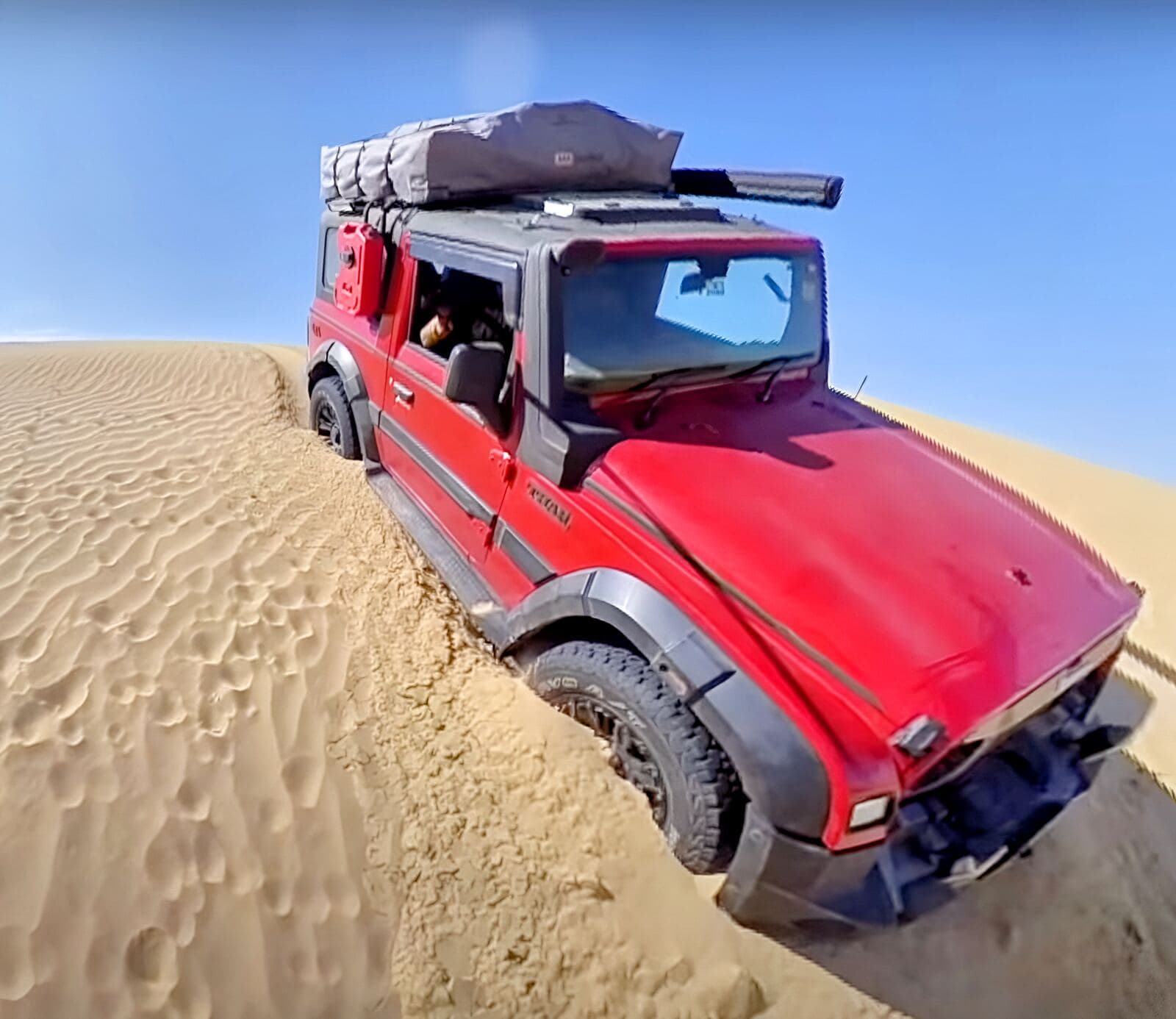
Real Indian numbers to plan around: a Mahindra Thar and Thar Roxx carry roughly 50 kg dynamic on the factory roof rails; a Maruti Jimny is around 30 kg (genuinely low — respect it); a Toyota Fortuner and Hilux sit near 75-80 kg dynamic; a Force Gurkha is in the 60-75 kg range. Always confirm against your own owner's manual, because trims and rail types differ. The rooftop tent's weight counts against dynamic load while you drive to camp, and only against static load once you have arrived and pitched.
Pairing a roof rack with a rooftop tent
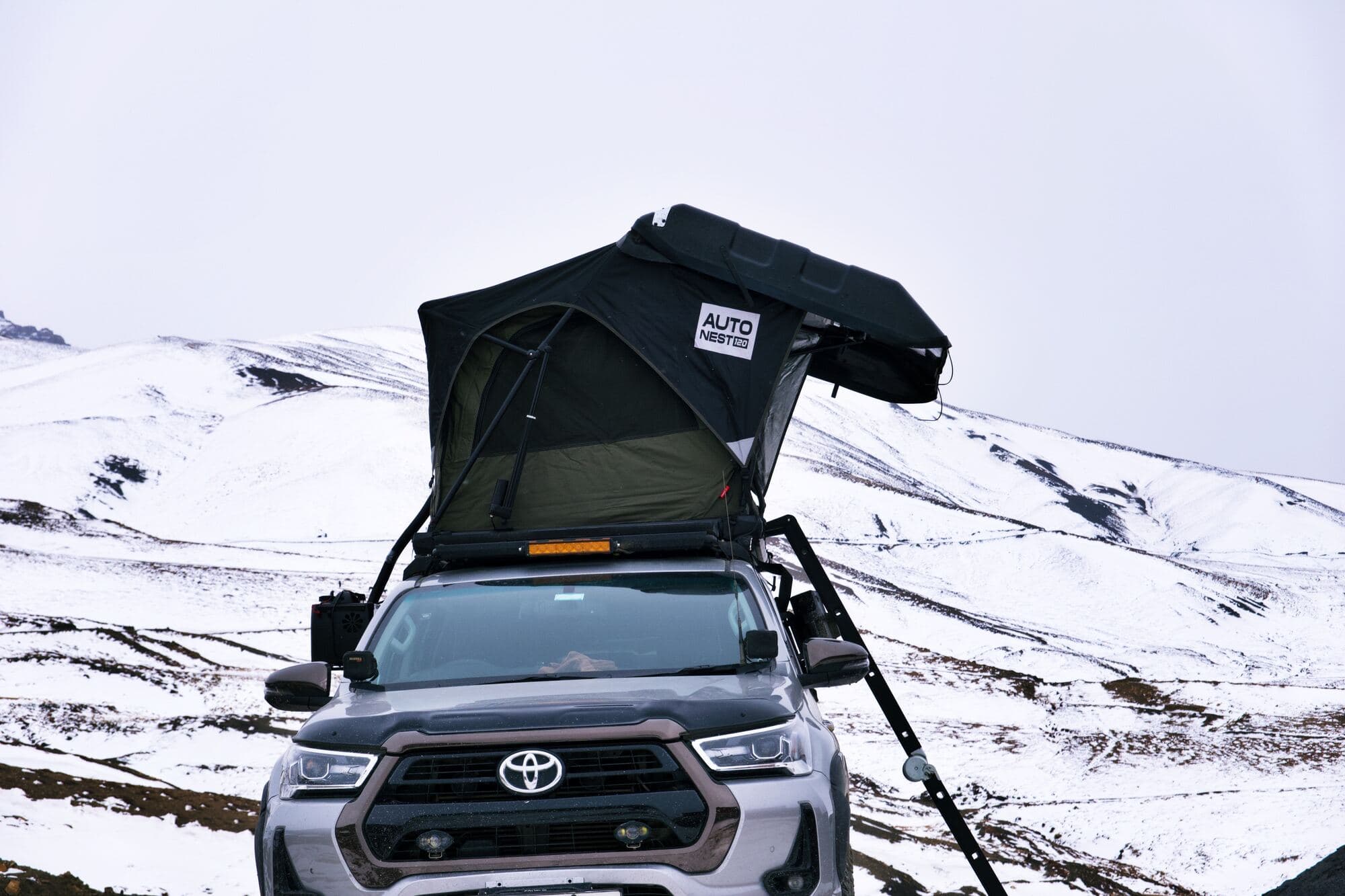
If a rooftop tent is on your horizon, buy the rack for the tent, not the other way round. A hardshell tent like an auto-opening clamshell needs a flat, rigid platform with mounting channels running the correct direction and a minimum crossbar spread (usually 700-800 mm) so the tent's rails clamp securely. Softshell fold-out tents overhang one side and load the rack asymmetrically, so mounting-point strength matters even more.
Do the math before you commit. Take a mid-size hardshell tent at ~65 kg, add a platform rack at ~25 kg, and you are already at 90 kg static before two people climb in — fine parked, but that 90 kg of tent-plus-rack alone can exceed a Jimny's or a base Thar's dynamic limit on its own. On a Fortuner or Hilux with ~75 kg dynamic, an empty 25 kg rack plus a 65 kg tent means you should keep the roof otherwise clear while moving and load heavy gear low, inside the cabin or bed. Our own rooftop tent range (AutoNest hardshell, Bison61, CampTop) is built around this logic — light shells, standard rail clamps, honest weights.
Weight discipline on Indian SUVs — Spiti, Ladakh and the real world
Every kilo on the roof sits above your centre of gravity, and a tall, narrow SUV like the Thar or Gurkha is already sensitive to it. Load high and you get slower steering response, more body roll into off-camber sections, and a genuine rollover margin cut on the loose, cambered hairpins of Kunzum, Baralacha or Chang La. The rule that has saved countless expeditions: heavy and dense goes low and inside (recovery gear, water, tools in the boot or cabin footwells); light and bulky goes up top (tent, sleeping bags, empty jerry cans, chairs).
- Never exceed the vehicle's dynamic roof rating in motion — the tent counts, the rack counts, the crossbars count.
- Keep a full Hydrox-style water tank OFF the roof; at 1 kg per litre a 40 L tank is 40 kg you do not want up high — mount it in the bed or cabin.
- Torque-check the rack feet and tent clamps after the first 50 km of any trip; corrugated approach roads to Spiti and Sach Pass loosen everything.
- Watch height: a rack plus hardshell tent can push a Fortuner past 2.3 m — a real concern for the low tunnels and dhaba awnings on NH-3 and the Manali-Leh route.
- Aero costs fuel: expect a 1-2 kmpl drop with a loaded rack; a front deflector and removing the rack between trips claws some back.
Material, mounting and buying notes for India
Aluminium platforms are the overland standard — lighter, rust-proof and modular, which matters on salt-affected Himalayan roads and coastal Konkan humidity. Powder-coated steel baskets are cheaper and tougher against knocks but heavier and prone to rust at weld points once the coating chips. Mounting matters as much as the tray: factory side rails, fixed points, a gutterless clamp system, or a track-mount all behave differently, so verify your specific vehicle's fitment. Beware generic online listings that quote a 150 kg rack rating and let buyers assume the roof can take it — it usually cannot.
On price and availability, expect roughly ₹18,000-45,000 for a quality platform rack in India depending on size and brand, with premium imported trays higher, all typically plus 18% GST. Buy from a seller who states dynamic and static ratings separately, publishes vehicle-specific mounting hardware, and does not conflate the two. If a listing only gives one big number, treat it as marketing, not engineering.
Where AdventureX fits — honestly
To be straight with you: AdventureX 4x4 does not currently manufacture roof racks or platform racks. We are an Indian overland-gear brand expanding our range, and racks are on our roadmap — no launch date to promise yet. If you would like us to notify you when we do build them, register your interest at /contact and we will reach out. In the meantime, the products that pair with a rack we do make today: our rooftop tents (AutoNest, Bison61, CampTop) which are engineered around standard platform mounting, our SaberLight 270-degree awning, Hydrox aluminium water tanks (mount them low, not on the roof), and a full recovery kit — traction boards, kinetic ropes, the X-Flate200 compressor — for when the trail bites back. Build the roof light, keep the weight low, and the mountains stay fun.
Ready to kit out?
Everything in this guide is built, stocked and backed by AdventureX4x4 — engineered for Indian cold and proven from Spiti to Ladakh.