

Stories
Why we built a rooftop tent for the Suzuki Jimny
The Jimny is the most capable small 4x4 in India - and nobody made a rooftop tent light enough for it. So we did.
When the Suzuki Jimny arrived in India, our phone started ringing with the same question: which of your rooftop tents fits it? The honest answer at the time was: none of them, not well. The Jimny's roof is small and its sensible roof load is low. Bolting a 70 kg hardshell onto it is a bad idea.
Why the Jimny breaks the usual rooftop-tent maths
A rooftop tent lives at the worst possible place for a small, short, tall 4x4: high up, where weight does the most damage. On a Thar or a Fortuner you have roof rating and wheelbase to spare, so a heavy hardshell is a non-event. The Jimny is a different animal. Its roof is physically small, its sensible load rating is genuinely low, and its short wheelbase and tall stance mean every kilogram you add up top is felt three times over in how it leans through a corner and how it behaves on a windy mountain road. Pile a conventional 60 to 70 kg hardshell up there and you do two bad things at once - you blow past the load the roof should carry, and you raise the centre of gravity of a vehicle that is already tall for its footprint. The result drives worse, feels nervous exactly where the Jimny should feel surefooted, and undoes the lightness that makes the thing brilliant in the first place. The usual rooftop-tent answer - just buy the big hardshell - simply does not apply here.
The constraint became the product
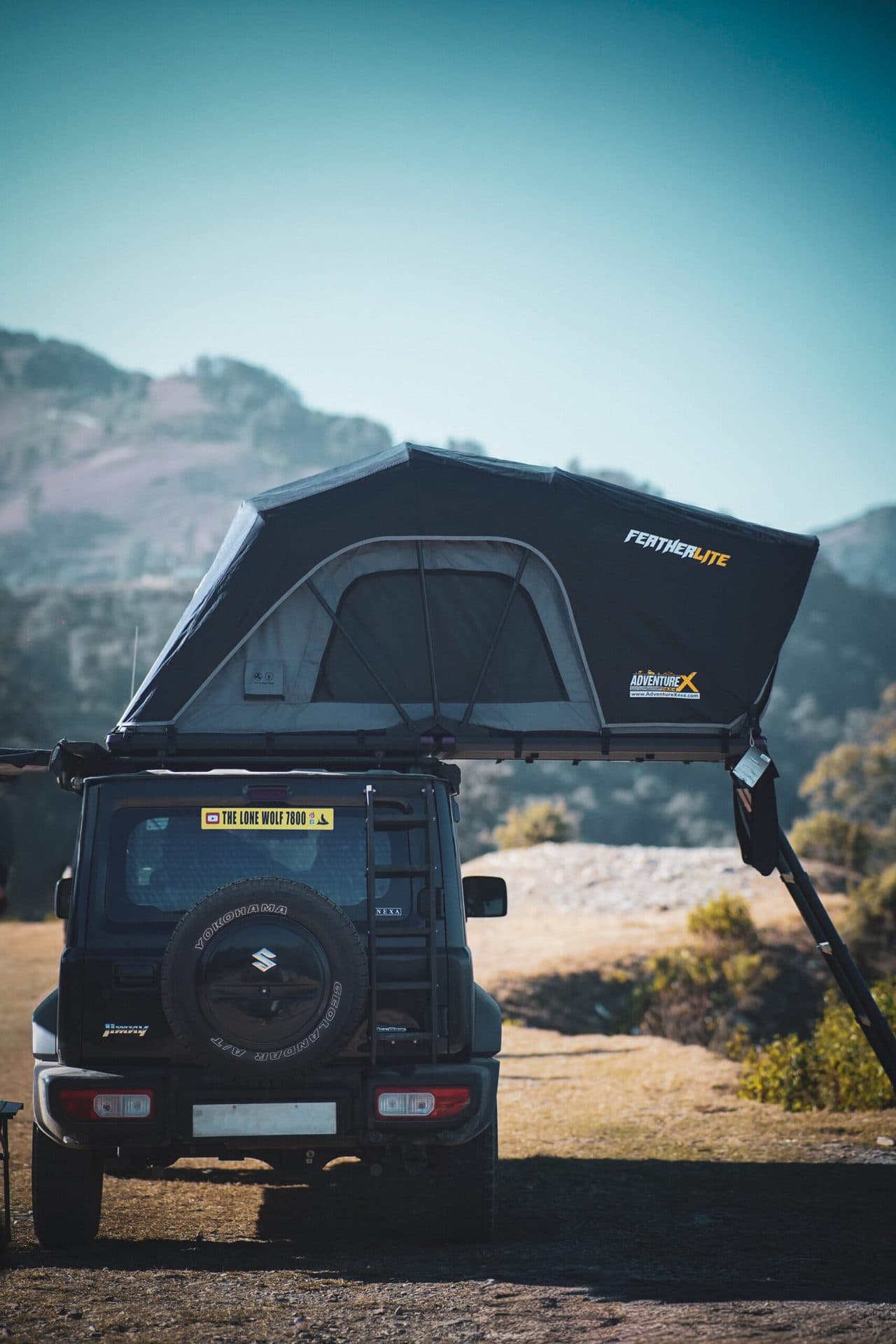
Instead of telling Jimny owners to buy a bigger car, we treated the weight limit as the design brief. The FeatherLite had one non-negotiable target: a genuine full-size sleeping platform under 45 kg - a ceiling we beat, landing the tent at 36.5 kg. Everything else was negotiable.
Holding that line was harder than it sounds, because weight hides in every component of a rooftop tent. The base board, the frame, the fabric, the ladder, the mounting hardware - each one is a place to quietly add a few kilos, and a few kilos in five places is the difference between a tent a Jimny should carry and one it should not. So the under-45 kg target was not a marketing figure we backed into; it was the constraint we designed every single part around - and one we ultimately beat, bringing the tent in at 36.5 kg. Where a heavier hardshell could afford to be casual about material, the FeatherLite could not, and that forced better choices throughout. The one thing we refused to trade away for the weight was the sleeping platform itself - it had to be genuinely full-size, because a light tent you cannot actually sleep two adults in is not a solution, it is a compromise dressed up as one.
The best products come from a constraint you refuse to compromise on. For the FeatherLite, that constraint was weight.

Where the weight actually went
Hitting 36.5 kg without gutting the tent meant interrogating every gram, and it is worth being concrete about where weight lives in a rooftop tent, because it is spread across more parts than most people realise. The base board is one of the heaviest single items, so the material and the way it is braced matter enormously - over-build it and you have lost the battle before you start. The frame and the hinge mechanism are next, and here the temptation is always to add metal for stiffness; the discipline is to find the geometry that stays rigid without it. The fabric is a balance - heavy enough to survive a Himalayan season and a desert sun, light enough not to blow the budget - and the ladder and the mounting hardware are the quiet places where a careless choice adds a couple of kilos nobody notices until the total comes in over target. None of these is dramatic on its own. The point is that the weight target was not met by one clever component; it was met by refusing to be lazy about any of them, which is exactly the kind of constraint that forces a better-engineered product than a casual brief ever would.
What we would not trade for the weight
A weight target taken too far produces a tent that is light and useless - a half-size platform, fabric that will not last a season, a mechanism that fights you. So the discipline cut both ways: under 45 kg was non-negotiable - we landed at 36.5 kg - but so were the things that make a rooftop tent worth owning. The sleeping platform stayed genuinely full-size, because two adults need to actually lie down flat - a lightweight tent you cannot sleep two people in is not a solution. The fabric had to handle what a Jimny owner in India actually meets: a high-altitude shoulder-season night, a desert sun, a wet weekend in the hills. And it had to be a tent you would genuinely want to live out of, not a gram-counting science project. Holding both lines at once - the weight and the usability - is the hard part, and it is the part that separates a tent built for a vehicle from a tent that merely happens to be light.
Light on the roof changes how the whole vehicle drives
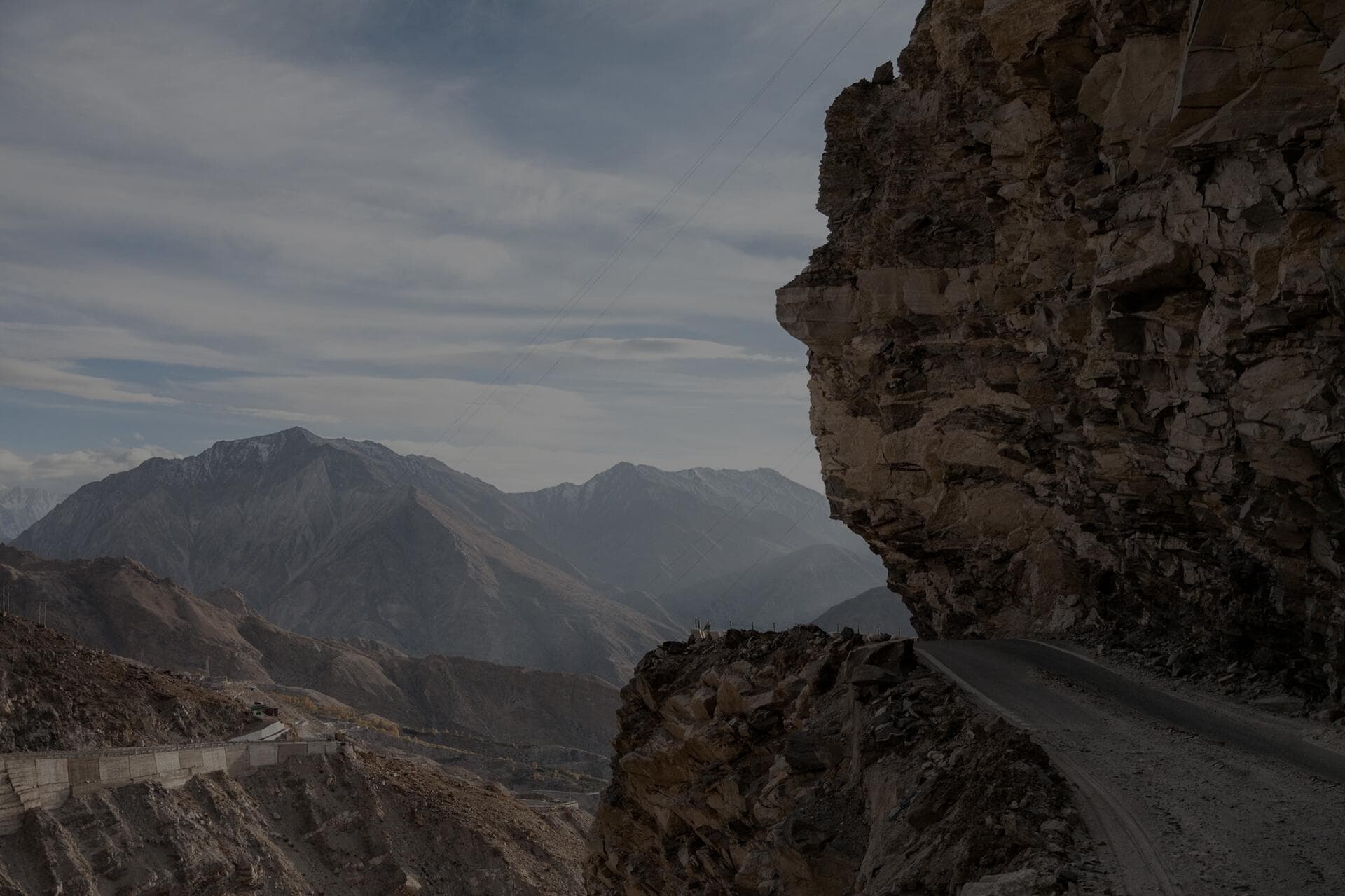
The payoff for all that discipline is not just that the tent fits within the roof rating on paper - it is how the loaded Jimny behaves. Keep the rooftop weight under 45 kg and the vehicle stays the nimble, surefooted thing it is meant to be: it leans less through a rutted corner, it feels stable rather than top-heavy on a windy high-altitude road, and it does not punish you on the technical, off-camber terrain where the Jimny is supposed to shine. A Jimny carrying a too-heavy tent does the opposite of all of that - it wallows, it feels precarious where it should feel planted, and it trades away its single greatest asset. Lightness is not a spec-sheet bragging point on this vehicle; it is the thing that keeps it good. Get the tent right and the Jimny stays a Jimny.

The result
The FeatherLite is, as far as we know, the first rooftop tent designed specifically for the Jimny in India - and it opened overlanding to a whole category of small-4x4 owners who had been told they needed something bigger. They didn't.
The customers tell the story better than we can. They are people who bought the Jimny precisely because it is small and light and brilliant in tight, technical terrain, and who had quietly accepted they could not have a proper rooftop sleep setup without ruining the thing they loved about it. The FeatherLite gave them the camp setup without the penalty - a full-size platform that the roof can actually carry, that does not turn their nimble little 4x4 into a top-heavy compromise. That is what we set out to do: not to build the biggest tent, but to build the right one for a vehicle the rest of the market had ignored. The constraint made a better product, and the better product opened the door for a whole category of owners who had been told to go buy something bigger.
There is a wider lesson in it that runs through how we build everything. The easy path when a customer's vehicle does not fit your catalogue is to sell them the nearest thing and let them deal with the consequences, or to tell them to buy a different vehicle. We did neither, because both answers treat the customer's actual situation as the problem instead of the brief. The Jimny owner was not wrong to want a light tent for a light vehicle - the market was wrong not to have built one. Taking the constraint seriously, rather than wishing it away, is what turned a frustrating phone call we kept getting into a product that did not exist before. That is the thinking behind the FeatherLite, and it is the same thinking we bring to every build conversation: start from the trip and the vehicle the customer actually has, and let that define the answer.
Frequently Asked Questions
How much does the FeatherLite weigh, and why does that number matter so much?
The whole design target was a genuine full-size sleeping platform under 45 kg - a ceiling we beat, landing the tent at 36.5 kg. That number matters because the Jimny's roof load rating is genuinely low and its tall, short body is sensitive to weight up high - every kilogram on the roof is felt three times over in how it leans and how stable it feels. A conventional 60 to 70 kg hardshell blows past what the roof should carry and makes the vehicle drive worse. Staying under 45 kg is what keeps the Jimny nimble and surefooted with a tent on top.
Why not just fit a normal hardshell tent to a Jimny?
Because a normal hardshell is too heavy for the Jimny's roof and too high for its centre of gravity. It overloads the roof and turns a planted, capable little 4x4 into a top-heavy, nervous one - undoing the exact lightness that makes the Jimny special. We could have sold Jimny owners a tent that technically bolted on, but it would have ruined the vehicle. Building the FeatherLite around the weight limit was the honest answer.
Is the FeatherLite only for the Jimny?
It was designed specifically around the Jimny's roof and weight constraints, which is why it exists at all. Any owner of a small, light 4x4 with a low roof rating benefits from the same thinking - the lightness is an advantage on any vehicle. But the Jimny is the platform that drove the design, and it is the one the FeatherLite was built first and foremost to serve.
Gear featured in this story
The kit named above, with current pricing - tap through for full specs.
Put it into practice
Write your own chapter - shop the gear or come drive with us.