Stories
Guided Expedition vs Going Solo: Which Is Right for Your First Himalayan Overland Trip
Guided or solo for your first Himalayan overland trip? An honest breakdown of cost, safety, learning, and freedom.
For your first Himalayan overland trip, a guided expedition is almost always the right choice, and going solo is something to earn after a season or two of experience. The Himalaya are unforgiving in ways that do not show up in a YouTube edit: altitude sickness, sudden weather, washed-out roads, and zero phone signal when something goes wrong. A guide brings route knowledge, recovery skills, medical readiness, and the simple safety of a second vehicle. Solo travel offers unmatched freedom and a deeper kind of self-reliance, but it asks a level of competence that a first-timer simply has not built yet. Here is an honest comparison so you choose well, with the real numbers, the real routes, and the real failure modes we have watched play out from Spiti to Ladakh.
To make this concrete, picture the two routes most first-timers dream about. The Spiti circuit comes in from Shimla through Reckong Peo and Nako, climbs to Kaza at 3800m, and pushes on to Komic, Langza and Hikkim above 4400m before either looping back or crossing Kunzum La to Manali. The Ladakh loop runs Leh to Nubra over Khardung La, out to Pangong, then the long lonely south-east arc through Hanle and Tso Moriri. Both look like a single line on a map. On the ground they are days of thin air, single-lane shelf roads with thousand-foot drops, glacier-melt water crossings, and stretches of 200 to 350 km with no fuel and no signal. That gap between how a route looks and how it behaves is exactly what a guide closes for you.
The Case For A Guided First Trip
A guided expedition removes the decisions that are most likely to hurt a beginner. The guide knows which pass is open, which river crossing is safe at which hour, where the fuel and water actually are, and what altitude profile keeps the group from getting sick. Crucially, you are never alone: if a vehicle gets stuck or a person falls ill, there are other rigs and experienced hands right there. For a first trip into terrain this serious, that safety net is worth far more than the cost, and you will learn more in nine guided days than in a year of guessing. On our Spiti Frozen and Ladakh Loop runs, a typical day is briefed before anyone turns a wheel: today's distance, the high point, where we fill fuel, where the crossing is and what time we hit it, and the bail-out plan if weather turns. A first-timer never has to invent any of that under pressure.
- Route knowledge: which passes, crossings, and detours are actually safe and open, plus the timing - a Spiti melt crossing that is shin-deep at 7am can be axle-deep by 2pm.
- A second vehicle and experienced hands for recovery and emergencies, with a kinetic rope, recovery boards and a winch already rigged and ready.
- Altitude management and a sensible acclimatisation profile - sleeping low and climbing high in stages - to reduce sickness risk on a route that tops 5000m.
- Logistics handled, so you learn by watching experts instead of by dangerous trial and error: fuel discipline, tyre pressures, chain fitment, camp selection.
The Case For Going Solo
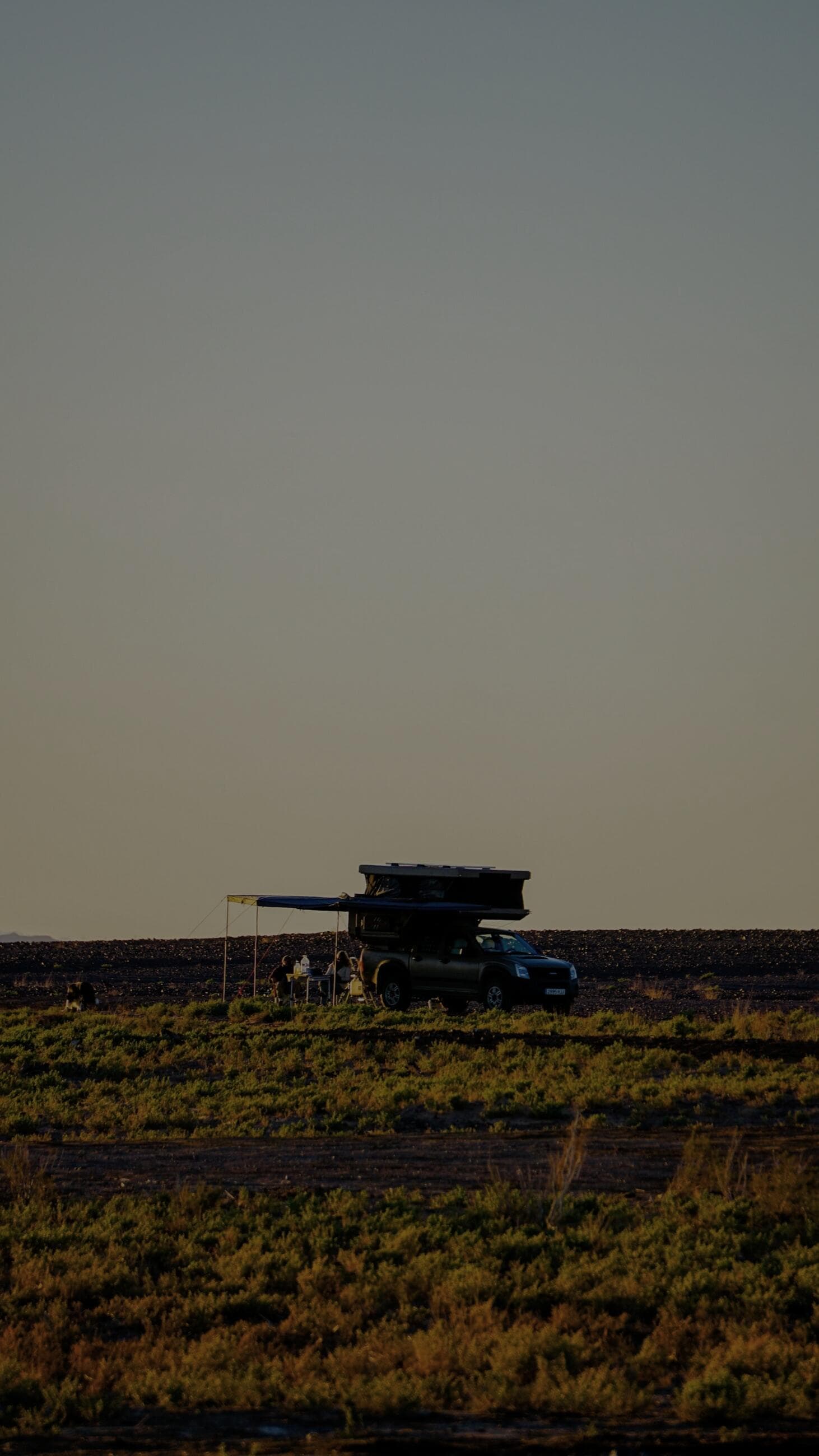
Solo overlanding is genuinely wonderful, and we would never talk anyone out of it forever. The freedom is total: you stop where you want, linger where you love, and answer to no schedule but your own. The self-reliance you build is real and deeply satisfying. But that freedom is also the danger, because every decision and every recovery is yours alone, with no backup if it goes wrong. Solo is the reward for competence, not the way to acquire it. The overlanders who solo safely almost all started in groups and earned their judgement the survivable way. Think about what solo actually means at Tso Moriri at -10C with a dead battery and no one for forty kilometres: nobody to jump you, nobody to anchor a winch, no signal to call for help. That scenario is character-building when you have the skills and a death-trap when you do not.
I am not against solo travel, I love it. I am against doing it before you have the judgement to get yourself out of trouble. Earn the solo trip, do not gamble it.
Honest Cost Comparison
Money matters, so let us be straight about it. A guided expedition costs more up front because you are paying for the guide, the support vehicle, and the logistics, but that price buys risk reduction and a steep learning curve. Solo looks cheaper on paper, but the savings are deceptive: one recovery from a remote ditch, one mechanical failure far from help, or one altitude evacuation can cost far more in money, time, and danger than the guided fee ever would. For a first trip, the guided premium is best understood as insurance you are very likely to use. A single broken leaf spring fixed in a Kaza workshop, a tow back to Manali, or a chartered evacuation for severe altitude sickness will eat your entire trip budget and then some, and that is before you count the days lost and the fright.
- Guided: higher up-front cost covering guide, support vehicle, and logistics - a known, fixed number you can plan around.
- Solo: lower obvious cost but full exposure to recovery, repair, and rescue expenses, none of which you can predict.
- Hidden solo costs spike fast with a single remote breakdown or evacuation - a tow from past Karu back to Leh alone can run into tens of thousands of rupees.
- For a first trip, treat the guided premium as cheap insurance against expensive mistakes, the same way you would not drive uninsured.
What You Learn On A Guided Trip That Makes Solo Possible Later
The best argument for going guided first is that it is how you become someone who can go solo. On a guided expedition you watch how a pro reads a river crossing, fits chains before the ice, manages tyre pressure, plans fuel, and makes the call to turn back when conditions sour. You absorb the judgement that keeps people alive. Do one or two guided trips paying real attention, and you will have the foundation to plan a modest solo route with eyes open. Skip that step and your first solo trip is an exam you never studied for. The specific skills are learnable and they are not obvious from a book: airing down to around 18 to 22 psi on rock and sand and re-inflating before tarmac, fitting TractionX chains in the dark before the ice rather than after you are stuck on it, reading whether that boulder is embedded enough to winch from, and recognising the early headache-and-nausea of altitude before it becomes an emergency.
A Realistic Readiness Checklist Before You Solo
Here is the honest bar. You are not ready to solo a remote Himalayan route until each of these is a yes, not a maybe. If you cannot tick them, your next trip should still be guided or in a convoy - and there is no shame in that, it is just sequencing the learning so you survive it.
- You can perform a self-recovery: build an anchor with no trees, use recovery boards and a winch or kinetic rope correctly, and you have actually done it, not just watched.
- You can manage altitude: you know the acclimatisation rules, carry the medication, recognise AMS early, and will descend without ego when it appears.
- You can plan fuel and water for a 350 km no-pump leg and you carry the jerry cans to back the plan up.
- You can fix or limp the common failures: a flat at altitude, a snapped fan belt, a dead battery, basic electrical and cooling gremlins.
- You have a communication and bail-out plan that does not rely on phone signal: an offline map, a sense of where the nearest help is, and ideally a satellite messenger.
How To Decide For Your Trip
Be honest with yourself about three things: your off-road and recovery experience, your comfort with high altitude, and how remote your intended route is. If you are new to any of those, especially recovery skills or altitude, go guided. If you have a couple of guided seasons behind you, solid recovery competence, and a route with reasonable bail-out points, a measured solo trip can be the natural next step. The mountains are not going anywhere, and the surest way to enjoy them for decades is to respect the order: learn first, solo later. A sensible middle path many of our customers take is the convoy - a small group of three to six vehicles where you get most of the freedom of solo travel with the safety of company, which is genuinely the best of both worlds for a confident second or third trip.
Frequently Asked Questions
Is it safe to do my first Himalayan overland trip solo?
We strongly advise against it. The combination of altitude, weather, remoteness, and recovery demands is a lot for a first-timer, and a guided trip gives you a vital safety net. The Himalaya punish the gaps in your knowledge harder than anywhere else in India, and on your first trip those gaps are widest exactly when the stakes are highest.
How many trips before I am ready to go solo?
There is no fixed number, but one or two guided expeditions where you actively learn recovery, altitude management, and route planning is a sensible foundation before a measured solo run. Better than counting trips, count competencies: when the readiness checklist above is all green, you are close, regardless of whether that took one season or three.
Is a guided expedition worth the extra cost?
For a first trip, yes. The premium buys route knowledge, a support vehicle, emergency readiness, and a steep learning curve that a single avoided mishap can repay many times over. A guided fee is a fixed, known number; a solo recovery or evacuation is an unbounded one, and in remote Ladakh it is the unbounded one that ruins trips.
What is the biggest risk people underestimate?
Altitude and remoteness. Altitude sickness can escalate fast, and with no phone signal and no second vehicle, a solo problem that would be minor at home can become serious in the Himalaya. People train hard for the driving and forget that thin air at 4500m can put a fit person on the ground within hours - and there is no quick help to call.
Put it into practice
Write your own chapter - shop the gear or come drive with us.