
Stories
Customer rig: a Thar built for the long way round
One of our customers spent two years turning a stock Thar into a continent-capable overlander. Here's the build, in his words and ours.
Some builds come together in a weekend. The best ones take years. This Thar - owned by a customer who asked us to keep his name off it but his rig on the site - took two, and it is one of the most thought-through vehicles we have ever helped equip. It is not the flashiest build in our customers' garages and it would not win a show-and-shine, and that is precisely the point. Every part on it answers a specific lesson learned the hard way on a specific trip, which is why it works as well as it does. We are sharing it because it is the clearest argument we know for a particular philosophy of building an overland vehicle: slowly, in response to real experience, rather than all at once from a catalogue.
Built one trip at a time
He did not build it all at once, and that is the whole story. Each addition followed a trip that revealed a need - not a want, a need, demonstrated by an actual failure or shortfall on an actual journey. The AutoNest went on after a wet weekend in the Western Ghats convinced him a softshell was not enough; he had spent a night wrestling soaked canvas in the rain and decided, at one in the morning, that the next tent would deploy in under a minute and shrug off weather. The second water tank went on after a Ladakh run came up three days short of water and forced an unplanned resupply detour that cost the group a day. The drawer system went in after one too many mornings of unpacking half the vehicle to find the stove. Every part on the vehicle is the solution to a problem he had personally lived through, which is why there is nothing on it that does not get used and nothing missing that he has ever needed.

What's on it
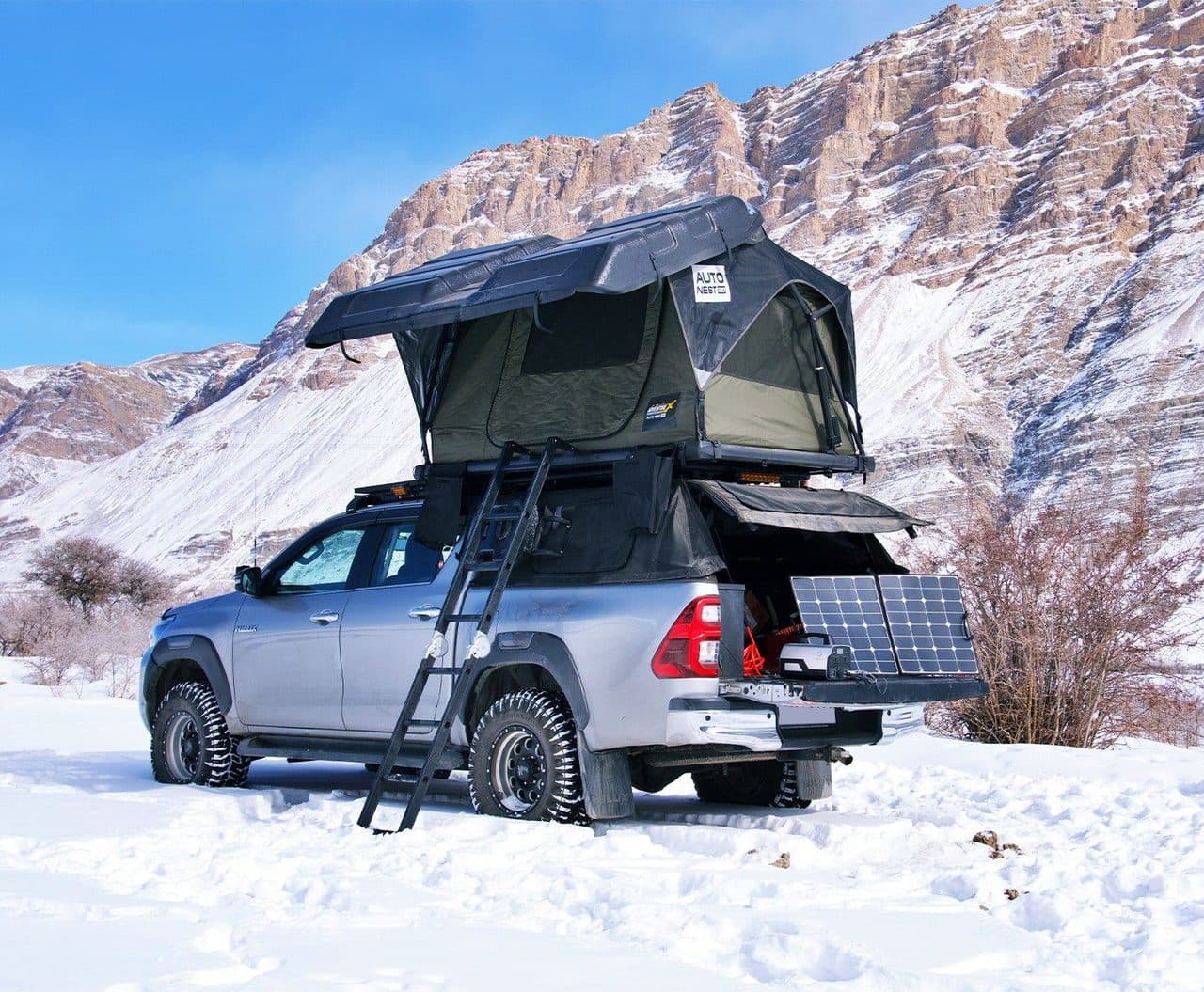
- AutoNest 120 - chosen after the wet-weekend lesson, for a deploy measured in seconds and a hard shell that ignores weather
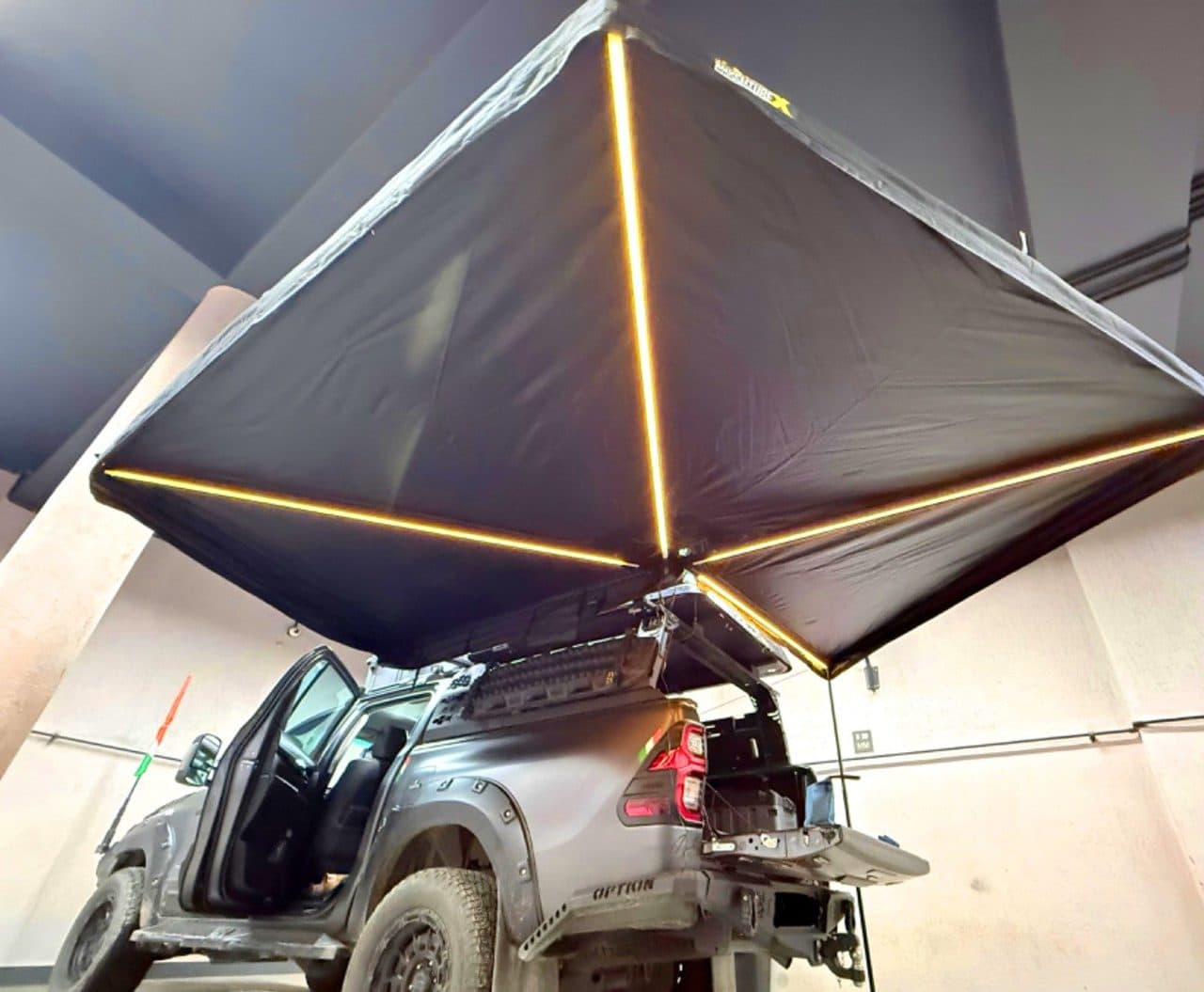
- SaberLight 270 awning - he cooks and works from camp for days at a stretch, so the shade and dry standing space earn their roof weight many times over
- Two HydroX26 tanks - the Ladakh shortfall, solved, mounted low and central for genuine multi-week autonomy without resupply anxiety
- Full recovery kit - traction boards, deflators, a quality compressor, and rated recovery points front and rear, all within reach but secured
- A drawer system he describes as the single best thing he added - everything has one home, and he can find any of it in the dark
The discipline of the slow build
What makes this rig instructive is what is not on it. There is no winch, because in two years of his kind of travel he has never been in a situation his traction boards and a buddy vehicle could not solve, and he was not going to hang twenty-odd kilograms off the nose for a tool he could not justify. There is no aggressive lift, because his routes are rough roads and water crossings, not technical rock, and a mild setup serves them better while keeping the on-road manners he wanted for the long highway hauls to the start of each trip. There are no accessories bolted on for the look of them. This is the discipline the slow build teaches you: when you only add what a real trip has proven you need, you end up with a lighter, simpler, more reliable vehicle than the person who bought everything at once - because most of what gets bought at once never gets used, and all of it costs weight, money, and complexity. His Thar is exactly as built-up as his actual travel requires, and not one bracket more.

Why this approach beats the all-at-once build
We see a lot of the other kind of build - the one where someone buys the vehicle on Monday and a full catalogue of armour, lighting, a winch, a roof rack, drawers, and a tent by the end of the month, before they have spent a single night out in it. Those builds are usually heavier than they need to be, often have accessories that fight each other or never get used, and frequently have to be partly undone once the owner actually travels and learns what they value. The slow build inverts all of that. By letting each trip dictate the next addition, this customer never spent money on a problem he did not have, never carried weight he did not need, and ended up knowing his vehicle intimately because he installed and learned each system one at a time. The result is a rig that is genuinely continent-capable, completely free of dead weight, and perfectly matched to how he travels - and he got there for less money and less hassle than the all-at-once crowd, while learning more along the way. That is the lesson worth taking from it, whatever vehicle you drive.
Don't build the whole vehicle at once. Let each trip tell you what it actually needs next.
If your rig has a story, we would like to see it. Tag us, or send it in through the contact page - the best customer builds end up featured right here in the journal, and the ones we learn the most from are exactly the ones like this: built slowly, deliberately, and in answer to real miles rather than a wishlist.
The trips that shaped it
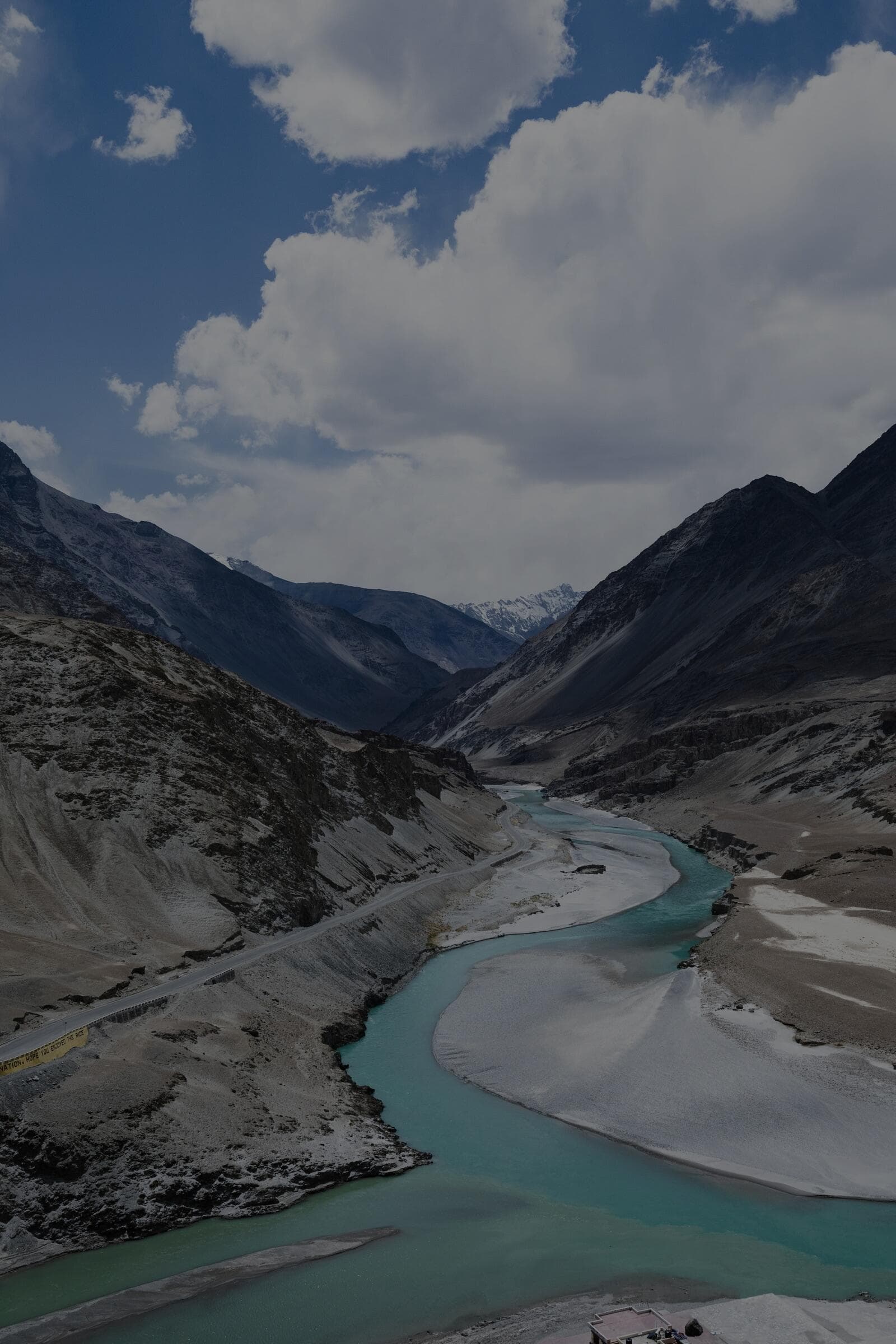
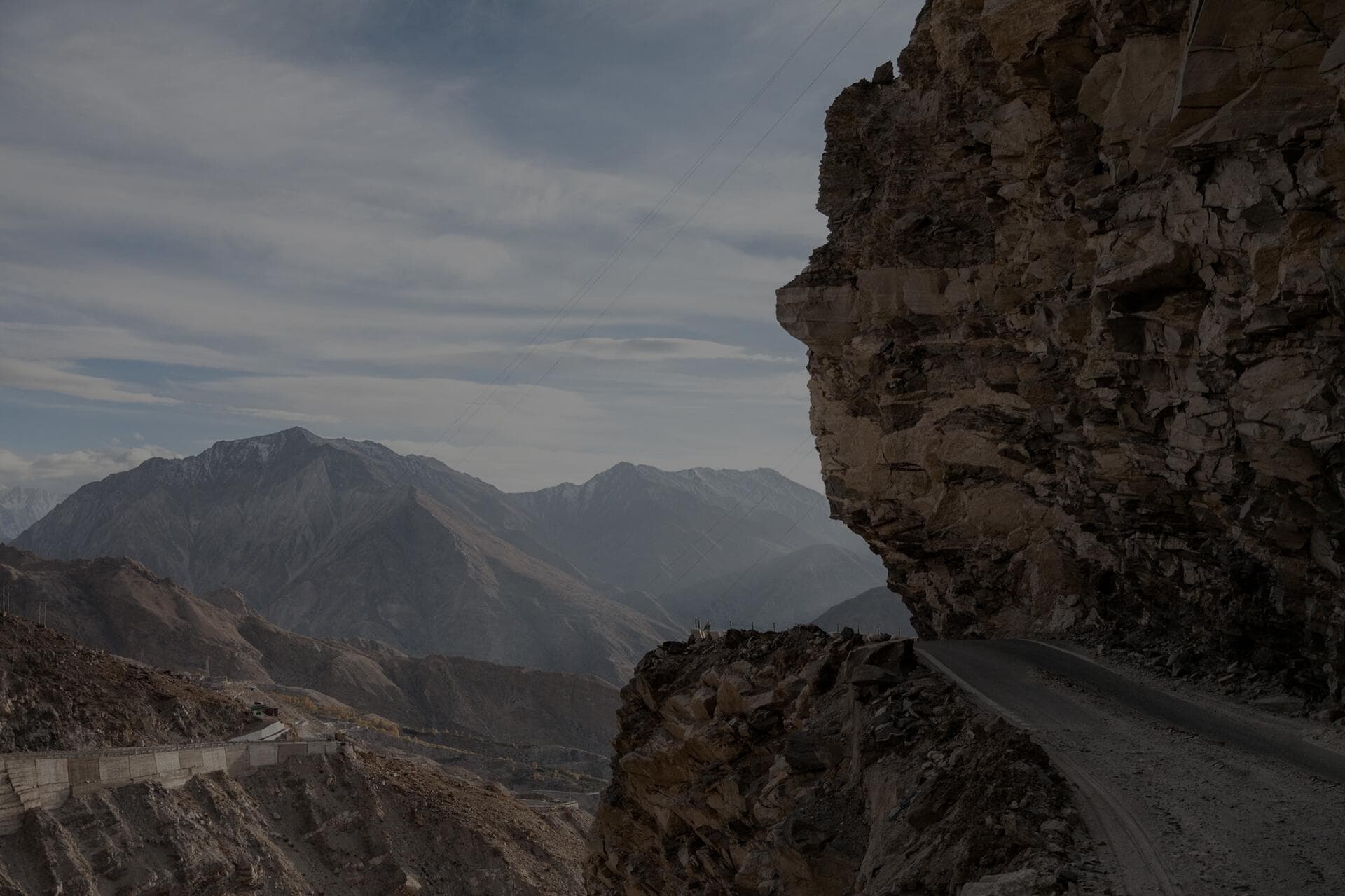
It is worth walking through the journeys that built this Thar, because the rig is really a map of them. The wet Western Ghats weekend that retired his softshell taught him that in serious rain, deploy speed and a hard shell are not luxuries - he wanted to be out of the weather in under a minute, not wrestling canvas at one in the morning, and the AutoNest answered that exactly. A Ladakh run that came up short on water taught him the difference between guessing at autonomy and calculating it; the second HydroX26 tank, mounted low and central, means the dry stretches between Leh and the remote eastern reaches are now a non-issue rather than a detour. A run across Rajasthan and the Rann in the pre-monsoon heat sold him on the SaberLight 270, because an afternoon of desert sun with no shade is a camp you abandon, and the wrap turned the side of the vehicle into a place he could actually live and work. And a hundred small frustrations - the stove always at the bottom, the head torch never where he left it - drove the drawer system that he now rates above everything. Each trip wrote a line of the spec. That is what a real overland build looks like when it is honest: not a shopping list, but an autobiography of where the vehicle has been.

What you can copy from this build
You do not have to own a Thar, or take two years, to use what this rig teaches. The transferable lessons are simple and they apply to a Jimny, a Fortuner, a Gurkha, or anything else. First, get the safety and recovery foundation in before anything else - rated recovery points at both ends, quality traction boards, a deflator and compressor, sound tyres, and a sleep system rated to your actual conditions - because that core keeps you safe regardless of how the rest of the build evolves. Second, resist the catalogue. Take the vehicle out as it is, find out what actually limits you, and let that specific, demonstrated limit dictate the next purchase rather than buying for a problem you have only imagined. Third, mount heavy things low and central and keep the roof for the tent and light bulk, because no accessory is worth wrecking your handling and roll margin. And fourth, prize the boring upgrades - the drawer system, the second water tank, the organisation - because over a long trip they improve daily life more than the dramatic ones ever do. Follow that and you will end up, like this owner, with a lighter, cheaper, more capable, and far better understood vehicle than the person who bought it all at once and learned none of it.
Frequently Asked Questions
Should I build my Thar all at once or over time?
Over time, if you possibly can. Get the safety and recovery basics in first - sound tyres, rated recovery points, traction boards, a deflator and compressor, and a sleep system rated to your conditions - then let real trips tell you what to add next. This customer's two-year Thar is the case study: by adding only what a trip had proven he needed, he ended up lighter, simpler, cheaper, and better matched to his travel than an all-at-once build would have left him.
Does a continent-capable Thar need a winch?
Often not. This rig has crossed serious ground for two years without one, because traction boards, a kinetic rope, and a buddy vehicle handle the overwhelming majority of real recoveries, and a winch adds significant nose weight, cost, and complexity. Fit a winch when your actual routes demand vertical pulls or you regularly travel solo in genuinely remote terrain. For most Thar owners, the recovery budget is better spent on quality boards, a rope, rated points, and good tyres first.
What was the single best upgrade on this build?
The owner's own answer is the drawer system - not the most exciting part, but the one that changed daily life on the trip the most. With everything assigned one home, he stopped unpacking half the vehicle to find anything and could locate any item in the dark, which over a two-week expedition saves enormous time and temper. It is a recurring theme among experienced overlanders: the upgrades that transform a trip are rarely the dramatic ones, but the organisational ones that make the vehicle easy to live out of day after day.
Gear featured in this story
The kit named above, with current pricing - tap through for full specs.
Put it into practice
Write your own chapter - shop the gear or come drive with us.