
Stories
Customer Rig Spotlight: A Fully-Kitted Toyota Hilux Expedition Build
A look inside a customer's fully-kitted Toyota Hilux overland build, from the rooftop tent to the water and recovery setup.
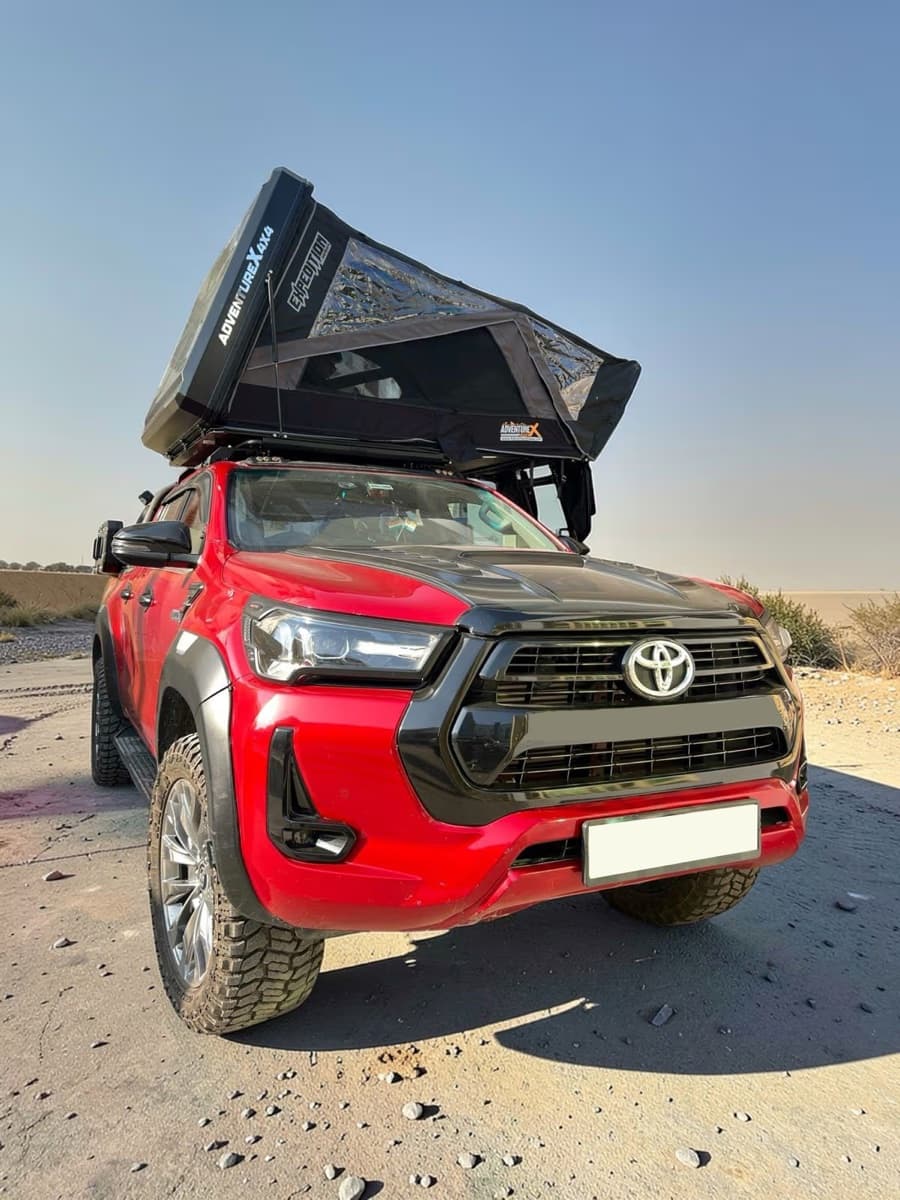
This month's rig spotlight is a fully-kitted Toyota Hilux built for multi-week Himalayan expeditions by Vikram, a customer from Pune who wanted one vehicle that could be entirely self-sufficient for ten days off-grid. The build centres on a Bison61 hardshell expedition tent on a bed rack, a HydroX26 water tank, a SaberLight 270-degree awning, TractionX snow chains, and a ThermaEvo heater, all chosen to work as a system rather than a pile of accessories. Here is exactly how the rig is laid out, why each choice was made, and what Vikram has learned running it across Ladakh and Spiti.
The Foundation: Why A Hilux And A Bed Rack
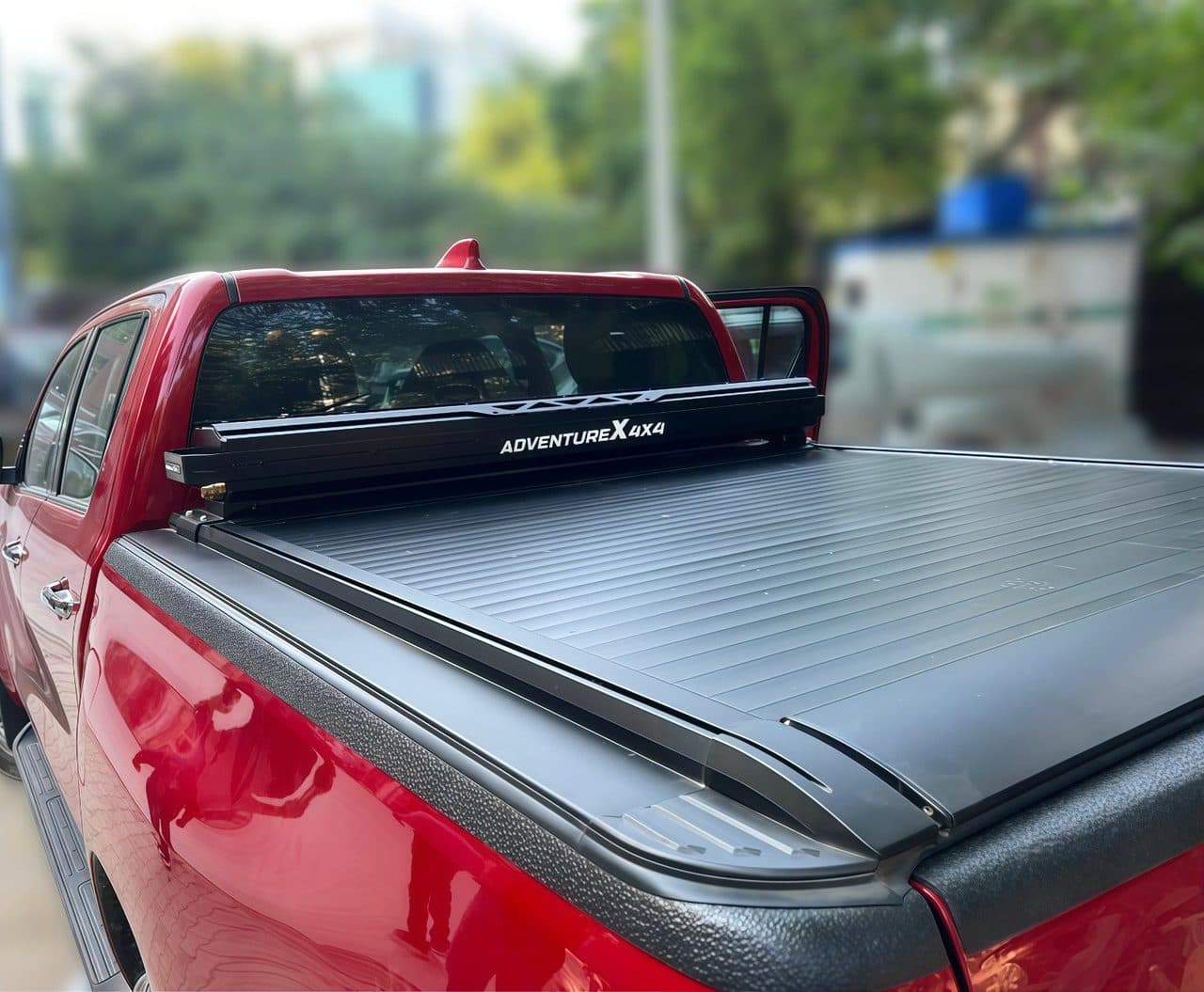
Vikram started, correctly, with the platform and the load plan rather than the shiny parts. The Hilux was chosen for its payload and that long, strong bed, which opens up mounting options no smaller vehicle offers. A bed rack lets the Bison61 hardshell sit over the load bed, keeping weight distributed and leaving the cab roof clear. The principle here is one we preach constantly: design the rig around weight and balance first, because a beautifully kitted truck that is overloaded or top-heavy is a liability on a shelf road, not an asset. The bed-rack choice also sidesteps the roof-load problem entirely - instead of fighting a 90 kg dynamic cab-roof limit, the tent's weight goes onto the bed and down through the chassis where it belongs.
- Platform first: the Hilux for payload and a long, strong load bed.
- Bed rack mounting to distribute the tent's weight and keep the cab roof clear.
- Bison61 hardshell expedition tent for durability on long, harsh trips.
- Weight and balance planned before any accessory was bolted on.
Sleeping Quarters: The Bison61 Hardshell
For a build meant to live outdoors for weeks at a time, Vikram chose the Bison61 expedition hardshell over a softshell, and his reasoning was sound. A hardshell shrugs off weeks of weather, packs down clean for highway transit, and stands up to the wind loads of high, exposed camps. Mounted on the bed rack, it gives him a fast, weatherproof bedroom that is ready in minutes after a long day. On a Hilux with this much payload, the weight of a hardshell is a non-issue, which is exactly why we recommend this platform for serious expedition tents. The clamshell opens in under a couple of minutes, which matters more than it sounds: at a high, cold Ladakh camp you want to be inside and warm with daylight still in the sky, not fighting canvas in a freezing wind at dusk.
Water And Power: The HydroX26 And Heating
Self-sufficiency for ten days means carrying water seriously, so the rig runs a HydroX26 water tank, sized and mounted low to keep the centre of gravity sensible. For warmth on those high, cold nights, a ThermaEvo heater takes the bite out of the tent before sleep. Vikram is disciplined about it, ventilating properly and never running it sealed, and that discipline is the whole point: good gear used responsibly is what keeps a long expedition safe rather than just comfortable. Water is the heaviest single consumable on a long trip - every litre is a kilo - so mounting the HydroX26 low and central rather than high up is not a detail, it is what keeps the loaded Hilux planted on an off-camber track instead of leaning.
I stopped thinking of it as buying accessories and started thinking of it as building a system. Once the water, the tent, and the heat all worked together, ten days off-grid stopped being scary and started being the plan.
Living Space And Traction: SaberLight And TractionX
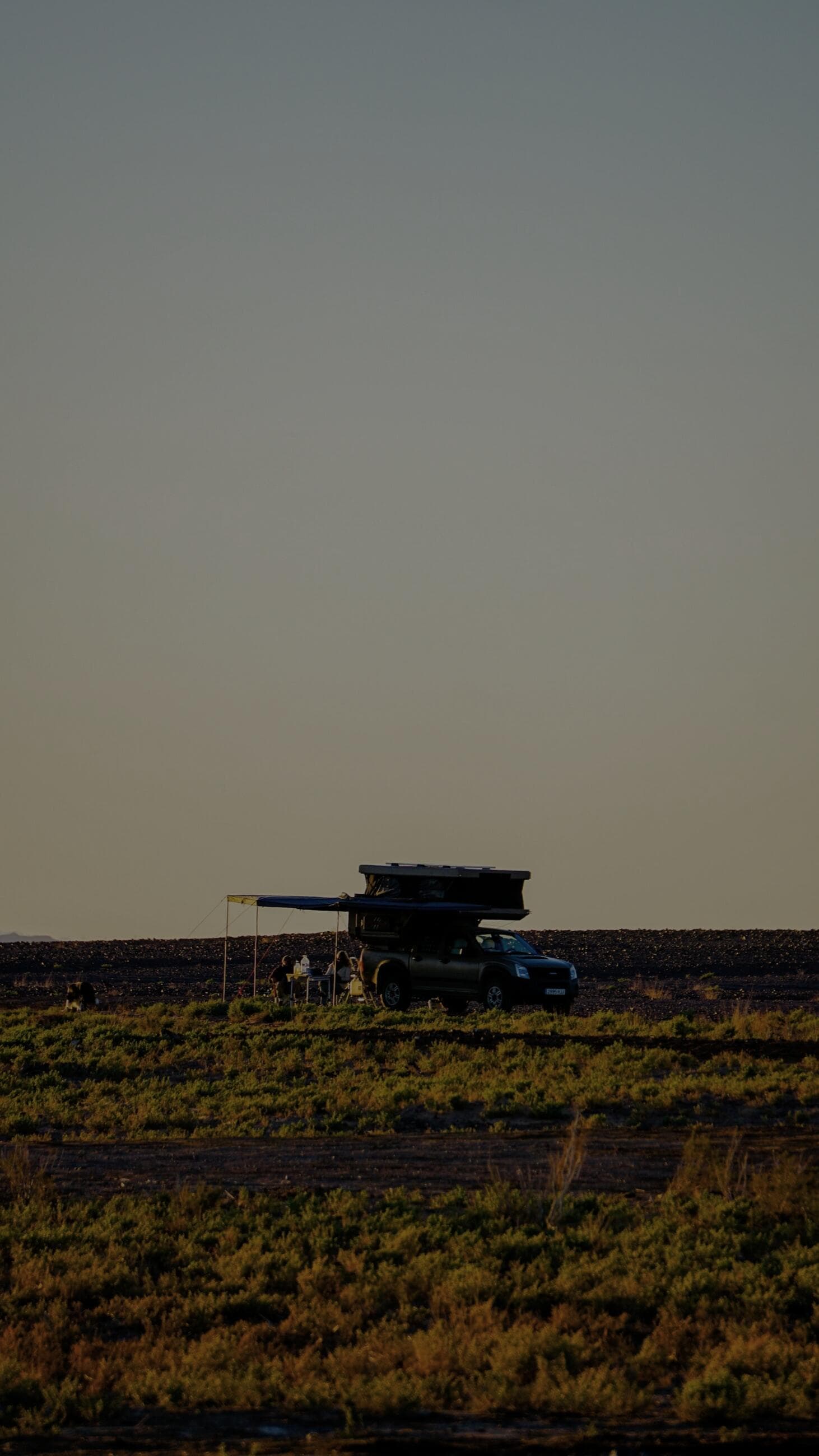
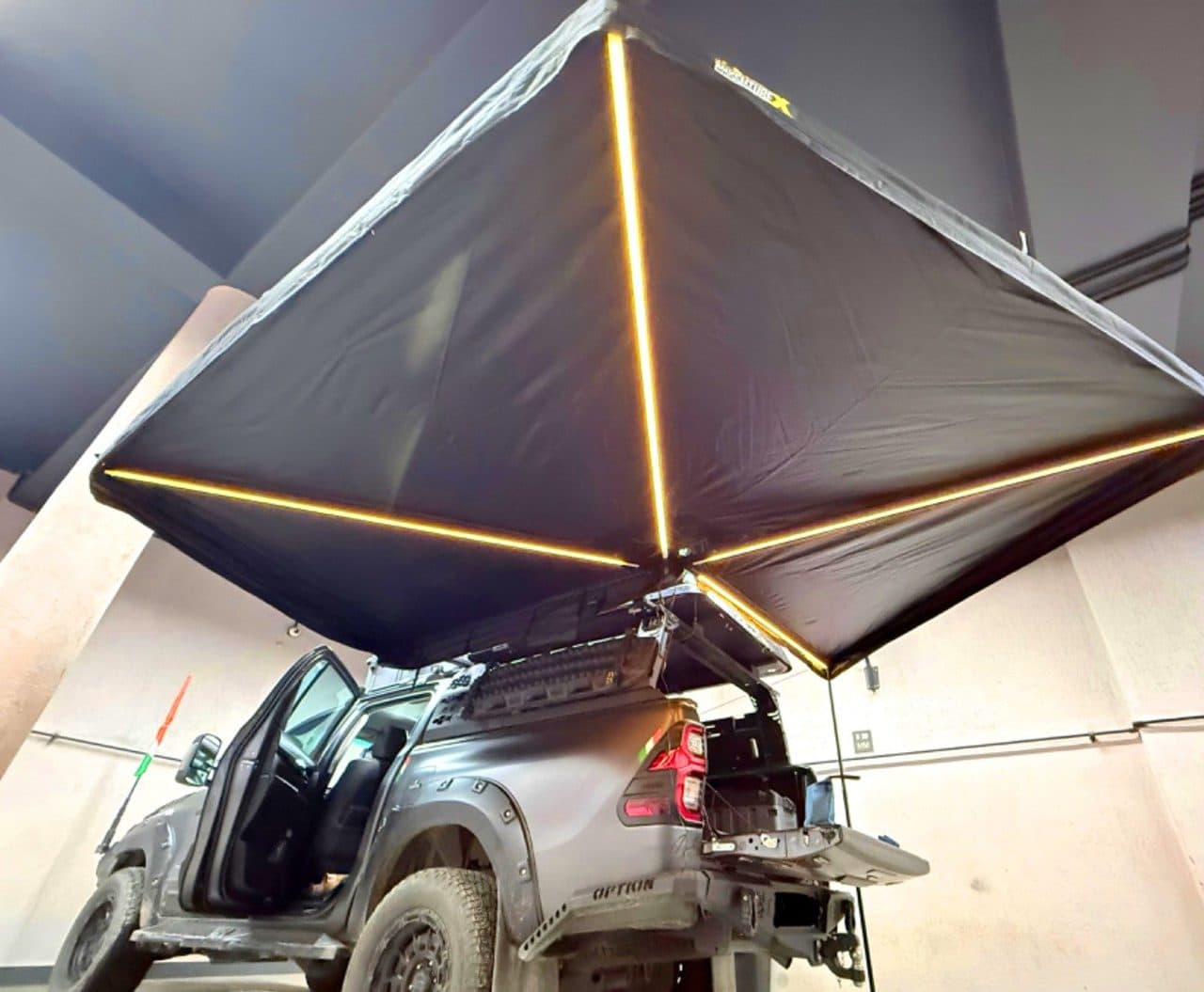
Two more choices round out the rig. The SaberLight 270-degree awning wraps around the side and rear of the Hilux, turning the patch of dirt beside the truck into a shaded, weatherproof living room for cooking and resting, which matters enormously on a long trip where you are not just sleeping but living out of the vehicle. And TractionX snow chains live permanently in the kit, because on Himalayan winter routes the difference between chains and no chains is the difference between making the climb and turning back, or worse. On the climb to Komic or over a snow-dusted pass, Vikram fits the chains before the ice, not after he is stuck on it - the whole point of carrying them is to use them early.
- SaberLight 270-degree awning for shaded, weatherproof living and cooking space.
- HydroX26 water tank mounted low for ten-day self-sufficiency without spoiling balance.
- ThermaEvo heater used with strict ventilation discipline on cold nights.
- TractionX snow chains carried as standard for winter Himalayan traction.
How The Rig Loads: Where Every Heavy Thing Lives
The kit list gets the attention, but the loading plan is what makes the rig drive well, and it is worth spelling out because it is the part readers can copy directly. Vikram's rule is the one we teach: heavy and dense goes low and between the axles, light and bulky goes high. The result is a Hilux that, fully loaded for ten days, still corners and brakes like a Hilux rather than a wallowing barge.
- Low and central in the bed: the HydroX26 water, the fridge, the recovery kit, tools and spares - all the dense weight kept down where it barely affects handling.
- On the bed rack up top: only the Bison61 hardshell and bedding - light and bulky, never dense.
- Side of the truck: the SaberLight awning and the TractionX chains, accessible without unpacking the whole rig.
- Cabin: documents, medical kit, day food and anything needed on the move, so nobody is climbing into the bed at a roadside.
- Fuel: proper metal jerry cans mounted externally where fumes vent, never loose plastic inside the cabin.
What This Build Gets Right
What makes Vikram's Hilux a standout is not the length of the kit list, it is the coherence. Every part was chosen to support a clear goal of ten days of self-sufficient Himalayan travel, and nothing was added just to look the part. The platform suits the load, the tent suits the platform, the water and heat suit the duration, and the recovery and traction kit suit the terrain. That is the lesson we hope every reader takes from a rig spotlight: build toward a defined trip, respect weight and balance, and choose gear that works as a system, and the rig will carry you safely instead of becoming its own problem.
If You Are Copying This Build, Start Here
Plenty of readers want to replicate a build like this, and the right way to do it is in order, not all at once. Buying the shiny parts first and figuring out the load later is exactly backwards. Define the trip, then the platform, then the load plan, and only then the gear - and your version will be as coherent as Vikram's instead of a heavy collection of things that fight each other.
- Define the trip honestly: how many days off-grid, what season, which routes - ten winter days in Spiti is a very different brief from a long summer Ladakh loop.
- Pick the platform for the load: payload and bed length first, looks last.
- Write the load plan before buying anything: where the water, fridge, recovery kit and tent will live, and check it against your payload.
- Buy the sleep and shelter system: a hardshell like the Bison61 plus the SaberLight awning, sized to the platform.
- Add water, power and heat to match the duration, then recovery and traction to match the terrain - and weigh the finished rig loaded before you trust it on a shelf road.
Frequently Asked Questions
Why a Hilux instead of a Thar or Fortuner for this build?
Mainly payload and the long load bed, which allow a bed-rack hardshell, a big water tank, and full recovery kit without overloading. The Thar and Fortuner are excellent too but offer less cargo flexibility, and on the Thar in particular you would be fighting a tighter roof-load and payload budget for a ten-day self-sufficient build.
Is a hardshell tent worth it over a softshell?
For long, harsh, multi-week expeditions, yes. A hardshell handles sustained weather and high-wind camps better and packs cleaner for transit, and the Hilux easily carries the extra weight. For shorter, gentler trips a softshell can make sense, but Vikram's brief was ten hard days, and that is hardshell territory.
How much water do you need for ten days off-grid?
It depends on people and cooking, but a dedicated tank like the HydroX26 mounted low is the right approach, sized to your group and kept low for balance. Plan your daily drinking and cooking needs, multiply by the days between reliable refills, and remember every litre is a kilo you have to carry and keep low.
What is the single most important thing in an expedition build?
Weight and balance. Plan the load before the accessories, because a top-heavy or overloaded rig is dangerous on shelf roads no matter how good the individual parts are. Vikram's build works precisely because the heavy things live low and central and the roof carries only the light, bulky tent.
Gear featured in this story
The kit named above, with current pricing - tap through for full specs.
Put it into practice
Write your own chapter - shop the gear or come drive with us.