
Vehicle Builds
Building a Toyota Hilux Into an Expedition Overlander: The Reference Build
How to turn an Isuzu-rivalling Toyota Hilux into a Spiti-ready expedition rig - tyres, lift, armour, payload and real costs.
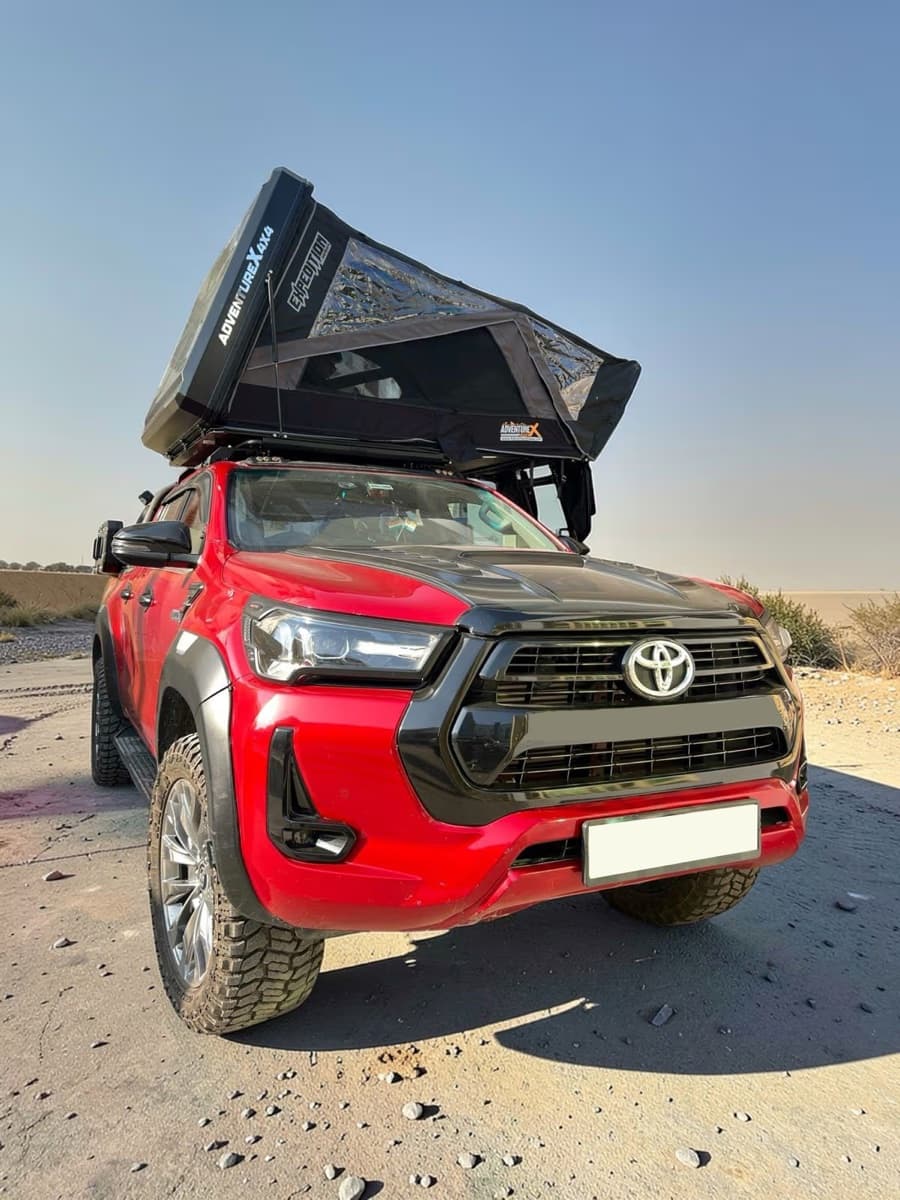
The Toyota Hilux is the reference expedition overlander in India because it pairs a ladder-frame chassis, a 500 kg-plus payload and the 2.8L 1GD-FTV diesel with the kind of parts availability you can actually lean on in Leh or Tezpur. A sensible build is a 40-50mm suspension lift, 265/65 R17 or 265/70 R17 all-terrains, an aluminium bull bar with a winch, a dual-battery setup, a drawer system and a hardshell rooftop tent. Done right you spend roughly Rs 6,00,000 to Rs 9,00,000 on top of the truck and end up with a rig that crosses Spiti water bars, sleeps two off the ground and still drives home on the highway at 100 kmph without drama.
Why is the Hilux the reference overland platform?
Three reasons. First, the chassis: a fully boxed ladder frame designed to carry a one-tonne tray, so adding 300 kg of build weight does not frighten it the way it frightens a monocoque SUV. Second, the drivetrain: the 204 PS 2.8L diesel with 500 Nm, a proper low-range transfer case and a rear diff lock on higher trims. Third, and this is the one people underrate, the global parts shadow. A wheel bearing, a tie rod, a radiator - these are the same parts that keep a million Hiluxes running across Asia and Africa, so even a roadside mechanic in Kaza has a fighting chance. For an expedition that may sit four days from the nearest dealer, that boring reliability is the whole point.
It is worth being honest about where the Hilux is not the obvious pick. Against a Mahindra Thar it is longer, wider and heavier, which means tighter switchbacks on the Spiti road and the narrow shelf of Zoji La demand more care and more shuffling. Its breakover angle - the limiting factor on sharp crests - is worse than a short-wheelbase Thar or a Jimny because of that long wheelbase, so on rutted village climbs you pick your line to avoid bellying the chassis. What you trade that away for is payload and range: the Hilux carries water, fuel and a full expedition kit without the rear sagging, and the big diesel lopes along empty highway stretches at 100 kmph in comfort. For point-to-point expeditions across the Himalaya it is the right tool; for tight technical trails a smaller vehicle is easier. Choose for the trip you actually do.

What tyres and wheels should you run?
The stock 265/65 R17 highway tyre is the first thing to bin. For a do-everything expedition truck, fit a 265/70 R17 all-terrain (roughly 32 inches tall) on the factory rim, or step to a 285/70 R17 if you also add a body-mount chop and want maximum clearance. Keep load rating at C or higher because a loaded Hilux with a rooftop tent is heavy. Run a real spare on a matching wheel, not a space saver, and carry a plug kit plus a 12V compressor so you can air down to 18-20 psi on rock and sand and air back up for tarmac.
- Daily-plus-expedition: 265/70 R17 AT, load range C, on stock 17x7.5 rims - no rubbing, minimal speedo error.
- Maximum capability: 285/70 R17 AT with a small body-mount chop and trimmed liners.
- Snow and ice on the Spiti circuit: pair the ATs with TractionX snow chains sized to the exact tyre.
- Always: full-size matching spare, plug kit, and a compressor rated to refill a 32-inch tyre.
Tyre pressure is the cheapest performance upgrade you own, so learn to use it. On tarmac a loaded Hilux wants near its placard pressure for stability and even wear. On the loose moraine below Kunzum La or the sandy More Plains, drop to 18-20 psi to lengthen the contact patch and float over the surface instead of digging in - this single move recovers more vehicles than any locker. On sharp rock, do not over-deflate or you risk pinching a sidewall on the moraine, which is the most common puncture in Spiti. Re-inflate to road pressure before you hit tarmac again, because running soft at highway speed builds heat and destroys tyres. A compressor that can refill a 32-inch AT in a few minutes turns all of this from a chore into a habit, and on snow the TractionX chains go on over whichever AT you have chosen, sized to that exact tyre so they do not foul the arches.
How much lift does it actually need?
Resist the temptation to go tall. A 40-50mm (1.5-2 inch) lift from a matched coil-and-shock or leaf-pack-and-shock kit is the sweet spot for a loaded Hilux. That clears the bigger tyres, restores ride height lost to the weight of a bar, drawers and tent, and keeps the centre of gravity sane for a vehicle that already sits high. Critically, match the rear leaf pack or add-a-leaf to your actual loaded weight - if you regularly carry a 60 kg rooftop tent plus gear, a constant-load rear setup stops the sag that wrecks geometry and headlight aim. Going beyond 50mm usually means CV angle and driveline vibration problems that are not worth it for India's terrain.
The mistake we see most is people buying a lift for the look and then loading the truck until it squats back down, which leaves the headlights pointing at the treetops and the suspension permanently near the bump stops. The fix is to spec the rear for your real loaded weight, not the brochure. Weigh the truck fully kitted - tent, drawers, fridge, water, fuel, passengers - and choose a leaf pack or add-a-leaf that holds the designed ride height under that load. A correctly loaded 40-50mm setup rides better, steers more predictably and keeps your beam aimed at the road, which matters enormously on the unlit sections of the Manali-Leh highway where oncoming trucks and a wandering beam are a genuine hazard. Tall lifts beyond 50mm bring driveline vibration and CV angle trouble that you will be chasing for the life of the build, for clearance you almost never need on Indian terrain.
We tell every Hilux owner the same thing: build the rear suspension for the day the truck is fully loaded for Ladakh, not for the empty truck in your driveway. Payload management is what separates a real expedition rig from a mall-crawler with stickers.

What is the right armour and recovery setup?
Start with an aluminium bull bar rated for a winch and airbag-compatible, then add rock sliders that are rated to jack the vehicle, not just decorative steps. A 9,500 lb winch with synthetic line covers a fully loaded Hilux. Underneath, a steel or aluminium bash plate set protects the sump, transfer case and fuel tank on the rocky climbs into Spiti villages. Recovery kit is non-negotiable: a kinetic rope, two rated bow shackles or soft shackles, a set of recovery boards, and a long-handle shovel. Keep the heavy steel - a full steel bumper, a second spare - off the build unless you genuinely need it, because every kilo you add up high is a kilo stolen from your usable payload and your stability.
Match the recovery kit to how vehicles actually get stuck in the Himalaya, which is rarely a dramatic rollover and usually a wheel sunk in a river-crossing bog or a rut on a soft shoulder. For that, the recovery boards and a shovel solve ninety percent of cases - dig, board, drive out, no second vehicle needed. The kinetic rope and rated shackles are for when a companion vehicle can give you a controlled snatch, which is why we run expeditions in pairs. The winch earns its weight on the genuinely sticky climbs and self-recoveries when there is a solid anchor, but anchors are scarce in treeless Spiti, so carry a ground anchor or be ready to use the second vehicle as the recovery point. The discipline that underpins all of it is weight: every kilo of steel bumper and spare tyre mounted high steals usable payload and raises the centre of gravity, so fit the lightest armour that does the job and keep the rest of the load low and central.
How do you set up sleeping and power?
For a couple, a hardshell rooftop tent like the AdventureX4x4 Bison61 mounts to a bed rack or full-length roof rack and deploys in under a minute, keeping you off the cold, wet, snake-prone ground at altitude. Pair it with a 270-degree awning for shade and rain cover at camp. For power, a dual-battery system with a DC-DC charger and a 100Ah lithium runs a 50L fridge, lights and device charging for days; add a 120W solar panel for longer static camps. A drawer system in the tray turns chaos into a kitchen and a recovery store you can find in the dark.
- Sleep: AdventureX4x4 Bison61 hardshell rooftop tent on a bed or roof rack, 270-degree awning alongside.
- Power: dual battery, DC-DC charger, 100Ah lithium, 50L fridge, 120W solar for static camps.
- Storage: tray drawer system, water tank of 40-50L plumbed to a tap, a recovery board mount.
- Comfort: diesel-friendly tyre pressures dialled in, a quality compressor, and a tyre repair kit.
A word on the power system, because lithium behaves differently in the cold that defines Himalayan trips. A 100Ah lithium battery happily runs a 50L fridge, lights and charging for days off a DC-DC charger fed by the alternator, and a 120W solar panel tops it up at a static camp. But most lithium chemistries should not be charged below freezing, and a -10C Chandratal night is well below that, so mount the battery inside the cab or a heated drawer rather than exposed in the tray, and let it warm before you rely on charging in the morning. The fridge is the single best comfort upgrade on a long expedition - cold food and no daily ice run - and the dual-battery setup means you can run it overnight without ever worrying about starting the truck the next day. On snow trips a ThermaEvo heater run sensibly off the same system takes the edge off a brutal night in the tent.

What does a reference Hilux build cost?
Budget in stages. A capable, livable build lands around Rs 6,00,000 to Rs 9,00,000 over the price of the truck, depending on how much you fabricate versus buy. The rooftop tent and rack run roughly Rs 1,10,000 to Rs 1,80,000; suspension Rs 70,000 to Rs 1,40,000; bar, sliders and bash plates Rs 1,20,000 to Rs 2,00,000; dual-battery and fridge Rs 90,000 to Rs 1,50,000; tyres and a spare around Rs 60,000 to Rs 90,000. The trick is sequencing: do tyres, suspension and recovery gear first because they make every trip safer, then add sleeping, power and storage as your trips get longer.
If money is tight, a worked priority order keeps every rupee buying safety first. Stage one, for well under Rs 2,00,000: good all-terrains, a full-size spare, a plug kit, a compressor and a basic recovery kit of boards, a rope and shackles - this alone lets the stock truck tackle Spiti in summer. Stage two: the matched 40-50mm suspension to carry the load you are about to add, then bash plates to protect the driveline on rocky climbs. Stage three, once your trips stretch to a week or more: the rooftop tent and awning for sleeping, then the dual-battery and fridge for living. The bull bar and winch sit late in the list because they are the heaviest and least often used items, valuable on the big remote trips but not what makes a first Spiti run safe. Build in that order and the truck is trip-ready and safe at every stage rather than a half-finished project.
Frequently Asked Questions
Is the Hilux too heavy and thirsty for long expeditions?
It is heavier and thirstier than a Thar, but the trade is range-friendly torque and a payload that swallows water, fuel and gear without sagging. Expect roughly 10-12 kmpl loaded on the highway and plan jerry cans for the long empty stretches beyond Kaza or in Zanskar.
Can I fit a rooftop tent on the Hilux without a canopy?
Yes. A bed rack that bolts to the tub rails or a sports-bar-mounted rack carries a hardshell tent like the Bison61 directly over the tray, leaving the bed underneath for drawers and storage. A canopy is optional and mainly about weatherproofing your gear.
Do I need lockers, or is the rear diff lock enough?
For Spiti, Ladakh and most Northeast tracks, a rear diff lock plus good ATs and correct tyre pressures handles the vast majority of obstacles. A front locker is a worthwhile upgrade only if you are tackling genuinely extreme low-traction climbs regularly.
How much payload do I really lose to the build?
A typical armour-plus-tent-plus-power build adds 250-350 kg. On a Hilux that still leaves useful headroom, but it is exactly why we insist on matching the rear suspension to your loaded weight and weighing the truck before a big expedition.
Is the Hilux too big for the tight sections of Spiti and Zoji La?
It is manageable but demands care. The long wheelbase and width mean tighter switchbacks and the narrow Zoji La shelf need patient shuffling and good line choice, and the breakover angle is worse than a short Thar on sharp crests. A confident driver handles it fine; if your trips are mostly tight technical trails rather than point-to-point expeditions, a smaller vehicle is easier.
Gear featured in this story
The kit named above, with current pricing - tap through for full specs.
Put it into practice
Building your own rig? Start with the kit that earns its place first.