Vehicle Builds
Mahindra Scorpio-N Overland Build: Turning a Family SUV Into an Expedition Rig
How to build a Mahindra Scorpio-N into a comfortable seven-seat-capable overlander for Spiti and Ladakh without wrecking the ride.
The Mahindra Scorpio-N builds into an excellent comfort-first expedition rig because it keeps a body-on-frame chassis, offers a 175 PS 2.2L diesel with 4XPLOR four-wheel drive and a rear diff lock on the top trim, and still carries the family in air-conditioned comfort to the trailhead. A sensible build is a mild 30-40mm lift, 245/65 R17 or 255/65 R18 all-terrains, a roof rack with a hardshell rooftop tent, underbody protection and a dual-battery fridge setup. You keep the daily-driver civility and the seven-seat flexibility while gaining the clearance, traction and self-sufficiency to run Spiti and Ladakh confidently. Budget roughly Rs 3,50,000 to Rs 6,00,000 over the vehicle.
What makes the Scorpio-N such a satisfying base is that you are not fighting the vehicle to make it capable - you are completing it. The factory already gives you the ladder frame, the proper low-range transfer case, the mechanical rear locker on the 4XPLOR trim and Mahindra's terrain modes; the build simply adds clearance, the ability to sleep and cook off-grid, and protection for the bits that hang low. The whole philosophy here is comfort-first overlanding: the same machine that takes the family to school in Faridabad does the 500-odd km transit to Manali in air-conditioned quiet and then climbs into Spiti with the gear to be self-sufficient for days. That dual life is the point, and it is why every choice below leans toward keeping the vehicle civilised rather than turning it into a hardcore rock buggy that punishes its passengers.
Can a family SUV really be an expedition vehicle?
Yes, and the Scorpio-N is one of the better candidates because it never gave up its ladder frame. Unlike monocoque crossovers, it has a separate chassis that tolerates a roof load, a lift and the pounding of corrugated Himalayan roads. The 4WD trim brings a proper low-range transfer case, a mechanical locking rear differential and Mahindra's terrain modes. What you are really doing with this build is adding clearance, traction and the ability to sleep and cook self-sufficiently, while keeping the climate control, the space and the on-road manners that make the long transit days to Manali or Siliguri genuinely pleasant for a family.
The ladder frame is the detail that does the heavy lifting, and it is worth understanding why. A separate chassis is designed to carry and twist - it tolerates the weight of a roof tent up high, it accepts a suspension lift cleanly, and it shrugs off the relentless corrugations of a road like the one to Kaza in a way a unibody crossover never will, because a monocoque carries its loads through the body shell itself. That is the structural reason a Scorpio-N can wear an expedition kit and still feel solid after a hard season, while a soft-roader would be rattling itself loose. Pair that frame with the 4XPLOR system's low range for crawling, the rear locker for the moment one wheel lifts on a rocky climb, and the terrain modes for snow and sand, and you have a genuine off-road platform underneath the family-SUV comfort. The build is not about overcoming the vehicle's nature; it is about exploiting a body-on-frame 4x4 that happens to also be a pleasant seven-seater.
How much lift and what tyres suit the Scorpio-N?
Keep it modest. A 30-40mm lift via a spacer or a matched coil-and-shock kit clears larger all-terrains and restores the ride height you lose under a roof tent and a loaded boot, without upsetting the Scorpio-N's reasonably composed on-road behaviour. For tyres, a 245/65 R17 all-terrain on the lower trims or a 255/65 R18 AT on the larger alloys is the practical sweet spot - tall enough for real clearance, restrained enough to keep the speedo honest and the ride comfortable. Avoid going dramatically oversized; this is a vehicle whose whole appeal is doing the expedition without beating up its passengers.
- Lift: 30-40mm matched kit - clears ATs, corrects roof-tent squat, keeps the ride civil.
- Tyres: 245/65 R17 AT (lower trims) or 255/65 R18 AT (top trim alloys), load range matched to a loaded SUV.
- Pressures: air down to 22-26 psi on rough tracks, refill for highway with an onboard compressor.
- Snow: fit TractionX chains sized to your exact tyre for the Spiti and Ladakh ice.
Two things deserve a closer look here: why modest is the right call, and how to think about pressures on a heavy SUV. Going dramatically oversized on tyres or lift looks the part but quietly taxes everything - it strains the driveline, throws off the speedometer and odometer, blunts the steering, hurts an already heavy vehicle's fuel economy, and raises the centre of gravity on a tall rig that is already carrying a tent up top. A 30-40mm lift with 245/65 R17 or 255/65 R18 all-terrains is the sweet spot precisely because it buys real-world clearance and better approach and departure angles without any of that penalty. On pressures, remember this is a loaded SUV, not an empty Jimny, so it wants slightly more air than a light vehicle on the same ground - 22-26 psi on rough tracks gives you a longer contact patch for comfort and traction over corrugations and rock without rolling a tyre off the rim, and then you air straight back up to highway pressure with an onboard compressor before you rejoin tarmac. For the Spiti and Ladakh ice, carry TractionX chains sized to your exact tyre and fit them on the road before you need them, not after you have slid to a stop.
Where do you sleep seven people, or do you?
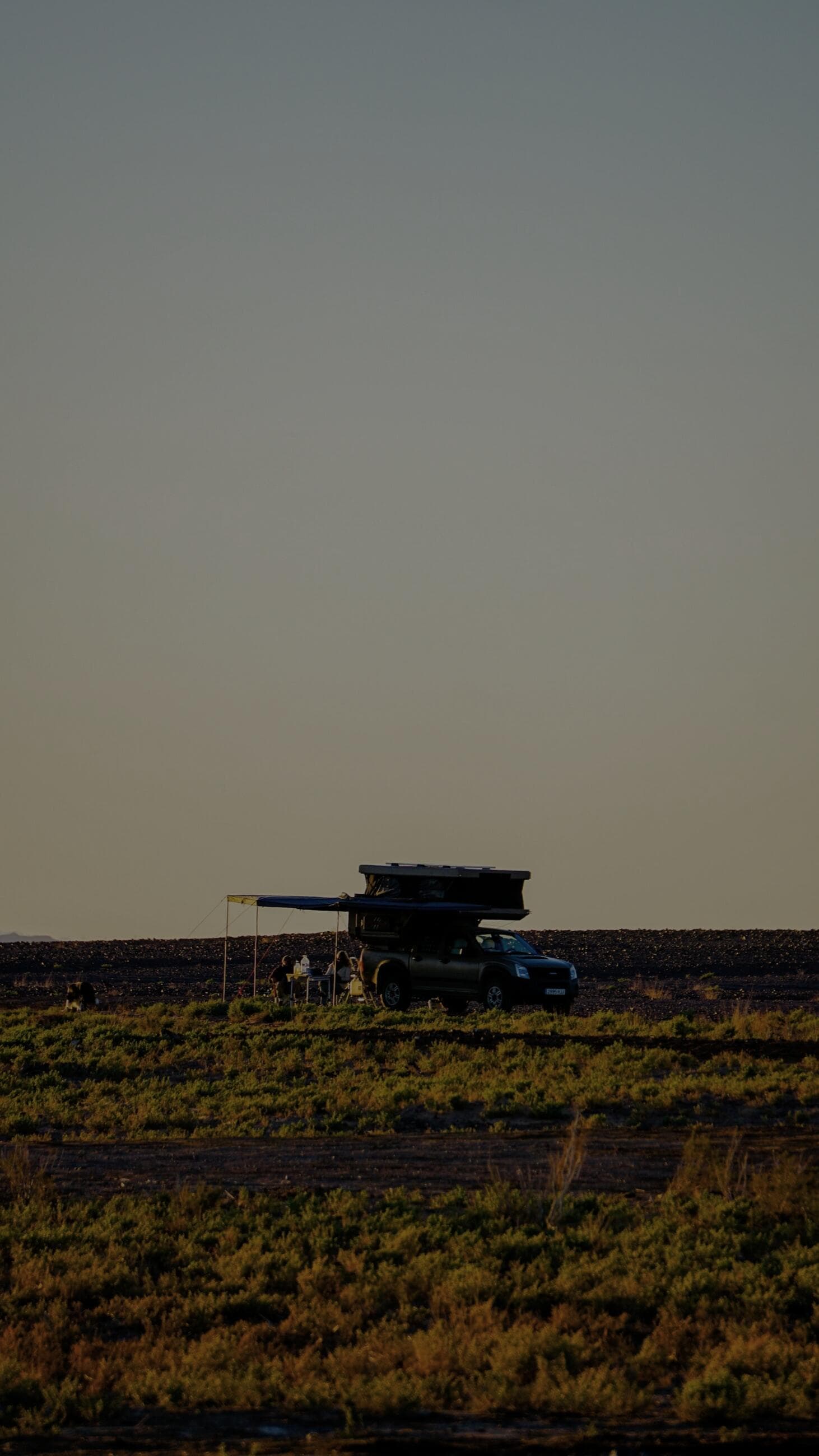
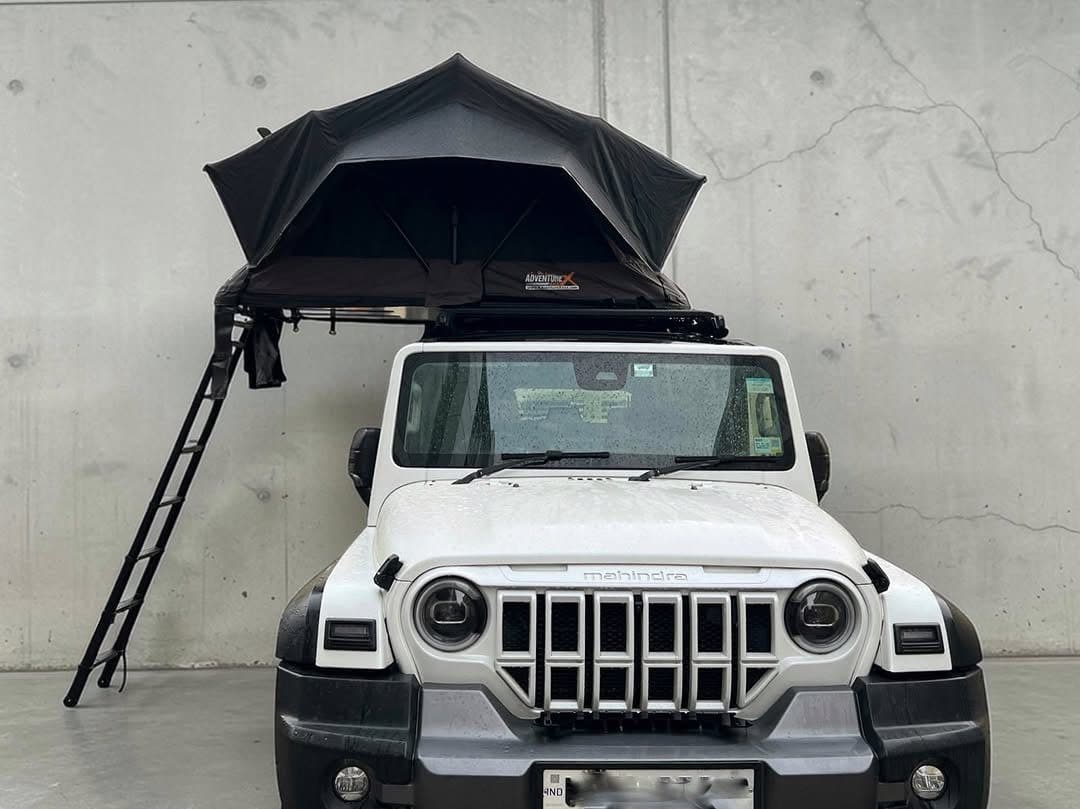
Be realistic: you do not sleep seven comfortably on an overland trip, and you should not try. The honest setup is a rooftop tent for two adults up top - the AdventureX4x4 Leopard41 softshell is a clean fit on a sturdy Scorpio-N roof rack - with the rest of the party in a ground tent pitched alongside, or in the folded-flat cabin for kids. For a couple-plus-kids expedition, the rooftop tent keeps the adults off the cold ground and frees the cabin and boot for gear. The Scorpio-N's length helps here: there is genuine room for a drawer or a fridge slide in the boot while still seating five up front.
The mistake families make is trying to turn one SUV into a moving hotel for seven. We build the Scorpio-N as a two-up sleeper with serious gear storage and let the trip breathe - tent for the kids, rooftop tent for the parents, fridge in the boot. Comfort comes from the right system, not from cramming everyone into one vehicle.
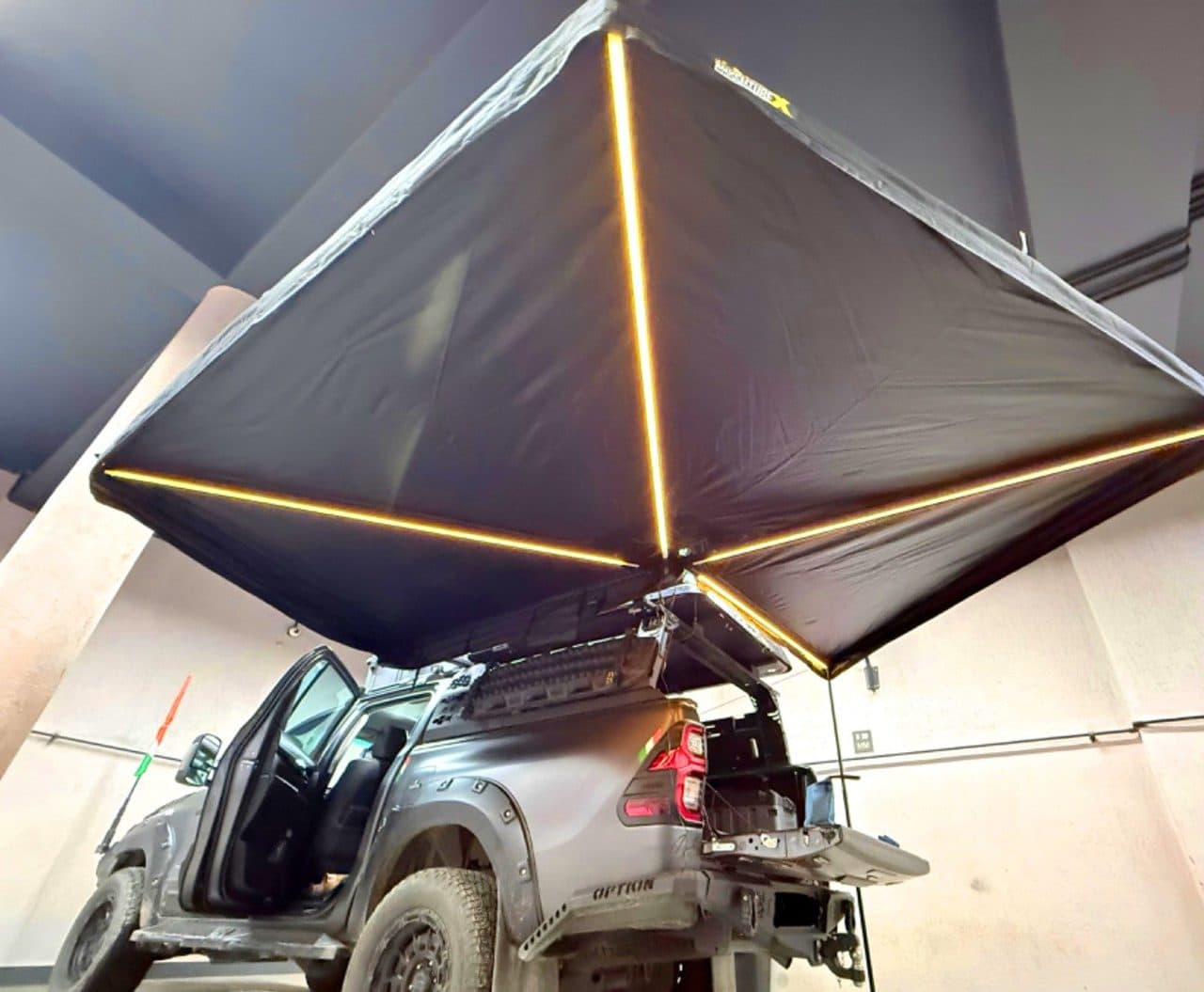
Work through a realistic family configuration and the logic gets concrete. Two adults sleep up top in the Leopard41 - off the cold ground, deployed quickly after a long drive, sheltered from the wind that builds in any Spiti or Ladakh valley after dark. Two children sleep in a good ground tent pitched alongside, or, if they are small, in the folded-flat second row of the cabin. That arrangement frees the boot entirely for a drawer system and a fridge slide, and it means nobody is sleeping badly because you tried to fit a family of four or five into one cabin. A SaberLight 270 awning off the side gives you a shaded, rain-covered living and cooking space that ties the camp together. The key mental shift is the one Arjun describes: comfort on a family expedition comes from the right system - a sleeping rig, a kitchen, a power setup - not from cramming everyone into the vehicle. Use the Scorpio-N's length and seven-seat flexibility to carry people on transit days and carry gear on camping days, switching between the two as the trip demands.
What protection and recovery gear does it need?
The Scorpio-N sits higher than a crossover but still needs its vitals protected on rocky village climbs. A skid plate set for the sump and transfer case, plus sturdy rock sliders rated to support the vehicle, are the priorities. A bull bar is optional - useful if you want a winch mount and some frontal protection, but it adds weight up front, so choose aluminium. Recovery essentials are the same as any expedition: a kinetic recovery rope, rated shackles, a pair of traction boards for when the family SUV inevitably finds a soft patch, and a long shovel. A 12V compressor and a tyre plug kit round out the self-recovery basics.
- Protection: sump and transfer-case skid plates, vehicle-rated rock sliders, optional aluminium bull bar with winch mount.
- Recovery: kinetic rope, rated bow or soft shackles, two traction boards, a long-handle shovel.
- Self-sufficiency: 12V compressor, tyre plug kit, a full-size spare on a matching wheel.
- Power: dual battery with DC-DC charger, 100Ah lithium, 40-50L fridge for the family supplies.
Prioritise this kit in the order it protects you. Skid plates for the sump and transfer case come first, because a single unlucky rock on a steep village track in Spiti can hole an oil pan and end the trip on the spot - that is the failure that turns into a tow and a ruined holiday. Rock sliders that are genuinely rated to support the vehicle's weight come next, both to protect the sills on rutted climbs and to give you a jacking point. A bull bar is genuinely optional; it earns its place mainly if you want a clean winch mount and some frontal protection, and if you fit one, choose aluminium so you are not hanging a slab of steel off the nose and ruining the front-end balance and economy. On the recovery side, the kit is the same as any serious expedition because a heavy family SUV will, eventually, find a soft patch of sand or snow - a kinetic rope and rated shackles to be snatched out by a convoy partner, two traction boards and a long-handled shovel for self-recovery, and a 12V compressor with a plug kit so a repairable puncture never strands you far from the nearest tyre shop, which in Ladakh can be a day away.
How do you power the fridge and camp?
A family expedition lives and dies by the fridge, so power is central. A dual-battery system with a DC-DC charger and a 100Ah lithium auxiliary battery runs a 40-50L fridge, camp lighting and device charging for the whole crew across multiple days. Add a 120-160W solar panel if you plan to camp static for more than a night between drives. Route USB and 12V outlets to the second and third rows so kids' devices charge without draining the starter battery. The beauty of the body-on-frame Scorpio-N is that there is space under the load floor and behind panels to mount this kit cleanly and out of the weather.
The reason the dual-battery architecture matters is isolation: the DC-DC charger lets the alternator top up the 100Ah lithium auxiliary battery while you drive, but keeps the fridge, lights and device charging entirely off the starter battery, so you can run the camp dry overnight and still crank the engine cold in the morning at altitude - a no-start at 4,000 m because the kids charged tablets off the main battery is exactly the avoidable misery this design prevents. A 40-50L fridge is the right size for a family's perishables and is what makes a multi-day camp pleasant rather than a tinned-food endurance test. If you plan to sit static for more than a night between drives, a 120-160W solar panel keeps the lithium topped up without running the engine, which matters in cold where the fridge works harder and the battery delivers less. Route 12V and USB outlets back to the second and third rows so devices charge where the family sits, and use the body-on-frame Scorpio-N's hidden space under the load floor and behind the trim to mount all of it cleanly, out of the weather and out of the way of the gear you live out of.

What does the build cost, and in what order?
A comfortable, capable Scorpio-N expedition build runs roughly Rs 3,50,000 to Rs 6,00,000 over the vehicle. Roof rack and rooftop tent are the biggest single line at around Rs 1,10,000 to Rs 1,60,000; suspension Rs 50,000 to Rs 1,00,000; skid plates and sliders Rs 80,000 to Rs 1,40,000; dual-battery and fridge Rs 90,000 to Rs 1,50,000; tyres and a spare around Rs 50,000 to Rs 80,000. Sequence it sensibly: tyres and suspension first for capability and safety, then protection, then the sleeping and power systems as your trips lengthen. This staged approach keeps the SUV usable as a daily driver throughout.
The order matters as much as the total, because it lets you spread the cost over several seasons while always having a usable, safe vehicle. Stage one is tyres, the modest lift and the recovery basics - a compressor, boards, a kinetic rope and shackles - because that combination is what actually gets you up the trail and back, and it is the safety floor you should never skip. Stage two is protection: skid plates and sliders, fitted before you start tackling rockier village tracks where the underbody is exposed. Stage three is the living systems - the roof rack and tent, then the dual-battery and fridge setup - added as your trips lengthen from weekend runs into multi-week expeditions. Built this way, the Scorpio-N is a competent, self-recovering off-roader after stage one, a protected one after stage two, and a fully self-sufficient family expedition rig after stage three, and at no point is it off the road waiting for the whole build to come together. That staged approach is also gentler on the wallet and lets you learn what you actually need before you spend on the expensive systems.
Frequently Asked Questions
Does a rooftop tent affect the Scorpio-N's stability badly?
A modest hardshell tent on a proper rack is fine, especially with a mild lift and good tyres. Drive to the higher centre of gravity - slower on corners and off-camber sections - and keep heavy gear low in the boot rather than on the roof.
Is the 2WD Scorpio-N enough for Spiti, or do I need 4XPLOR?
For the classic Spiti and Ladakh circuits, the 4WD 4XPLOR trim with low range and the rear locker is strongly recommended. A 2WD can do graded roads in good conditions but loses the margin you want for water crossings, snow and steep loose climbs.
Can I keep using the third row with an expedition build?
Yes, for transit and for kids, though on a loaded multi-week trip most builders fold the third row to carry drawers, a fridge and gear. The flexibility to switch between people and cargo is exactly the Scorpio-N's strength.
How much clearance do I gain over stock?
A 30-40mm lift plus taller all-terrains adds meaningful real-world clearance and approach and departure angles, which is usually enough for Spiti and Ladakh. Pair it with skid plates so the gains are not undone by an unlucky rock on a village track.
Gear featured in this story
The kit named above, with current pricing - tap through for full specs.
Put it into practice
Building your own rig? Start with the kit that earns its place first.