Gear Deep-Dive
Which Rooftop Tent Fits Your Vehicle: A Thar, Jimny, Fortuner, and Hilux Buyer's Guide
A straight-talking guide to matching the right AdventureX4x4 rooftop tent to your Thar, Jimny, Fortuner, or Hilux.
The right rooftop tent for your vehicle comes down to three numbers: your roof rail's dynamic load rating, your vehicle's payload headroom, and how many people sleep up top. For a Suzuki Jimny, the lightweight FeatherLite is the honest answer because the Jimny's roof and payload cannot safely take a heavy hardshell. For a Thar, Hilux, or Fortuner, the auto-deploying AutoNest 120, the expedition-grade Bison61 hardshell, or the softshell Leopard41 all fit comfortably. This guide walks through each vehicle so you buy once and buy right, rather than overloading a roof you will regret on the first bad road.
Before the vehicle-by-vehicle breakdown, fix the three numbers in your head, because they decide everything else. First, the dynamic load rating of your roof or rack - how much the roof can carry while the vehicle is moving. This is the number that governs which tent is safe, because a rough Himalayan road multiplies static weight with every pothole and corrugation. Second, payload headroom - your vehicle's gross weight limit minus its kerb weight, minus the people and gear you already carry. A rooftop tent, a rack, an awning and a loaded boot all eat into that figure fast, and on a light vehicle you run out of it before you run out of roof. Third, sleeping capacity - whether one, two or two-plus-a-child are going up top, which sets the tent size and therefore the weight. Get those three straight and the rest of this guide is just matching them to the metal.
Which Rooftop Tent Fits A Suzuki Jimny?
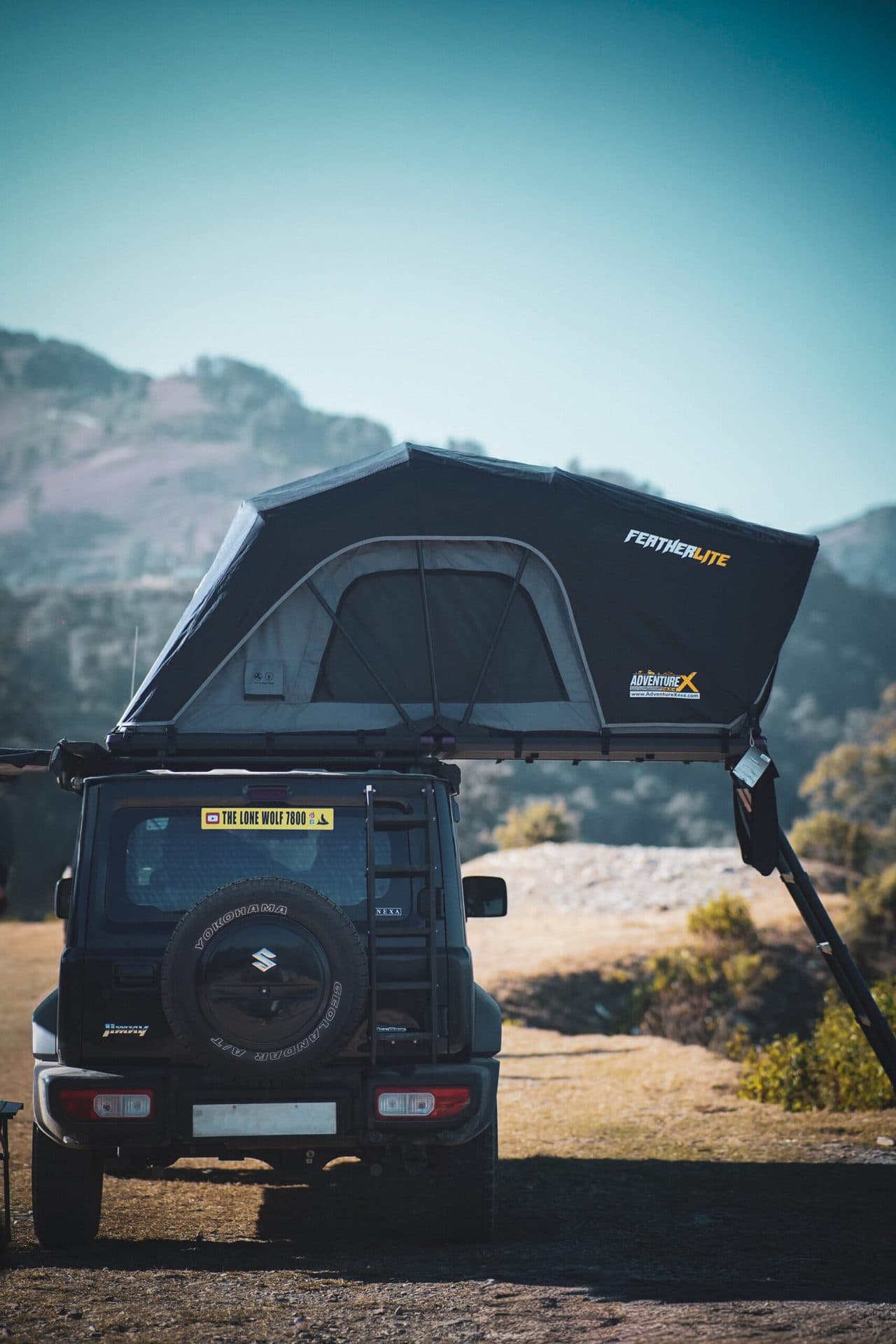
For the Jimny, choose the FeatherLite, the tent we built specifically because nothing else on the market respected how light the Jimny is. The Jimny is a brilliant, compact off-roader, but its roof rails and overall payload are modest, and bolting a 60kg-plus hardshell up there raises the centre of gravity and eats into the weight you need for fuel, water, and people. The FeatherLite is engineered to keep mass low and close to the roofline so the Jimny still handles like a Jimny on a shelf road in Spiti. If a salesperson tries to put a heavy expedition hardshell on a stock Jimny, walk away.
- Best match: FeatherLite, designed around the Jimny's light roof and payload.
- Keep total roof load low so the high centre of gravity does not spoil the Jimny's nimble handling.
- Confirm your specific roof rail dynamic rating before fitting anything, as Jimny setups vary.
- Ideal for one to two light sleepers who prioritise agility over interior volume.
Think about why weight up high matters so much on a Jimny specifically. With a kerb weight around 1,200 kg and a tall, short body, the Jimny is already a vehicle that leans and pitches more than a long, heavy truck - that is part of its character and part of why it is so good on tight, technical trails. Put a heavy hardshell on the roof and you raise the centre of gravity on exactly the vehicle least able to absorb it, which shows up as nervous body roll on an off-camber shelf road and a real reduction in your comfortable cornering speed on the highway transit. Then add the payload squeeze: by the time you have two adults, a tank of fuel, water and a few days of kit, the Jimny does not have a lot of spare carrying capacity, and a 60 kg-plus tent plus a heavy rack can quietly push a fully loaded rig past where you want it. The FeatherLite exists to dodge both problems - it keeps mass low and modest so the Jimny still drives like the agile little machine you bought. If you genuinely want a big hardshell and a fridge and a drawer system, that is a sign you should be looking at a Thar, not fighting the Jimny's physics.

Which Rooftop Tent Fits A Mahindra Thar?
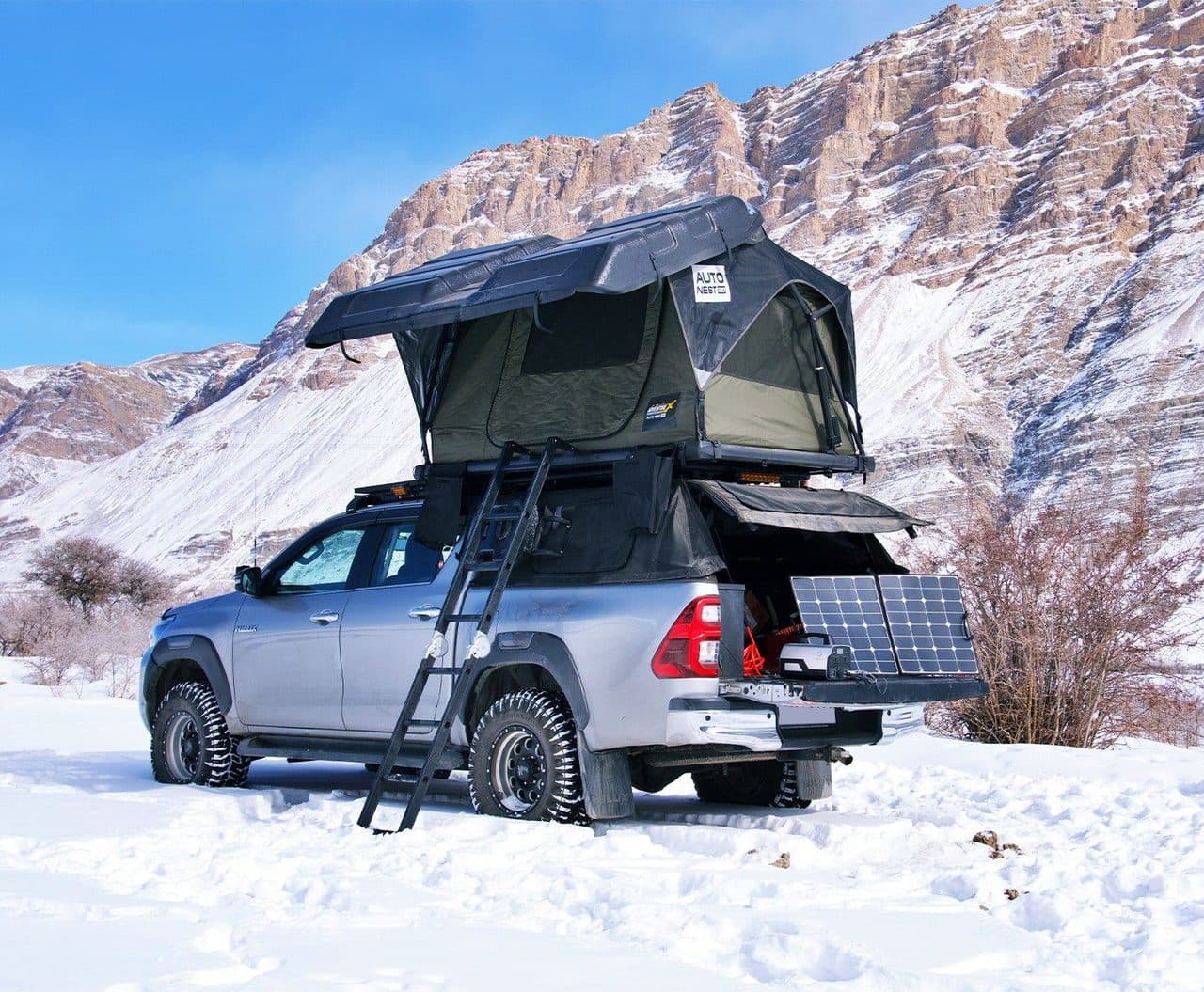
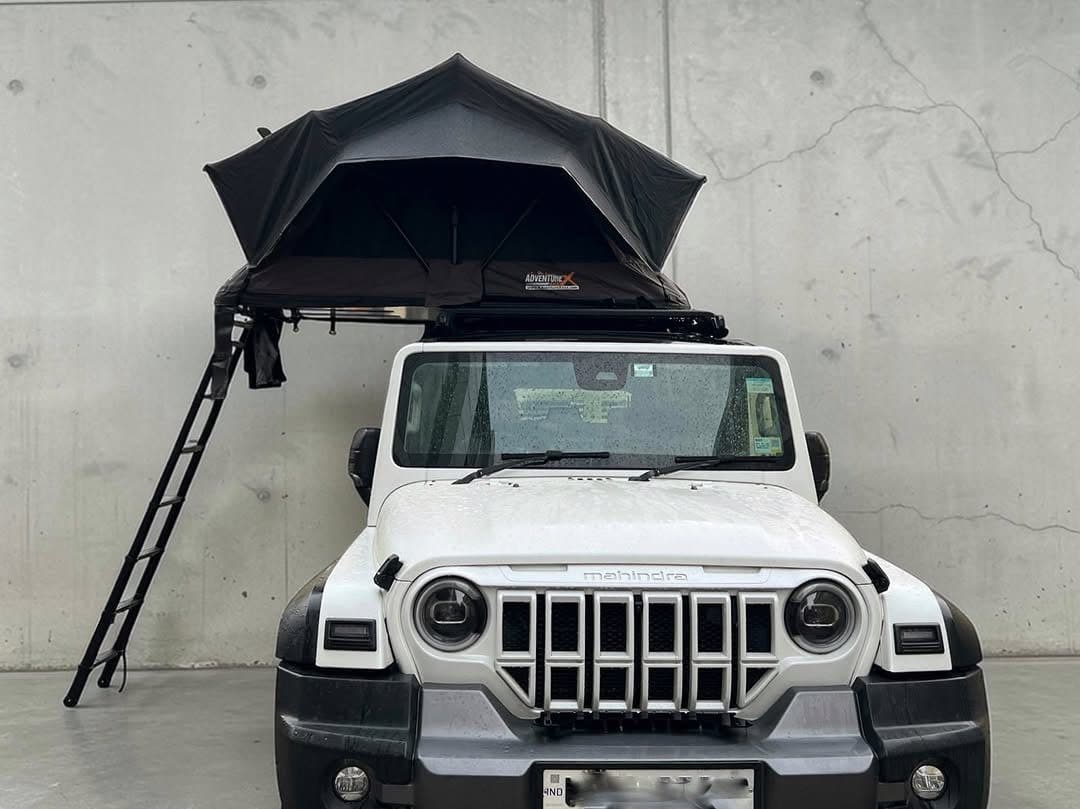
The Thar is the sweet spot of the Indian overland world, and it happily takes the AutoNest 120 or either of our hardshell expedition tents. The Thar has the roof strength and the attitude for a proper hardshell, and the AutoNest 120 is the crowd favourite because the under-90-second auto-deploy suits the Thar owner who drives hard all day and wants camp set up before the chai water boils. If you run a two-door Thar, just be mindful that your cargo space is limited, so a low-profile closed height matters even more for keeping the rig balanced.
- Best all-rounder: AutoNest 120 for fast auto-deploy after long driving days.
- Expedition choice: the Bison61 hardshell or the Leopard41 softshell for longer, harsher trips.
- Two-door Thar owners should prioritise a low closed height to protect balance and economy.
- Confirms easily to most quality crossbars, but verify the dynamic load rating of your rack.
The Thar earns its reputation here because it has the one thing the Jimny lacks - margin. The body-on-frame chassis tolerates a roof load, the diesel torque does not notice a hardshell the way a small petrol engine does, and the payload headroom means you can run a serious tent and still carry the fridge, the recovery kit and the water for a self-sufficient Spiti loop. That is why almost every owner who drives hard and camps for two-up comfort lands on the AutoNest 120: after ten or eleven hours bouncing down to Kaza, an auto-deploy that has you set up in under ninety seconds, before the chai water boils, is the difference between a relaxed camp and a chore in the dark. If your trips are longer and harsher - multi-week expeditions, sand and snow and salt on the same loop - the Bison61 hardshell or the rugged Leopard41 softshell is the more capable answer. The one detail to watch is closed height, especially on a two-door Thar where cargo space is already tight: a lower-profile tent keeps the centre of gravity down, costs you less fuel on the long transit, and keeps the rig feeling balanced on a side-slope.
Which Rooftop Tent Fits A Toyota Fortuner?
The Fortuner is a big, stable platform with the payload to carry a family-sized setup, so the AutoNest 120 is an excellent fit, and you have the headroom to add a SaberLight 270-degree awning without stress. Because the Fortuner is tall to begin with, think practically about ladder reach and how you will deploy the tent for shorter family members, but the vehicle itself is more than capable. The Fortuner owner is often touring with family, so the AutoNest's 120cm width for two adults with a child between them tends to be the natural pick.
- Best match: AutoNest 120, with payload to spare for a family setup.
- Pair with a SaberLight 270-degree awning for shaded living space at camp.
- Mind the tall roofline for ladder reach and deployment ergonomics.
- Strong, stable platform that comfortably handles a heavier expedition hardshell too.
The Fortuner's strength is that you almost never have to think about whether the roof can take the tent - it can. What you do have to think about is the height. This is a tall vehicle to begin with, so the closed tent sits high, and a shorter member of the family will need a thought-out plan to get up the ladder and into the tent in the dark or in wind. Position the ladder on the sheltered side, choose a tent whose ladder reaches the ground at a sensible angle for your rig's height, and practise the deploy at home before the trip so nobody is learning the mechanism at a cold campsite. Because the Fortuner is usually the family tourer of this group, the AutoNest 120 with its 120 cm width - two adults, or two adults with a small child between them - is the natural match, and pairing it with a SaberLight 270 awning gives you a shaded, rain-sheltered living room at camp that makes a multi-day stop with kids genuinely comfortable. If your ambitions run to harder, longer expeditions, the platform will carry a heavier hardshell without complaint too.

Which Rooftop Tent Fits A Toyota Hilux?
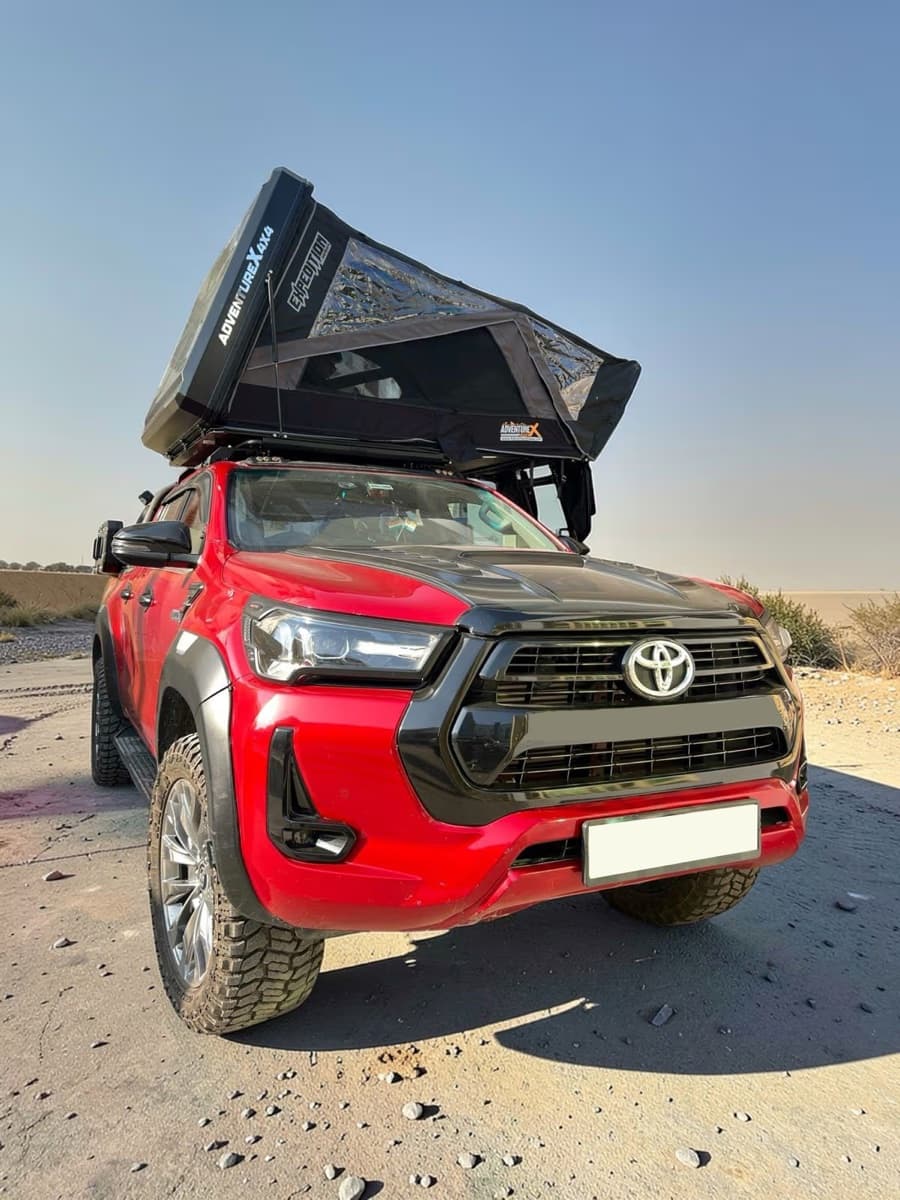
The Hilux is arguably the ultimate canvas for an overland build, and it suits the expedition-grade Bison61 hardshell and the rugged Leopard41 softshell beautifully, especially if you run a bed rack. The Hilux's payload and that long, strong bed give you options no other vehicle here does: you can mount over the cab or over the bed, run a bigger tent, and still carry a HydroX26 water tank and full recovery kit. For a serious, long-duration expedition build, the Hilux plus a hardshell expedition tent is our default recommendation.
What sets the Hilux apart is the bed. A bed rack opens up mounting positions no SUV here offers: put the tent over the cab and keep the bed clear for gear, or mount it over the bed and free the cab roof, and either way you have the payload to run the bigger Bison61 or the Leopard41 and still carry a HydroX26 water tank, a fridge, a full recovery kit and a week of supplies without watching every kilo. That is why, for a genuinely long-duration expedition - the kind where you are self-sufficient for two weeks across Spiti, Ladakh and beyond - the Hilux plus a hardshell expedition tent is our default recommendation. The trade-off is the same as the Fortuner's, only more so: a tent on a bed rack sits high, so plan your ladder and deployment, and keep heavy gear in the bed and low rather than piled on the roof so all that payload works for you instead of raising your centre of gravity.
I tell first-time buyers to start with the roof rating, not the tent they fell in love with on Instagram. Match the gear to the vehicle and you will never have a nervous moment on a side-slope.
How To Read Your Roof's Load Rating
This is the part most buyers skip and later regret. Your roof has two ratings: a dynamic load, which is how much it can carry while moving, and a static load, which is how much it can hold when parked. A rooftop tent must respect the dynamic rating, because that is the number that matters on a rough road. The good news is that the tent plus occupants while you sleep counts against the higher static rating, since you are parked. If you take one thing from this guide, take this: find your rack's dynamic rating in writing before you buy, and never exceed it.
Here is how that works in practice, with numbers, so it stops being abstract. Suppose your rack carries a dynamic rating of, say, 75 kg - the figure your rack maker states for weight while moving. Your tent's closed weight plus the mounting hardware must sit under that 75 kg with margin, because every corrugation and pothole on the way to Kaza momentarily multiplies that load far beyond the static figure. Now, when you are parked and asleep, the relevant limit is the static rating, which is far higher, and that is the number that comfortably absorbs the tent plus two adults - because none of that is bouncing down a road. So the discipline is simple: size the tent to the dynamic number, and let the people-load fall against the static number. Two cautions. The dynamic rating is set by the weakest link in the chain, which is usually your factory roof rails or the feet that clamp to them, not the crossbars themselves, so confirm the rail rating, not just the bar rating. And get the figure in writing from the rack or vehicle maker - not a forum guess, not a salesperson's confidence - because this is the one number that, if you get it wrong, you discover at the worst possible moment on a side-slope.
Frequently Asked Questions
Can I put a hardshell rooftop tent on a stock Jimny?
We do not recommend it. The Jimny's light roof and payload are better served by the purpose-built FeatherLite, which keeps weight low and handling sharp. A heavy hardshell raises the centre of gravity on the vehicle least able to absorb it and eats payload you need for fuel, water and people.
Will a rooftop tent ruin my fuel economy?
It adds some drag, which is why we keep our closed heights low. On a Thar or Fortuner the hit is modest, and you can reduce it further by removing the tent for pure city use. A lower-profile shell costs you less fuel on the long highway transits than a tall one.
How many people can sleep in the AutoNest 120?
Two adults comfortably, or two adults with a small child between them, thanks to the 120cm internal width. For a larger family, pair the rooftop tent with a ground tent or use the folded-flat cabin for kids rather than trying to fit everyone up top.
Do I need a special roof rack?
You need crossbars or a rack with a dynamic load rating that meets or exceeds the tent's weight plus mounting hardware. Verify that rating in writing before buying any tent, and confirm the rating of your factory roof rails, not just the bars, since the rails are usually the weakest link.
Hardshell or softshell - which should I buy?
A hardshell like the AutoNest 120 or the Bison61 deploys in well under two minutes, sheds wind and fine sand far better, and is the right tool for cold, exposed, high-altitude camps in Ladakh and Spiti. A softshell such as the Leopard41, or a folding tent, costs less and often sleeps more for the size, suiting milder, lower trips. For harsh Indian high-altitude overlanding, we lean hardshell every time.
Gear featured in this story
The kit named above, with current pricing - tap through for full specs.
Put it into practice
Ready to kit out? Shop the gear we put through its paces here.