Stories
Why India Needed a Homegrown Overland Brand Built to Global Standards
India's terrain is world-class and brutal. Here is why we built AdventureX4x4 at home instead of importing someone else's gear.
India needed a homegrown overland brand because no imported product is actually designed for what an Indian rig endures: a -20C night in Spiti, 45C heat in the Thar desert, monsoon humidity, and highways that vibrate hardware loose over hundreds of kilometres. We founded AdventureX4x4 in Faridabad in 2024 not to undercut foreign brands on price, but to curate gear that is validated against Indian conditions, supported with spares you can actually get, and priced honestly because we skip the import and distributor markups. This is why a country with some of the planet's greatest overland terrain deserved its own brand, and why we built it to global standards rather than as a budget imitation.
The Terrain Was Always World-Class. The Gear Was Not.
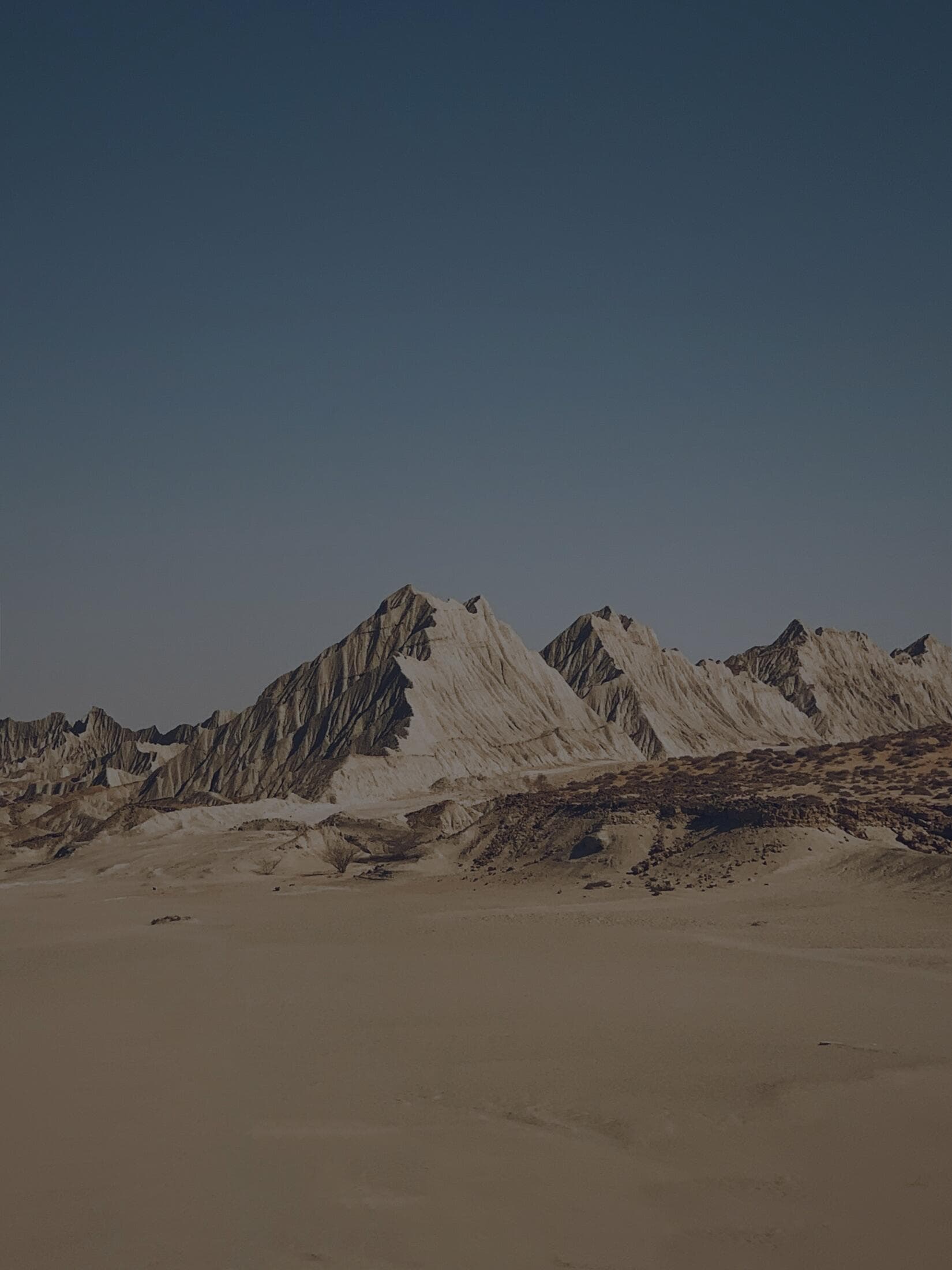
Indian overlanders have access to terrain that people fly across the world to experience: the high passes of Ladakh, the lunar valleys of Spiti, the salt flats of the Rann. For years, though, the only credible gear came from abroad, designed for American deserts or European Alps, shipped in containers, and sold at a markup that bore no relation to how it would perform on a Manali-Leh corrugation. We started AdventureX4x4 because the mismatch was absurd. The mountains were ready. The gear built for them was not.
Consider what a single Indian trip actually throws at a piece of gear, because no other overland market compresses this range into one journey. A drive from Faridabad to Leh and back can take a tent from 45C in the plains in the morning to a -20C night in the high desert within forty-eight hours, soak it in a monsoon downpour on the Himachal foothills, coat it in fine dust on the approach, and then shake every fastener for hundreds of kilometres on corrugated highway. Gear engineered for the dry heat of an American desert or the cold of the European Alps has simply never been asked to survive all of that in one outing. The terrain was world-class from the start; what was missing was equipment designed for the specific, punishing combination that defines overlanding here.
Imported Does Not Mean Suited To India
A tent designed for Moab does not know what a Faridabad-to-Leh drive does to its fasteners. Imported gear is often genuinely well made, but it is made for its home conditions, and India is a uniquely demanding combination of cold, heat, dust, humidity, and road vibration in a single trip. Beyond fit, there is the brutal reality of support: when an imported shell cracks a hinge, you are looking at months of waiting on a replacement part across a customs queue. We have seen customers ground their entire expedition season over a part the size of a fist.
- Foreign tents are tuned for foreign climates, not India's cold-to-heat-to-monsoon swing in one trip.
- Highway vibration on Indian roads loosens hardware that passes static tests abroad.
- Imported spares can take months to arrive, grounding a rig over a small part.
- Markups on imported gear often double the price without doubling the suitability.
The vibration point deserves emphasis because it is the failure mode people least expect. A bolt or hinge that passes every static load test on a bench in California can still work itself loose over a few hundred kilometres of Indian highway corrugation, because the constant high-frequency shaking is a different kind of stress entirely. We learned this the hard way ourselves on early prototypes, watching fasteners back out on the Manali-Leh road that had been torqued correctly and would never have moved on a smooth European motorway. It is why our validation is not just a cold-soak chamber and a wind test - it is bolting gear to a Thar and driving it on the roughest roads we have until something fails, then fixing the thing that failed. You cannot discover a vibration failure in a lab in a climate that does not have our roads.
What Proving It From Faridabad Actually Changes
Proving our gear from our own base in Faridabad changes three things that matter to a customer. First, we test against Indian conditions because we live in them, freezing kit to -25C and vibrating it like a real highway would. Second, when something breaks, we get you a replacement fast, because support is here, not across an ocean. Third, we can price honestly, because we are not paying for a container, an importer's margin, and a distributor's margin stacked on top of each other. Homegrown is not about nationalism for us, it is about the warranty actually meaning something.
Take the support point and make it concrete. A customer in Pune who cracks a hinge on a winter trip sends us the part number and a photo, and the replacement is pulled from our Faridabad stock and couriered to them within India in days. Compare that to the imported alternative: the same fist-sized part ordered from abroad, queued behind a customs process, and arriving months later - long enough to write off an entire expedition season for the sake of one component. That difference is not marketing; it is the whole reason a warranty means anything when you are four days from the nearest dealer. The same logic underpins the honest pricing. When the sourcing, the fitment and the testing are all run from one base in Faridabad, the price reflects the gear, not the stacked margins of a container shipment, an importer and a distributor.
We did not start AdventureX4x4 to make a cheaper tent. We started it to make the right tent for our mountains, and to be standing here in India when a customer needs us.
Built To Global Standards, Not Local Shortcuts
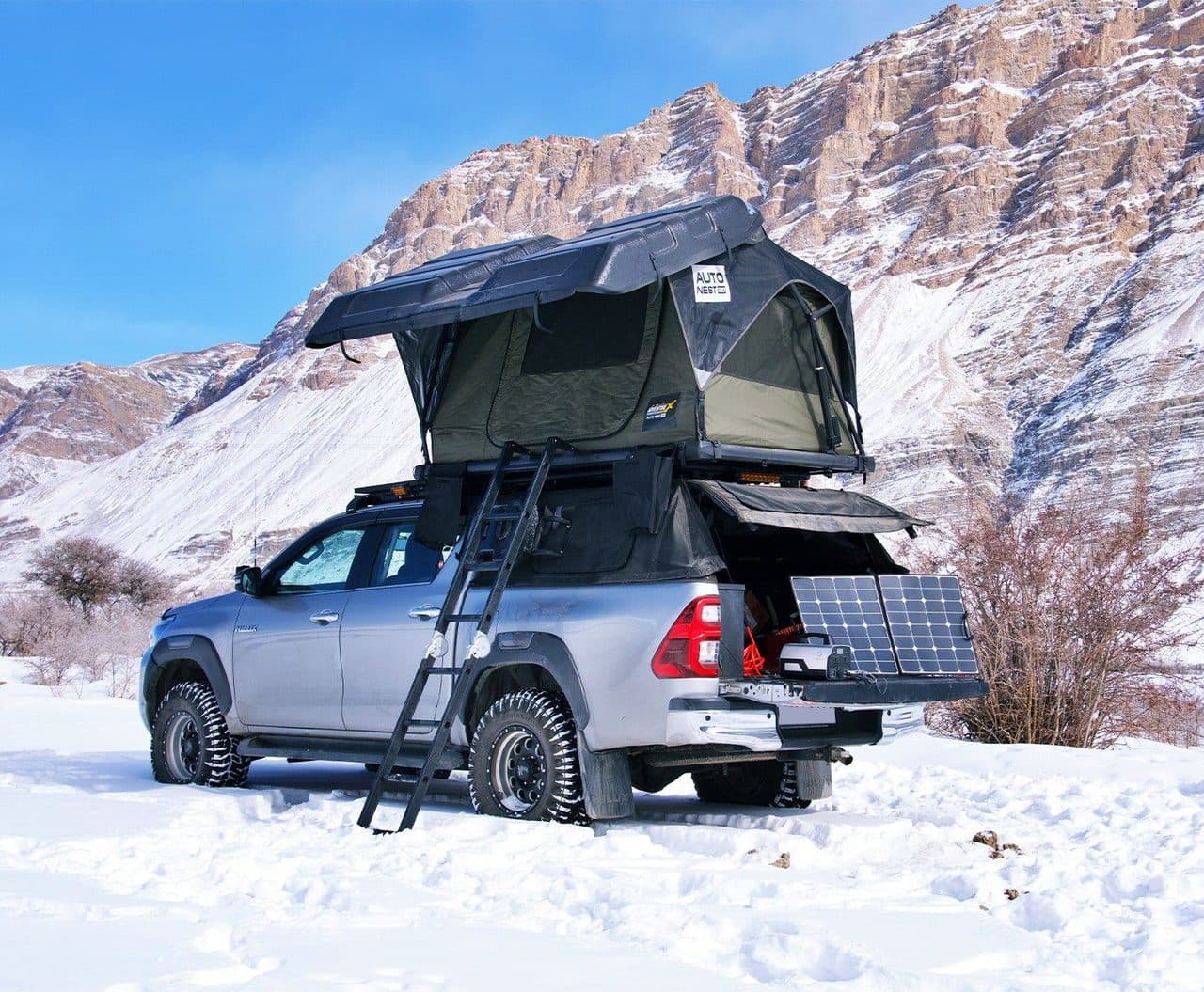
The trap with building an Indian overland brand is the temptation to cut corners and call it value. We refused that from day one. Our canvas is 320gsm taped-seam ripstop, our shells are honeycomb aluminium, our validation campaign would satisfy any serious international brand, and our flagship AutoNest 120 is India's first auto-deploying rooftop tent at Rs 2,20,700. The point of an Indian brand was never to lower the standard, it was to meet the global standard while finally tuning the gear to Indian reality. Anyone can be cheap. We wanted to be right.
- 320gsm taped-seam ripstop canvas, chosen for monsoon and snow, not cost.
- Honeycomb aluminium shells engineered for highway wind loads and snow.
- Full cold-soak, vibration, and wind validation matching international rigour.
- Spares and warranty fulfilled within India, usually in days rather than months.
Meeting a global standard while tuning for India is not a contradiction, it is the entire design brief, and the AutoNest 120 is the clearest example. The auto-deploy mechanism had to satisfy the kind of engineering rigour any serious international brand would demand - controlled stored energy, no single point of failure, consistent deployment - while also solving problems those brands never face, like gas struts that must work identically at -25C in Ladakh and 45C in the Thar. The 320gsm taped-seam ripstop canvas was chosen because it shrugs off both a Spiti snowstorm and a monsoon downpour, not because it was the cheapest fabric on the shelf. That is what we mean by global standards tuned to Indian reality: take nothing away from the engineering, and add everything our specific terrain demands. The temptation when building an Indian brand is always to trim the spec and call the saving value; we treated that temptation as the thing to design against.
Built In 2024, And Just Getting Started
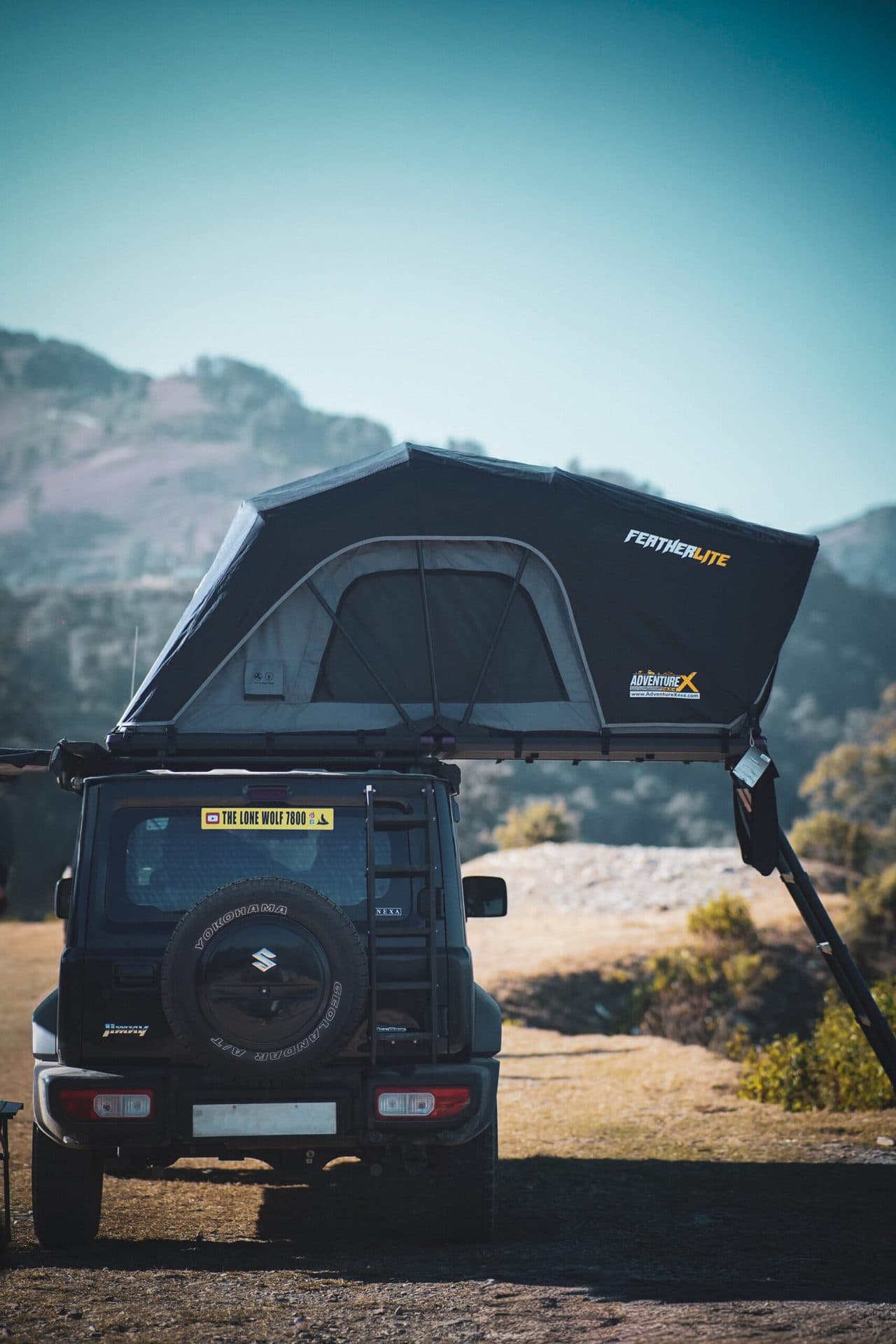
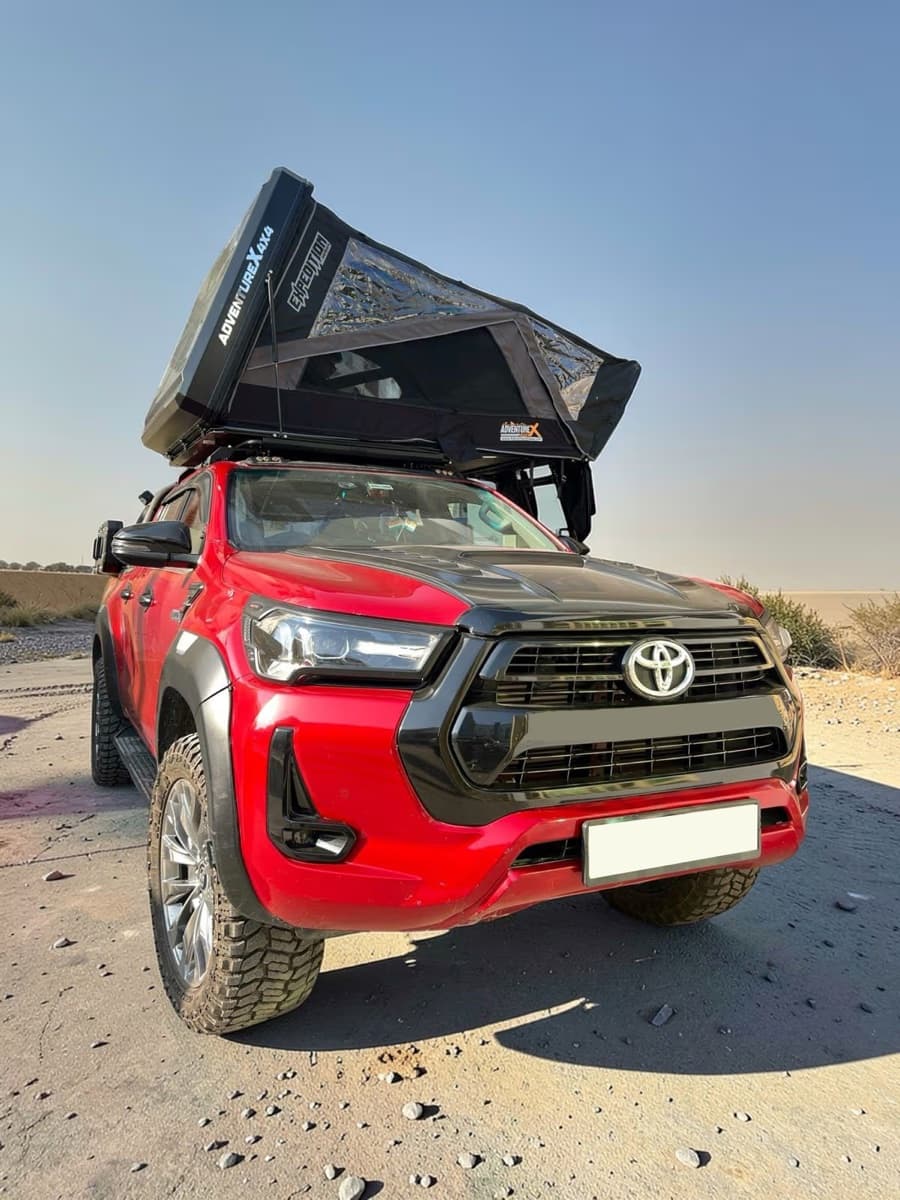
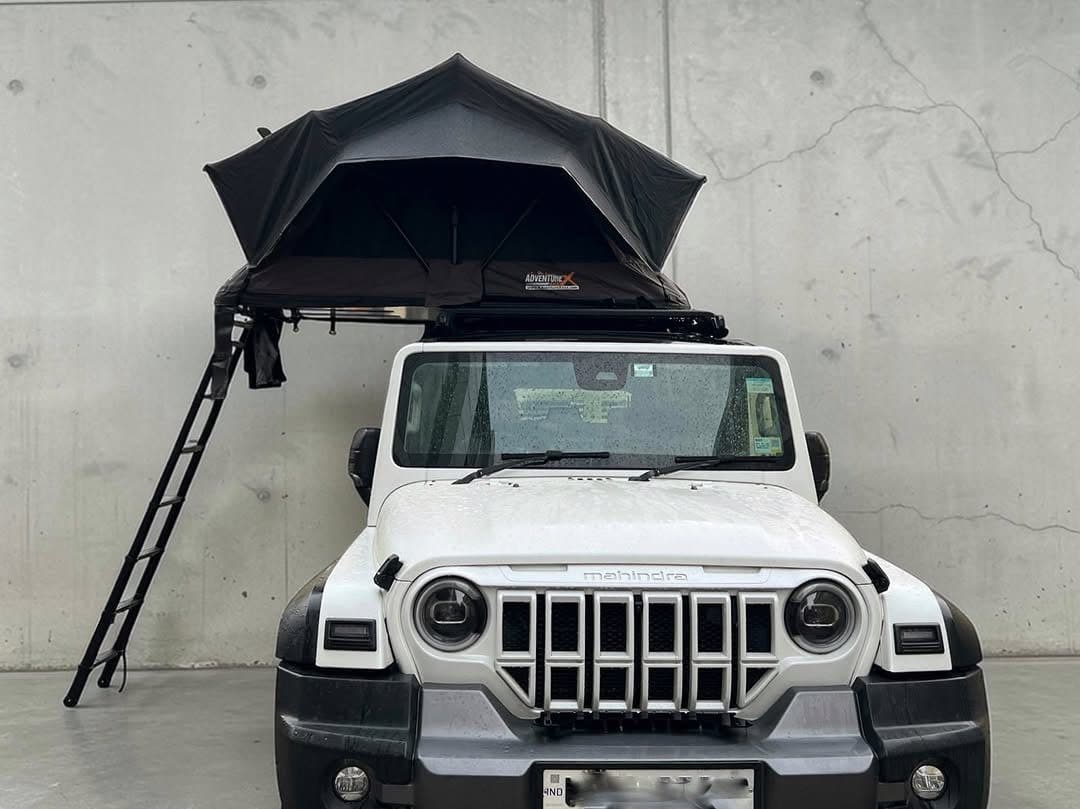
We launched in 2024 with a full overland system rather than a single product, drawing on a decade of Dinesh's hands-on overlanding to know exactly what an Indian rig needs: the AutoNest 120 and FeatherLite tents, the Bison61 expedition hardshell, the Leopard41 and CampTop softshells, TractionX snow chains, the HydroX26 water tank, the SaberLight awning, and ThermaEvo heaters. Every one of those products exists because a customer or a guide hit a wall on a real trip and we built the answer. That is what a homegrown brand can do that an importer never will: listen to the specific problems of Indian overlanding and engineer for them.
Trace any one product back and you find a real trip behind it. The TractionX snow chains exist because of glare ice on the winter Kinnaur road into Spiti, where a stock all-terrain simply slides. The ThermaEvo heater exists because a -20C night in a homestay or tent at Kaza is genuinely punishing without one. The SaberLight 270 awning exists because cooking in a Chandratal wind at 4,300 m with numb fingers needs shelter. The HydroX26 tank exists because stomach trouble at 4,000 m is dangerous and you want treated water on board. Our Spiti Frozen and Ladakh Loop expeditions are not just trips we sell; they are the proving ground where the next product reveals itself, because a guide hits a wall on a real trip and our Faridabad base sources and fits the answer for the following season. That loop - real problem to proven solution - is what an importer can never replicate, and it is why we treat the catalogue as permanently unfinished.
Frequently Asked Questions
Is AdventureX4x4 gear cheaper than imported kit?
It is fairly priced because we skip the stacked import and distributor markups, not because we cut corners, and the goal was suitability and support, not being the cheapest option. We use 320gsm ripstop canvas and honeycomb aluminium shells, and the saving comes from cutting out the import chain, not from trimming the spec.
When was AdventureX4x4 founded and where?
In 2024, with HQ in Faridabad, where we still select, outfit and test our gear. Fitting, breaking and refining on the same Indian roads our customers drive is the whole point of being based here.
Why not just import proven foreign gear?
Because foreign gear is tuned for foreign conditions, and imported spares can take months to reach you across a customs queue. We wanted gear validated for India's cold-to-heat-to-monsoon-to-vibration combination and support that is here in days when you need it, not grounded for a season over a fist-sized part.
Does an Indian overland brand mean lower quality?
Not for us. We use 320gsm taped-seam ripstop canvas, honeycomb aluminium shells, and a full cold-soak, vibration and wind validation campaign, all chosen to global standards while tuned to Indian terrain. The flagship AutoNest 120 is India's first auto-deploying rooftop tent, proven on Indian terrain, not imitated.
Gear featured in this story
The kit named above, with current pricing - tap through for full specs.
Put it into practice
Write your own chapter - shop the gear or come drive with us.