
Trip Planning
Monsoon overlanding in India: eight rules that keep you moving
The monsoon is the most beautiful and most unforgiving season to overland in India. Eight hard-won rules.
Monsoon overlanding splits opinion, and it should. The Western Ghats in full rain are as green and dramatic as anywhere on earth - waterfalls where there was dry rock a fortnight ago, the whole escarpment from Amboli to Agumbe wrapped in cloud, leeches in the grass and frogs the size of your fist on the trail. And the same rain that makes all of that beautiful is what gets people into trouble. We have run rigs through the Ghats and across central India from the first week of June, when the monsoon makes landfall over Kerala, deep into September when it is pulling back north. Over those years the eight rules below have stopped being advice and started being the difference between the trip you talk about for years and the trip you spend a month explaining to your insurer.
Why the Indian monsoon is its own discipline
A dry-season overlander who is competent on the same trails can get caught out badly in July, because the monsoon changes three things at once. Grip collapses - laterite mud in the Ghats turns to a greasy orange film that all-terrain tyres skate across, and black-cotton soil in the Deccan becomes a clay that builds up between tread blocks until the tyre is effectively a slick. Water appears where there was none - a dry nala you crossed without thinking in April becomes a chest-deep torrent after one night of rain upstream. And visibility drops to where you are reading terrain through a windscreen the wipers cannot keep clear. None of these is dramatic on its own. Stacked together, at the wrong moment, on a shelf road with a drop on one side, they are how people end up needing a recovery they should never have needed.
The eight rules
- Never cross flowing water you cannot see the bottom of - depth and current both lie, and brown Ghat water hides everything
- Check the weather upstream, not just where you are - flash floods arrive from a cloudburst you never saw, an hour away and 1,000 m higher
- Camp on high ground, never in a dry stream bed however flat and convenient it looks - the bed is dry because the water is elsewhere, for now
- Treat every descent as a potential mudslide - test grip on the first few metres before you commit to a slope you cannot reverse back up
- Carry traction boards within reach, not buried under two weeks of gear - in mud you will use them more than any other recovery tool
- Keep electronics and bedding in genuinely waterproof bags, not optimistic ones - dry-bag everything that matters, then assume the rest gets wet
- Build slack into the schedule - monsoon routinely turns a six-hour day into a ten-hour day, and a tired driver in the rain is the real hazard
- Know your exit - always have a route out that does not depend on one bridge or one ford, because the one you came in on may be gone by morning
Rule one, in detail: the crossing you can't see into
The single most dangerous thing in monsoon India is moving water you cannot read. Clear Himalayan glacier-melt at least lets you see the bottom and judge depth. A Ghat stream in spate is opaque orange-brown, and that colour hides a washed-out bed, a boulder that has shifted, a drop where the culvert used to be. The number that matters is your vehicle's safe wading depth, and it is lower than you think. A stock Mahindra Thar or Force Gurkha will wade roughly 500 mm with care; a Maruti Jimny noticeably less; a touring Toyota Fortuner around 700 mm, but the air intake position is what actually decides it, not the badge. Moving water also pushes - around half a metre of fast current will start to lift and slide a two-tonne vehicle sideways long before the engine is in danger. If you cannot walk it, you do not drive it. Full stop.
Rule two, in detail: the flood that comes from somewhere else
Indian monsoon flooding is overwhelmingly a problem that arrives from upstream. You are parked in light drizzle by a pretty stream in the Sahyadris; 40 km away and 1,200 m up, a cell has just dumped 80 mm in an hour, and that water is now coming down the catchment toward you with no warning at your location at all. This is exactly the mechanism behind the casualties people read about every year. Practically: before you commit to any low ground or any crossing, check rainfall in the whole catchment above you, not the patch of sky overhead. A simple offline weather radar app, the IMD nowcast where there is signal, and a hard rule about not camping low all stack up to keep you out of the path. The water does not announce itself. You have to go looking for it.
Tyres and pressures for mud
Monsoon mud and dry sand want opposite things, and people get this wrong. In sand you air down hard to float. In deep, sticky mud you generally do not want to drop as low, because a narrower, taller contact patch with an aggressive open tread cuts down to firmer ground beneath the slop, where a wide soft tyre just skates on top. For a Thar on stock-size all-terrains, we will run roughly 22 to 24 psi in churned monsoon trails - enough to conform and find grip, not so low you risk rolling the bead in deep ruts, and not so wide that you aquaplane on greasy laterite. Mud-terrain tyres with wide-spaced lugs genuinely clear themselves better than a road-biased all-terrain in this stuff; if the Ghats in July are your regular ground, that tread pattern is worth the highway noise. Carry a deflator and a compressor regardless - you will be changing pressures several times a day as surfaces switch between tar, mud, and rock.
Protecting the vehicle and the kit
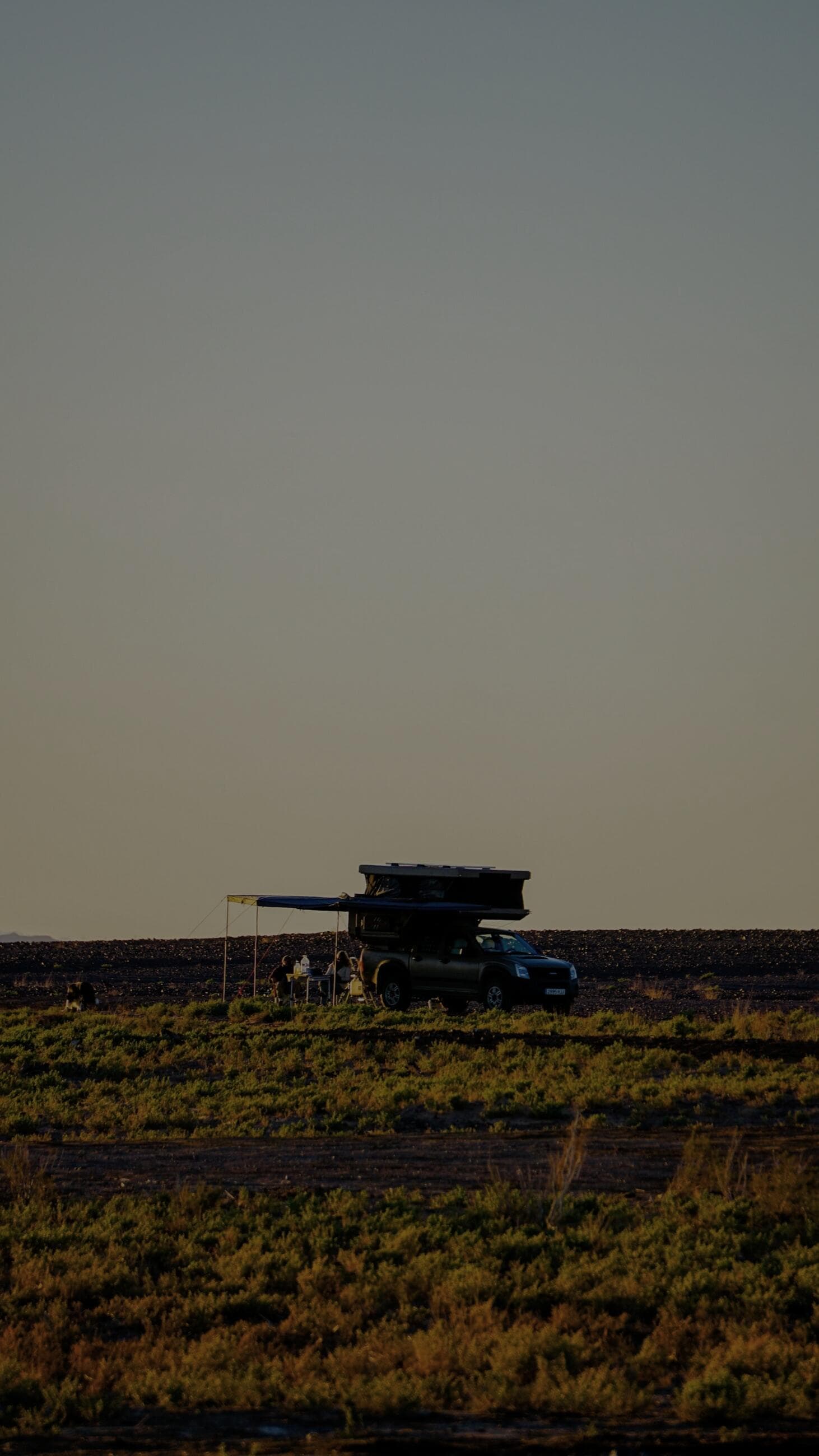
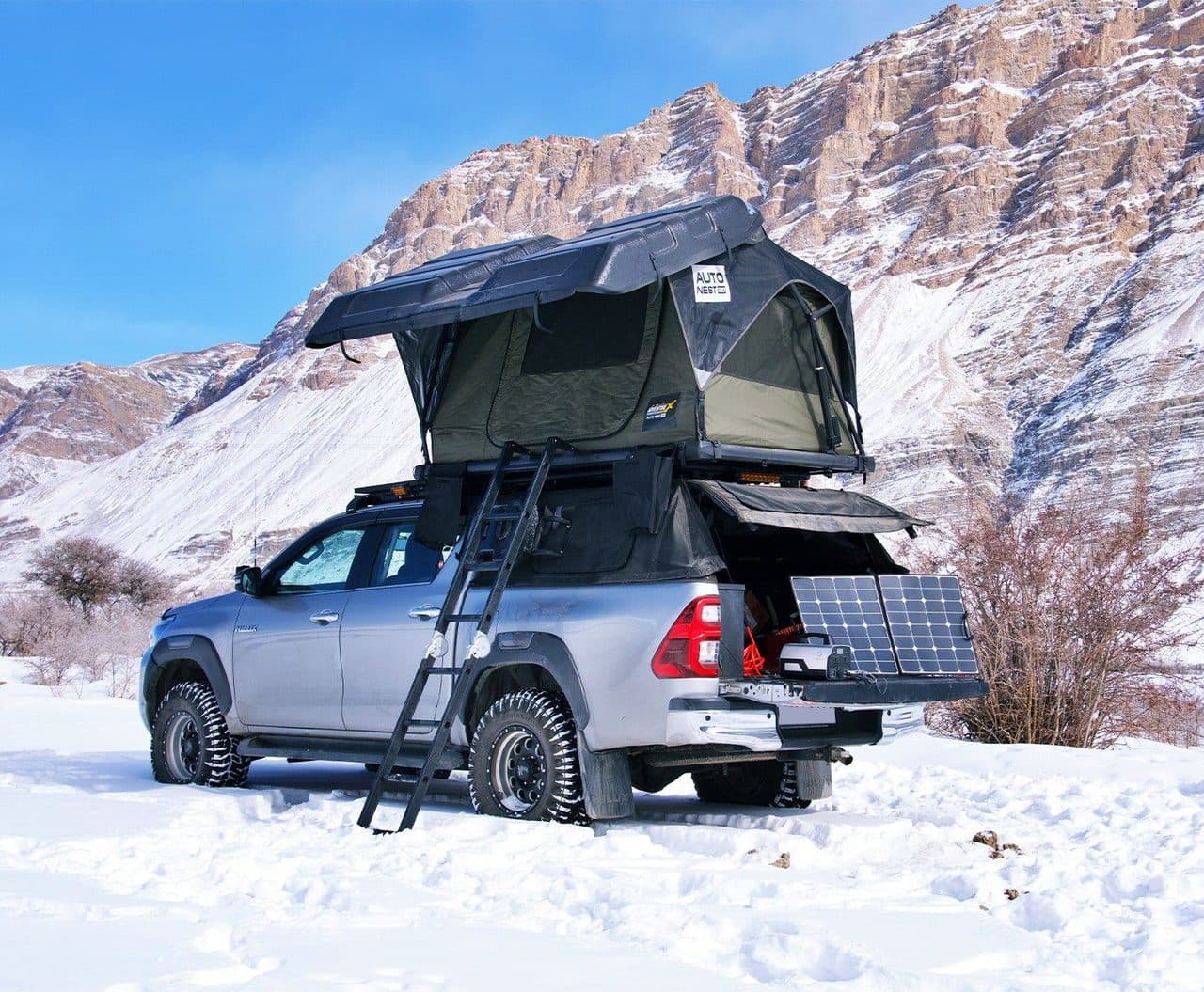
Constant wet is hard on a 4x4 in ways the spec sheet never mentions. Water and grit get into wheel bearings, brake calipers, and the clutch; after a serious monsoon trip, check and re-grease anything that should not have got wet. Carry a spare set of wiper blades - old rubber smearing a muddy windscreen on a Ghat descent is genuinely dangerous. Inside, run a system: a hardshell rooftop tent such as the AutoNest 120 keeps your sleep dry and off the saturated ground in a way no ground tent manages in a Ghat downpour, and it deploys in under a minute so you are not standing in the rain wrestling poles. Everything that must stay dry - bedding, spare clothing, electronics, documents, a power bank - goes inside genuine roll-top dry bags, not the splash-resistant zip pouches people convince themselves are enough. Assume anything not in a dry bag will be damp by day three, and pack accordingly.
A worked example: a Sahyadri washout
Picture a real shape of day, because this is how it actually goes. You leave a homestay near Amboli at first light under low cloud, planning a loop down toward the Konkan and back up a second ghat by evening - on paper a comfortable seven hours. By ten it is raining properly. The descent you planned to take has a section of laterite the colour and consistency of wet terracotta; you stop, walk the first thirty metres, feel your boots slide, and decide against committing to a slope you could not climb back up if the far side has gone. You back off and reroute - which is where the second exit you scouted the day before earns its place. At the bottom, the ford you crossed dry yesterday is now knee-deep and moving fast; you walk it with a stick facing upstream, find the bed firm and the depth within your Thar's limit, set a spotter, cross slow and steady pushing a small bow wave, and you are through. That seven-hour day became eleven. Nobody got recovered, nobody got hurt, and the only reason is that every decision got made on foot, early, with the schedule slack to absorb it. That is monsoon overlanding done right - undramatic, patient, and home by dark.
The mindset
Monsoon overlanding rewards patience and punishes ego, more bluntly than any other season. The driver who waits two hours for a river to drop gets home. The one who decides their vehicle can make it usually provides the story everyone else learns from. The season does not care how good your build is or how many trips you have run; it cares whether you read it honestly and leave yourself a way out. Get that right and the wet Ghats give you the most beautiful overlanding in the country. Get it wrong and they take the trip, the vehicle, or worse.
In the monsoon, the best recovery is the crossing you chose not to attempt.
Frequently Asked Questions
When does the monsoon actually open and close for overlanding in the Ghats?
The southwest monsoon usually reaches Kerala around the first week of June and works its way north over the following weeks, then begins withdrawing from north India in September. For the Western Ghats, July and August are the heart of it - greenest, wettest, and most demanding. Early June and mid-September give you the drama with a little more margin. Plan the heart of the season only if you are comfortable making conservative calls on the ground.
Is a stock 4x4 enough for monsoon trails, or do I need a build?
A stock Thar, Gurkha, or Jimny is plenty capable for monsoon overlanding if you respect the limits. The upgrades that genuinely matter are mud-biased or aggressive all-terrain tyres, a reliable deflator and compressor, traction boards within reach, and a way to sleep dry off the ground. Lifts and lockers are nice-to-haves; tyres, recovery kit, and judgement are the things that keep you moving and safe.
What is the most common monsoon mistake you see?
Camping low, near water, because the spot is flat and pretty. The bed of a dry nala or the bank of a calm stream is exactly where the catchment delivers a flash flood at two in the morning. Camp high, every time, even if it means a worse view and a longer walk to water. It is the cheapest insurance in overlanding.
Gear featured in this story
The kit named above, with current pricing - tap through for full specs.
Put it into practice
Want it all handled? Join a fully-supported AdventureX4x4 expedition.