
Gear Deep-Dive
Do you actually need a 270-degree awning? An honest look
An awning is the most-used accessory on most builds - or a 24 kg waste of roof weight. Which one depends on how you camp.
We sell awnings and we will still tell you honestly: not every overlander needs one. An awning is either the most-used piece of kit on your entire build or a chunk of dead roof weight that rides along for years doing nothing useful. There is very little middle ground, and which one it turns out to be for you has almost nothing to do with the awning and everything to do with how you actually camp. Here is how to know which it will be before you spend the money and the roof weight, because both are real costs and a 270-degree awning is not a small thing to mount on a vehicle.
What an awning actually buys you
Strip away the marketing and an awning does one thing: it creates shade and dry standing space attached to the vehicle, deployable in a minute or two. In the Indian context that is genuinely valuable in two very different conditions. In the heat - the Rajasthan desert, the plains in May and June, the white Rann under a midday sun that is physically punishing - shade is not a comfort, it is the difference between a usable afternoon at camp and hiding inside a hot vehicle. And in the monsoon - the Western Ghats in July, anywhere the rain sets in for hours - a reliable patch of dry ground to cook, work, and move around under is what keeps a wet day livable. An awning turns the side of your vehicle into a room. Whether you need that room depends entirely on whether you spend time at camp or just sleep there.
Buy an awning if...
- You camp in one spot for more than a single night at a time, so the setup pays off over a real stay rather than being struck again at dawn
- You travel where midday sun is punishing - the Thar desert, the Rann, the plains in summer - and an afternoon of shade is the difference between rest and misery
- You cook and live outside the vehicle rather than just sleeping in it, so you actually use the covered space day after day
- You travel in the monsoon and need reliable dry standing room to cook and move around when the rain sets in for the day
- You run a touring rig like a Fortuner build where long midday stops are part of the rhythm, and the roof can carry the weight without compromise

Skip it if...
If you are a fast-moving overlander who breaks camp every single morning and rarely stops in daylight, an awning spends almost its whole life folded - and on a small vehicle, that weight and that roof space are better spent elsewhere. A Jimny owner running a deliberately light minimalist build is the clearest case: every kilogram on a Jimny matters three times what it does on a Thar, the roof load limit is genuinely low, and an awning that gets used twice a trip is exactly the kind of thing the minimalist Jimny philosophy says to leave off. Honesty over upsell - the awning has to earn its roof space, and on a fast-moving or weight-critical build it often does not. There is no shame in deciding your camping style does not warrant one; that is the right call, not a compromise.
Why 270 degrees, and the weight question
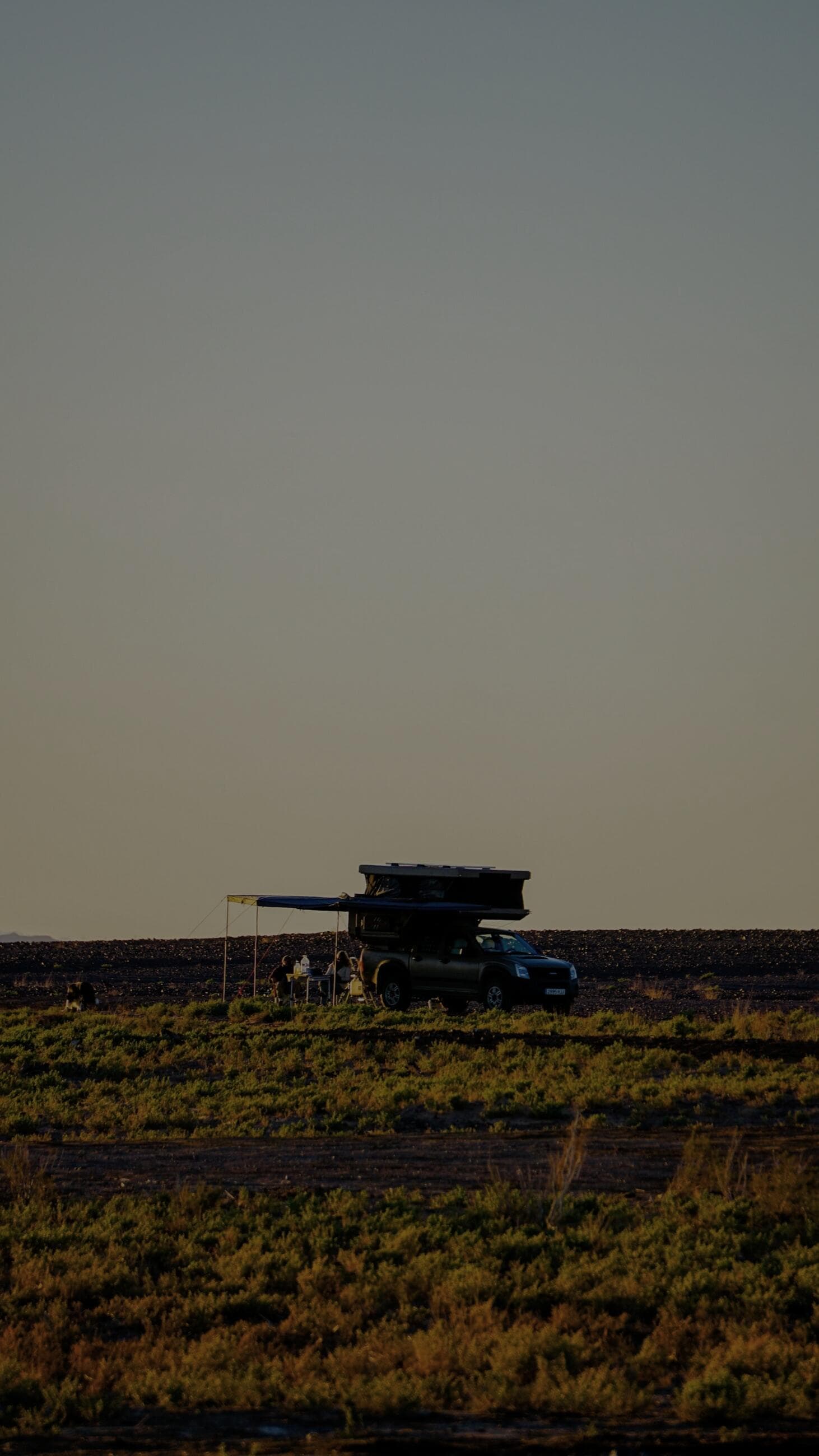
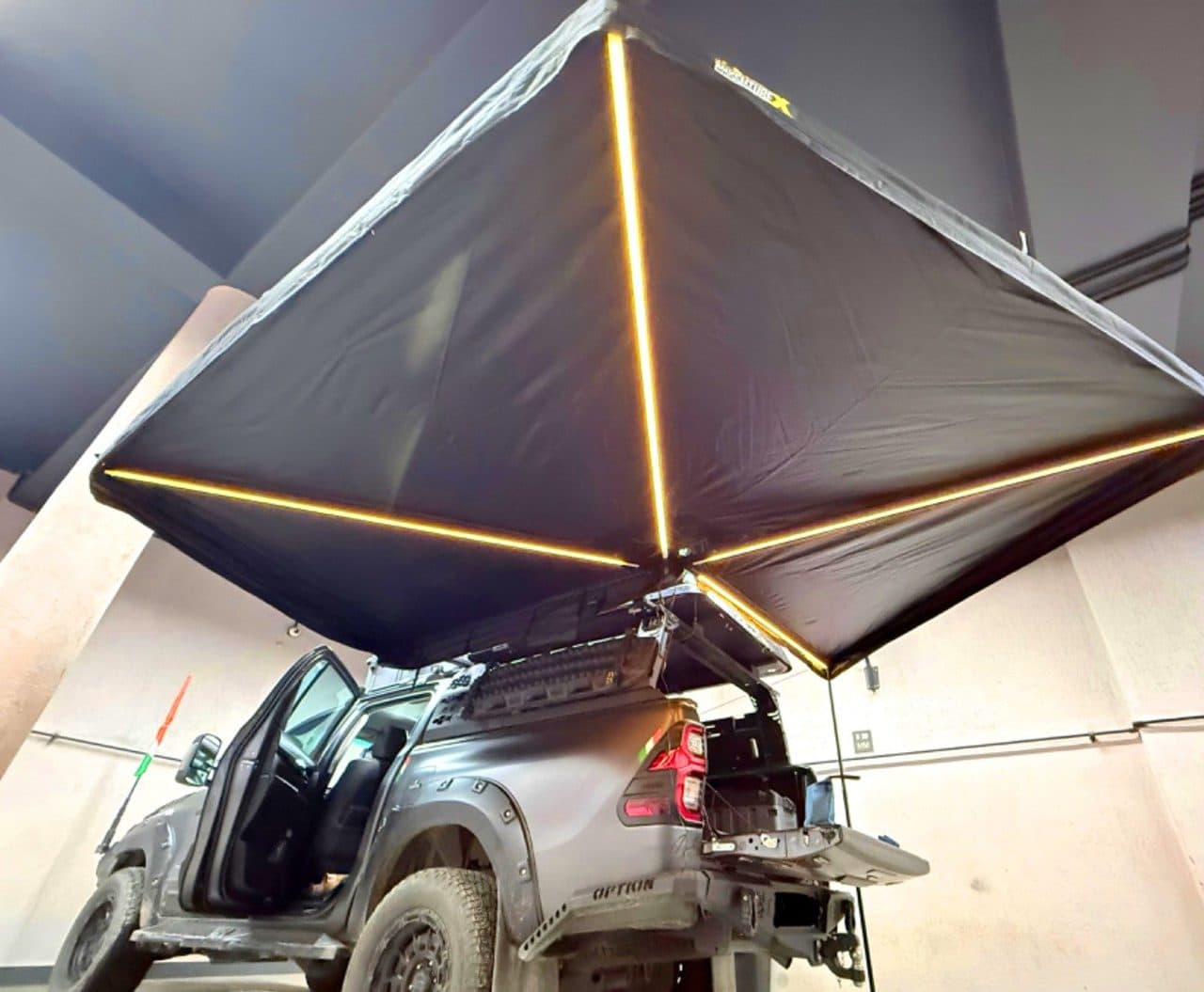
If you decide you do want an awning, the next question is coverage, and here the honest answer is that the 270-degree wrap is the one worth having. A simple straight awning shades exactly one side of the vehicle - useful, but the sun moves and so does the shade, and by mid-afternoon you are chasing it. A 270-degree awning like the SaberLight 270 wraps around three sides of the vehicle, from the rear around the side and forward, and creates an actual outdoor room that stays shaded as the sun tracks across the sky. The coverage difference is larger than the price difference, which is why we steer people who are buying at all toward the wrap. The trade-off is weight and bulk - a 270 awning is a real load on the roof, often in the region of twenty-odd kilograms with its mount, and it needs a vehicle and a roof system that can carry it without eating into your tent and crossbar budget. On a Fortuner or a well-built Thar, no problem. On a Jimny, this is precisely the weight the platform cannot spare.
A worked example: the same awning, two verdicts
Take two real customers to see how the same product is right for one and wrong for the other. The first runs a Fortuner touring build and spends a fortnight a year in the Rann and Rajasthan, camping two and three nights in a spot, cooking elaborate meals, working from a laptop in the afternoons. For him the SaberLight 270 is the most-used thing on the vehicle - the shade in the desert heat alone justifies it, and over multi-night stays it is deployed more than it is folded. The second runs a light Jimny and overlands fast, covering ground every day, rarely in camp before evening, breaking it down at first light. For her the same awning would be twenty-plus kilograms of roof weight on a platform that cannot spare it, deployed maybe twice on a week-long trip. Same excellent product, opposite answers - because the decision was never about the awning. It was about how each of them actually travels. Answer that honestly and the awning question answers itself.
An awning is brilliant for the overlander who lives at camp - and dead weight for the one who only sleeps there.

Where an awning earns its keep in India, season by season
India makes the case for an awning more strongly than most countries, because both ends of the year punish you outdoors. In the pre-monsoon heat of April, May, and June, the plains and the desert hit temperatures where unshaded midday is genuinely unsafe to sit in, and a camp without shade is a camp you abandon to hide in a hot vehicle until the sun drops. On a multi-night stay in the Rann or in Rajasthan, the awning is not a comfort item then - it is what makes the afternoon usable at all. Swing to the monsoon and the Western Ghats, and the awning earns its place differently: hours of unbroken rain mean that without dry standing space you cannot cook, cannot organise gear, cannot do anything but sit inside, whereas a 270 wrap gives you a covered outdoor room to live in while the rain does its thing. The two seasons where an awning is least useful are the pleasant ones - a crisp Himalayan summer or a mild winter where you are happy to sit out in the open anyway. So the honest India calculus is simple: if your trips land in the brutal heat or the heavy rain, and you stay put long enough to use it, the awning is one of the best things on the vehicle. If you only travel in the gentle windows, you may genuinely not need it.
Setup, anchoring, and getting the most from it
If you do fit one, a little technique turns a good awning into a great one. Park with the awning side away from the prevailing wind and angled to throw shade where you will actually sit as the afternoon wears on - a minute of thought on where you point the vehicle saves you re-rigging later. Peg and guy it properly even in calm weather; an unanchored awning is fine until the one gust that bends an arm or tweaks the roof mount, and pegging takes thirty seconds. Run the legs down to the ground on the open sides for stability and to give you something to clip walls or a mesh room to later if you go that way. In the heat, the awning plus a couple of dropped side walls creates genuine shade that is several degrees cooler than open ground; in the rain, angle one edge slightly low so water runs off a chosen corner rather than pooling in the centre and stretching the fabric. And the rule that protects the whole investment: when the wind genuinely picks up, take it down. An awning is a large, flat sail bolted to your roof, and wind is the only thing that reliably destroys them. Treat it like a tent - deployed when it helps, stowed when conditions turn - and a quality 270 will serve you for years of hard Indian trips.
Frequently Asked Questions
How much does a 270-degree awning weigh, and will my roof take it?
A quality 270 awning with its mounting hardware lands in the region of twenty-odd kilograms - enough that you need to check your crossbar and roof load rating before fitting it, especially alongside a rooftop tent. A Fortuner or a properly built Thar carries it without issue. A Jimny generally should not, because that weight competes directly with the tent the platform can barely spare roof capacity for. Always confirm the dynamic load rating of your roof system, not just the static figure, before mounting an awning.
Can I leave an awning out overnight or in wind?
For settled weather and an overnight at a fixed camp, yes - a 270 awning pegged and guyed out is stable and gives you covered space morning and evening. In strong or gusty wind, take it down or do not deploy it; an awning is a large sail, and wind is what damages them and the roof mounts. In the monsoon, deploy it for the dry standing space but stay alert to gusts. As with a tent, the awning rewards reading the conditions rather than trusting it to survive anything.
Straight awning or 270 wrap - is the wrap worth the extra?
If you are buying an awning at all, the 270 wrap is usually worth it, because the coverage gain is larger than the price gain and it keeps you shaded as the sun moves instead of chasing a shrinking strip. The straight awning makes sense only where weight or budget is tight and you genuinely just want a quick patch of shade on one side. For anyone building a touring rig who has already decided they live at camp, the wrap is the version that earns its place.
Gear featured in this story
The kit named above, with current pricing - tap through for full specs.
Put it into practice
Ready to kit out? Shop the gear we put through its paces here.