Repair & Recovery
Convoy and Trail Etiquette for Group Expeditions
A safe convoy needs a lead, a sweep, spacing and hand signals - here is the etiquette that keeps a group expedition together.
A safe group expedition runs on a simple structure: a lead vehicle that sets the pace and picks the line, a sweep (tail) vehicle that makes sure nobody is left behind, sensible spacing so dust and braking do not cause pile-ups, and an agreed system of communication - radios where possible, hand signals always. The golden rule of convoy travel is that you are responsible for the vehicle behind you: at every turn or fork you wait until you can see the vehicle behind take the same turn, so the convoy can never silently split. Get this right and a group is safer than any solo traveller, because there is always a second vehicle to anchor a winch, share fuel, or go for help. Get it wrong and a convoy becomes a hazard to itself, with vehicles lost at junctions, tailgating into each other's dust, and nobody noticing a breakdown until camp. This is the etiquette we brief before every AdventureX4x4 group run into Spiti and Ladakh.
Why does a convoy need a fixed order?
Structure prevents chaos. The lead vehicle is experienced, knows or has the route, sets a pace the whole group can hold, and chooses the line through obstacles so the others can follow proven tracks. The sweep vehicle is equally experienced and ideally well-equipped for recovery, because its job is to be the last vehicle and guarantee no one is stranded behind it - if the sweep is moving, everyone ahead is accounted for. The vehicles in between hold their order and do not overtake. This fixed order means that at any moment everyone knows who is ahead and who is behind them, which is the foundation of the wait-for-the-vehicle-behind rule. A convoy without a designated lead and sweep is just a loose scattering of cars that will inevitably fragment on the first confusing junction.
How do you set the order before you roll?
The order is not random and it is not about ego - it is about putting capability where the responsibility sits. Lead and sweep are your two strongest, calmest, best-equipped drivers. Everyone else slots into the middle, and within the middle there is still a logic. A useful trick on a long Spiti or Ladakh run is to put the slowest or least confident vehicle directly behind the lead, so the whole convoy naturally paces to it and nobody gets dropped. The vehicle most likely to have trouble - the oldest rig, the heaviest load, the newest driver - should never be at the tail, because the tail is the hardest job, not the easiest.
- Lead: experienced, has the route loaded offline, sets a pace the whole group can sustain, picks the line through obstacles.
- Second position: the slowest or least experienced vehicle, so the convoy paces to it without anyone realising they are being waited for.
- Middle: everyone else, holding order, never overtaking, each watching the vehicle behind.
- Sweep: experienced and recovery-capable, patient by temperament, carries the kinetic rope and boards, guarantees nobody is left behind it.

How much spacing should you keep?
- On dusty trails, hang back far enough to stay out of the vehicle ahead's dust cloud - driving blind in dust is how convoys rear-end each other.
- On tarmac and faster sections, keep a normal safe following distance so a sudden brake does not cascade down the line.
- On a tricky obstacle, let the vehicle ahead fully clear it before you commit, so you are never both stuck in the same spot and you can spot for each other.
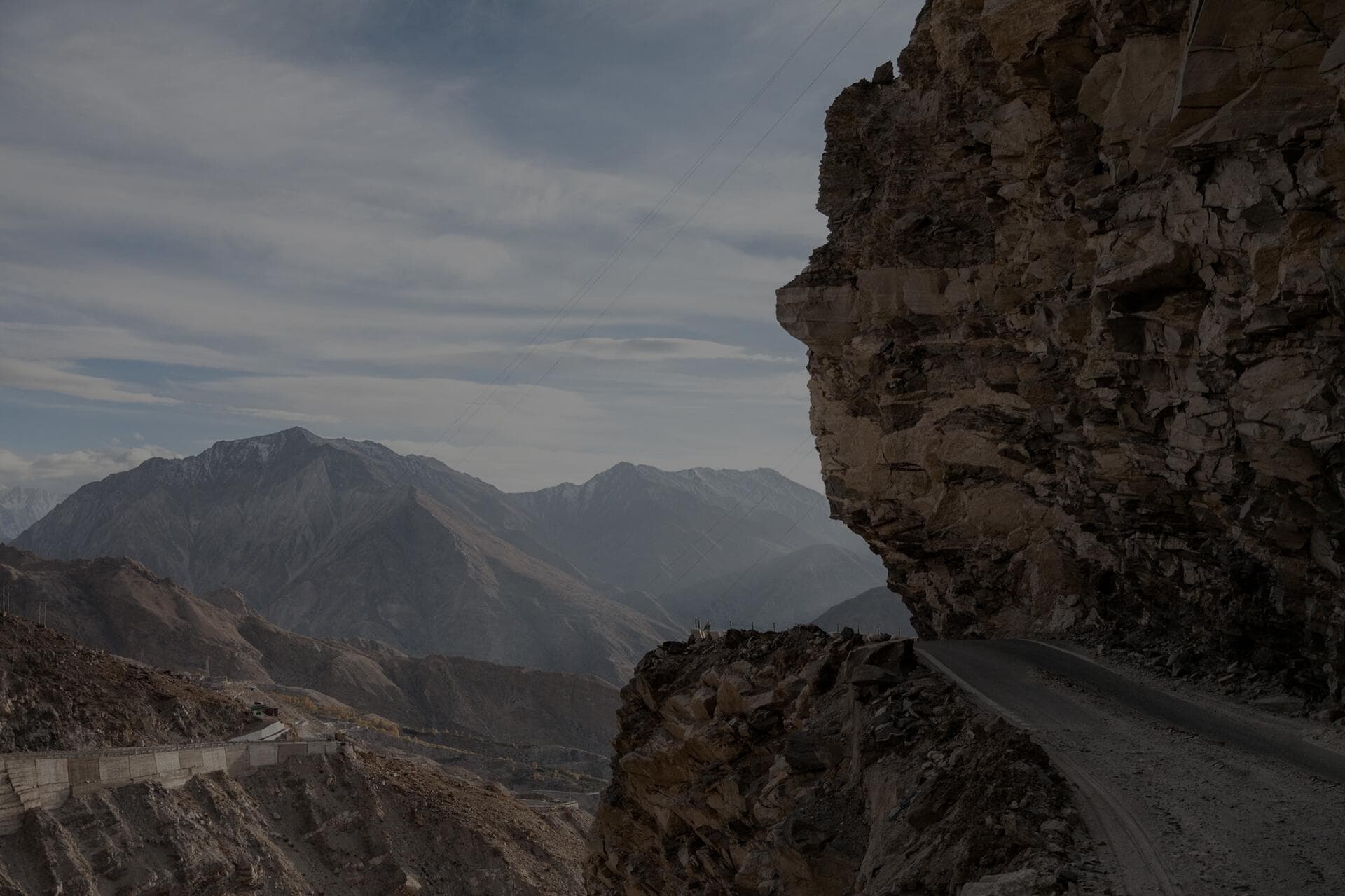
- On narrow shelf roads with drop-offs, increase spacing so only one vehicle is on the worst section at a time.
- Close the gaps up at junctions and forks so the vehicle behind clearly sees which way you went.
- Never tailgate to keep up - if you have fallen behind, the convoy should slow for you, not you drive dangerously to catch up.
What is the single most important rule?
Wait for the vehicle behind you at every turn. This one habit prevents the most common convoy failure - the silent split, where the front half of the group sails through a fork and the back half takes the wrong branch, and nobody realises until the two halves are kilometres apart in terrain with no phone signal. The rule is mechanical and foolproof: at every junction, fork or any point where the route is not obvious, you stop or slow until you physically see the vehicle behind you take the same turn. They in turn wait for the vehicle behind them, and so the message propagates all the way to the sweep. No one is ever responsible for the whole convoy - you are only ever responsible for the one vehicle behind you, and if everyone keeps that one promise, the convoy cannot break.
How should you communicate on the trail?
- Use two-way radios (VHF/UHF handhelds) if the group has them - agree a channel and do a radio check before departure; they are the best convoy tool in no-signal terrain.
- Agree hand signals before you start: number of fingers out the window for how many vehicles are following, a fist for stop, a thumbs-up for all-well.
- Use indicators deliberately to show your turn at forks, and headlight flashes or a horn pattern as agreed for attention.
- Brief the whole group before rolling: the route, the day's stops, the order, who is lead and sweep, and the emergency plan.
- Agree a regroup protocol: if you lose contact, the lead stops at the next safe, obvious point and waits, rather than pressing on.
- Keep headlights on so vehicles are visible in dust and on blind mountain corners.
The rule I drill into every group is the simplest one - you are responsible for the vehicle behind you, nobody else. Wait at every turn until you see them follow. If each driver keeps that one promise, a convoy of fifteen vehicles cannot lose anyone. The day someone decides the rule does not apply to them is the day we spend three hours searching a wrong valley.

The pre-departure briefing: a five-minute ritual that saves the day
Every well-run convoy day starts with the same short huddle before anyone climbs in. It takes five minutes and it is the cheapest safety you will ever buy. Skip it and you will spend the day correcting the confusion it would have prevented. We run the same checklist whether it is a two-vehicle weekend or a ten-vehicle Ladakh Loop, because the failure modes do not change with group size, only the consequences do.
- Today's route, distance, the high point, and where we expect to camp - so everyone has the shape of the day in their head.
- Where we fill fuel and where the next pump is after that - fuel is a convoy resource, agree the reserve nobody drops below.
- The order: who is lead, who is sweep, who sits where, and the wait-at-every-turn rule restated out loud.
- The comms plan: radio channel and check, the agreed hand signals, the regroup point if anyone loses contact.
- The emergency plan: who carries the recovery kit, who has first-aid training, and the bail-out option if weather or a pass closes.
How does etiquette extend to other trail users and the land?
Convoy etiquette is also about everyone else on the mountain. On narrow Himalayan roads, the vehicle going downhill generally yields to the one climbing, because it is easier and safer to stop and reverse downhill - but read the situation and use the wider spot, whoever is nearest it. Pass villages, livestock and pedestrians slowly and give them space; a herd of pashmina goats owns that road more than you do. Keep noise and dust down near settlements. Do not block the carriageway when you stop for photos - pull fully off. And carry out everything you carry in: a group of vehicles leaves a big footprint, so police your camp and your litter. Treating other travellers, locals and the land with respect is not just courtesy; in remote country, the goodwill you build is what brings help when you need it. A well-run convoy is also a self-sufficient rescue unit - it can anchor a winch, share fuel, and send a vehicle for help, which is exactly why group travel is the safest way to overland these routes.
Frequently Asked Questions
How many vehicles is an ideal convoy size?
Three to about six vehicles is a sweet spot - enough for mutual support and recovery, small enough to manage at junctions and fuel stops and to not overwhelm tiny villages. Larger groups work but need tighter discipline and often a mid-convoy marshal in addition to lead and sweep. Below three you lose the recovery margin; above six the convoy gets slow and hard to keep together at every fork.
What if one vehicle breaks down or gets stuck?
The convoy stops as a unit. The sweep and any recovery-equipped vehicle assist, the rest pull safely off the road, and nobody drives ahead alone. This mutual support is the entire reason convoy travel is safer than going solo on remote routes. One vehicle going for help while the rest stay put with the casualty is far safer than the group scattering.
Do I really need a radio, or are hand signals enough?
Hand signals are mandatory and work for the basics, but radios are far better in dust, around blind corners, and over distance where signals cannot be seen. For serious remote group travel, a set of handheld radios on an agreed channel is well worth it. In a Ladakh dust cloud or strung out along a shelf road, a radio lets the sweep tell the lead to stop before a small problem becomes a lost vehicle.
Who should be the lead and sweep vehicles?
The most experienced drivers, with the lead navigating and setting pace and the sweep being recovery-capable and patient. Put a nervous or under-equipped vehicle in the middle of the order, never at the front or the tail where the most responsibility sits. The sweep job in particular is the hardest in the convoy and the least glamorous, so give it to someone calm who genuinely will not leave anyone behind.
Put it into practice
Carry the kit that gets you unstuck - and learn to use it.